The problem is that when these materials are disturbed, they can release microscopic asbestos fibers into theair. According to the National Cancer Institute, exposure to these fibers is linked to serious health conditions, including mesothelioma and lung cancer. Before you start any renovation project that involves tearing up old floors, testing for asbestos isn’t just a good idea—it’s a critical first step toward ensuring a safe home.
This guide will walk you through the visual clues of asbestos tiles, the steps for professional testing, and what to do with the results.
TL;DR: How to Safely Test Floor Tiles for Asbestos
- Look for visual clues: Check for tiles installed before 1980, common sizes like 9x9 or 12x12 inches, and the presence of black mastic adhesive.
- Do not disturb: Never sand, drill, scrape, or break suspect tiles. This can release dangerous airborne fibers.
- Get a professional test: Visual identification is never enough. The only way to be certain is to have a sample tested by a certified lab.
- Hire a certified inspector: A licensed asbestos inspector should collect the sample to ensure safety and prevent cross-contamination.
- Plan next steps based on results: A positive result doesn't always require immediate removal. Encapsulation or professional abatement are common solutions.
Step 1: Identifying Potential Asbestos Floor Tiles (Visual Clues)
While only a lab test can definitively confirm asbestos, several visual clues can tell you if your flooring is high-risk. If you see multiple signs, treat the material as potentially hazardous and prepare to call a professional.
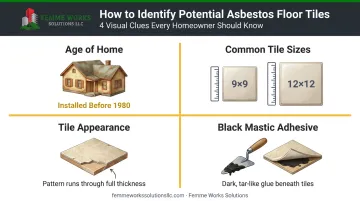
The Age of Your Home and Flooring
This is the single most important factor. Asbestos was a common ingredient in flooring from the 1920s through the early 1980s. In fact, OSHA requires that any asphalt and vinyl flooring installed no later than 1980 must be considered asbestos-containing unless proven otherwise by a lab.
Even if you have newer flooring like laminate or carpet, older asbestos tiles could be hidden in a layer underneath. During a renovation, it’s common to discover these forgotten floors.
Size and Dimensions
Asbestos floor tiles were often manufactured in a few standard sizes. Be on the lookout for:
- 9" x 9" Tiles: The most common size associated with asbestos. If found in a pre-1980s home, the probability is very high.
- 12" x 12" Tiles: This size also frequently contained asbestos, particularly vinyl tiles installed from the 1960s onward.
- 18" x 18" Tiles: A less common but still possible format for older asbestos-containing flooring.
Appearance and Material
The look of the tile itself can offer clues. Older asphalt-based tiles often have a dark, slightly oily or waxy appearance and were made in dark colors like black, brown, or gray. As vinyl became more popular, lighter colors with marbled or speckled patterns emerged.
A key indicator is that the pattern and color often run through the entire thickness of the tile, rather than being a thin printed layer on top. If a tile is chipped, you'll see the same pattern on the broken edge.
The Adhesive Used (Black Mastic)
Check under any loose or chipped tiles. If you see a thick, black, tar-like adhesive, you're likely looking at "cutback adhesive" or "black mastic." This adhesive frequently contained asbestos, sometimes even if the tiles themselves did not. If you find black mastic, both the adhesive and the tiles it was used with should be considered hazardous until tested.
Step 2: The Definitive Method - How to Get a Professional Asbestos Test
Visual clues are helpful for raising suspicion, but they are not a substitute for a real test. The EPA and other health organizations strongly recommend hiring a certified professional to collect samples. Attempting to take a sample yourself can easily release dangerous fibers and contaminate your home.
Finding a Certified Asbestos Inspector
Start by searching online for a "certified asbestos inspector" or "environmental testing company" in your area. It's important to look for professionals with proper credentials. While federal AHERA accreditation is focused on schools, it's a good quality marker to look for in a residential inspector.
What to Expect During the Sampling Process
A professional will follow a strict safety protocol to collect a sample. The process is straightforward and designed to be non-disruptive.
- Preparation: The inspector will seal off the immediate area with plastic sheeting to contain any potential dust.
- Safety: They will wear personal protective equipment (PPE), including a respirator and disposable coveralls.
- Collection: The area is wetted down to minimize dust. The inspector then carefully cuts and removes a small, discreet piece of the tile and, if present, the mastic underneath.
- Packaging: The sample is immediately placed in a sealed, labeled bag to prevent any cross-contamination.
Lab Analysis and Reporting
The sealed sample is sent to a lab accredited by the National Voluntary Laboratory Accreditation Program (NVLAP). There, technicians use a method called Polarized Light Microscopy (PLM) to definitively identify the type and percentage of asbestos present. You'll receive a formal report with the findings.
The Advantage of a Local Testing & Abatement Expert
For homeowners in Massachusetts and New Hampshire, hiring a single, licensed company for both testing and removal streamlines the entire process. This provides a seamless transition from identifying asbestos to creating a safe, compliant abatement plan.
With over 15 years of experience, Femme Works Solutions ensures every step complies with all state and federal regulations (EPA, OSHA, and DEP), from the initial inspection to final air clearance.
Our certified team understands the unique challenges of older New England homes, giving you peace of mind that the job will be done safely and correctly.
Step 3: Understanding Your Asbestos Test Results
The lab report is the final word. It will guide your next steps and help you make an informed decision for your home and family.
If the Test is Negative
Congratulations! A negative result means no asbestos was detected. You can treat the flooring as normal construction material and proceed with your renovation or removal plans without needing asbestos-specific precautions.
If the Test is Positive
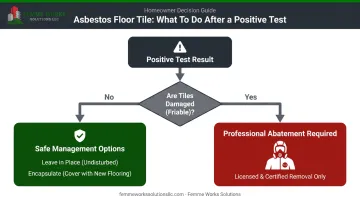
A positive result confirms asbestos is present, but don't panic. The immediate risk depends almost entirely on the condition of the tiles. The key is understanding whether the material is non-friable (well-contained in a solid state and not easily crumbled) or friable (damaged, easily crumbled, and likely to release fibers). Non-friable tiles are generally not a hazard if left undisturbed, while friable asbestos requires urgent attention.
If your test is positive, you have three primary options:
- Leave the tiles in place if they are in excellent, non-friable condition and will not be disturbed. This is often the safest and simplest option.
- Encapsulate the asbestos tiles by covering them with new flooring, such as vinyl or laminate. This is a cost-effective solution that safely seals intact tiles.
- Hire a licensed abatement professional if the tiles are damaged (friable) or must be removed for a renovation. A certified team, like Femme Works Solutions, can guarantee safe removal and disposal.
Critical Safety Precautions: What NOT to Do with Suspect Tiles
The single most important rule is to leave any material that may contain asbestos undisturbed. Disturbing it can release dangerous fibers. Avoid creating a serious hazard by never making these common mistakes:
- Do NOT sand, scrape, or grind tiles. These actions are extremely dangerous because they pulverize the material, releasing a high concentration of asbestos fibers directly into the air.
- Do NOT use power tools. Drills, saws, or power sanders used on or near suspect flooring will instantly aerosolize asbestos fibers due to their high speed.
- Do NOT break or smash tiles. Breaking tiles to look underneath or to speed up removal can release fibers, and even accidental breakage is a risk.
- Do NOT attempt removal without certification. Asbestos abatement requires certified licensed professionals. It requires specialized equipment (like HEPA vacuums and negative air machines) and strict disposal procedures to prevent contaminating your entire home, as required by the EPA.
Conclusion: Prioritizing Safety in Your Home
Identifying old floor tiles is the first step, but remember that visual clues about age, size, and appearance are only indicators, not proof. The only way to know for sure if you have an asbestos problem is through professional testing.
Handling suspect materials with caution and relying on certified experts for testing and removal is the best way to protect your family's long-term health. A small investment in professional assessment gives you the peace of mind needed to move forward with your projects safely. If you're in Massachusetts or New Hampshire, the licensed team at Femme Works Solutions can provide professional testing and a clear path forward.
Frequently Asked Questions
How much does it cost to test a tile for asbestos?
Costs for a professional site visit and initial sampling typically start at a few hundred dollars. Lab analysis fees are often charged separately for each sample tested.
Can you test floor tiles for asbestos?
Yes, floor tiles can and should be tested if they are suspected to contain asbestos. Analysis at an accredited laboratory is the only definitive way to be certain.
Are all 9x9 floor tiles asbestos?
While not all 9x9 tiles contain asbestos, it was the most common size for asbestos-containing tiles for decades. Any 9x9 tile in a home built before 1980 should be presumed to contain asbestos until proven otherwise by a test.
How common are 12x12 asbestos tiles?
Asbestos-containing 12x12 tiles were also very common, especially from the 1960s to the 1980s. While less universally suspect than 9x9 tiles, they still pose a significant risk and should be tested if installed during that era.
What should I do if my asbestos test is positive?
If the tiles are in good condition, they can often be left alone or covered with new flooring. If they are damaged or you plan to renovate, consult with a certified asbestos abatement professional to discuss encapsulation or removal.
Can I just cover asbestos tiles with new flooring?
Yes, covering (or encapsulating) intact asbestos tiles is often a safe and recommended solution. This must be done carefully to avoid sanding, breaking, or otherwise disturbing the original tiles during the installation of the new floor.