This guide is designed to help homeowners, property managers, and contractors understand the risks. We'll cover how to identify potential amosite-containing materials, the serious health consequences of exposure, and why professional removal is the only safe option. As a certified expert in safe asbestos abatement, Femme Works Solutions is committed to helping you protect your property and the people inside it.
TL;DR: The Dangers of Amosite Asbestos
- Amosite, or "brown asbestos," is a highly hazardous material with brittle, needle-like fibers that are easily inhaled.
- It was frequently used in pipe insulation, ceiling tiles, and cement sheets in buildings constructed before the 1980s.
- Exposure can lead to mesothelioma, lung cancer, and asbestosis, with symptoms often appearing decades later.
- There is no safe level of exposure; identification and removal must be handled by certified professionals.
What is Amosite Asbestos? (The “Brown Asbestos”)
Amosite asbestos belongs to the amphibole family of minerals, a group known for its straight, sharp, and brittle fibers. Its name comes from the Asbestos Mines of South Africa (AMOSA), where it was primarily mined.
Its key properties made it a popular choice for construction:
- High Heat Resistance: It doesn't burn and was used extensively for fireproofing and insulation.
- Exceptional Durability: The strong fibers added reinforcement to cement and tiles.
- Distinct Color: A high iron content often gives it a brownish color, leading to its common name.
However, the greatest danger of amosite lies in its friable nature. This means the material can easily be crumbled or reduced to powder by hand pressure, especially as it ages and degrades.
When disturbed during renovations, repairs, or demolition, it releases a cloud of microscopic, sharp fibers. These airborne fibers can be unknowingly inhaled, posing a severe health risk.
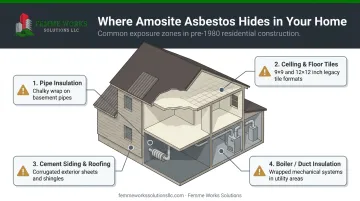
Where Amosite Asbestos Hides: Common Locations in MA & NH Properties
In the United States, asbestos consumption peaked in 1973 at 803,000 metric tons, meaning a significant portion of the housing and commercial building stock in Massachusetts and New Hampshire is at high risk. If your property was built or renovated between the 1940s and 1980s, be aware of these common hiding spots.
Insulation Materials
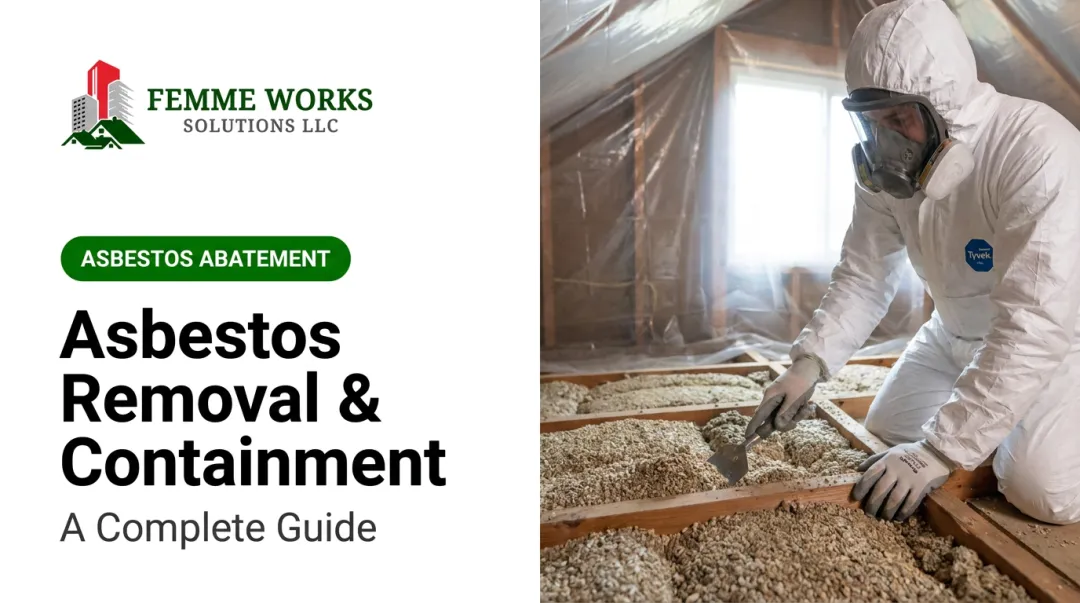
Amosite was a go-to material for thermal insulation. You can find it wrapped around pipes, boilers, and ducts in basements, crawlspaces, and attics. This insulation often looks like a chalky, grayish-brown or off-white wrap that can be easily damaged. It was also used in block insulation and asbestos insulating boards (AIB) for fireproofing walls and structural steel.
Ceiling and Floor Tiles
For decades, amosite was added to acoustic ceiling tiles and vinyl floor tiles to increase durability and fire resistance. The mastic, a black, tar-like adhesive used to glue down floor tiles, also frequently contained asbestos.
While these materials are generally stable when intact, they pose a significant risk if they become cracked, broken, or are disturbed during removal.
Cement and Roofing Products
As a reinforcing agent, amosite was mixed into asbestos cement to create durable building products. Look for it in:
- Corrugated cement sheets
- Roofing shingles and felt
- Siding shingles
- Flue pipes for furnaces and water heaters
These materials are considered non-friable and are generally safe unless they are cut, drilled, sanded, or damaged, which can release the locked-in fibers.
The Serious Health Risks of Amosite Asbestos Exposure
The most important fact about amosite asbestos is that there is no safe level of exposure. The danger comes from inhaling the microscopic, needle-like fibers. Unlike other pollutants, these sharp fibers can lodge deep within the lung tissue and other organs. The body cannot easily break them down, leading to persistent inflammation, scarring, and cellular damage over many years.
Asbestos-Related Diseases
Prolonged exposure to amosite is directly linked to several devastating diseases:
- Mesothelioma: A rare and aggressive cancer that forms in the lining of the lungs, abdomen, or heart. It is almost exclusively caused by asbestos exposure.
- Asbestosis: A chronic and progressive lung disease caused by the scarring of lung tissue. This scarring makes it increasingly difficult to breathe and can lead to respiratory failure.
- Lung Cancer: Asbestos exposure significantly increases the risk of developing lung cancer. For individuals who also smoke, the risk is not just doubled—it becomes exponentially higher.
The Latency Period
One of the most insidious aspects of asbestos-related diseases is the long latency period. According to the National Cancer Institute, symptoms may not appear for 10 to 40 years or more after the initial exposure. This means a risk taken during a home renovation today may not reveal its deadly consequences until decades later.
The Professional Abatement Process: How Certified Experts Safely Remove Amosite
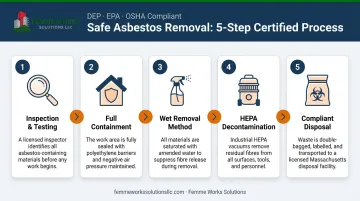
Safe amosite removal requires licensed certified professionals following State, DEP, and EPA regulations. It is a meticulous, highly regulated process that demands specialized training and equipment. Here is the industry-standard procedure that certified professionals follow to ensure safety and compliance.
Step 1: Professional Inspection and Lab Testing
A certified inspector first assesses the property to identify suspected asbestos-containing materials (ACMs). Samples are carefully taken and sent to an accredited laboratory for analysis to confirm the presence and type of asbestos.
Step 2: Full Containment and Site Preparation
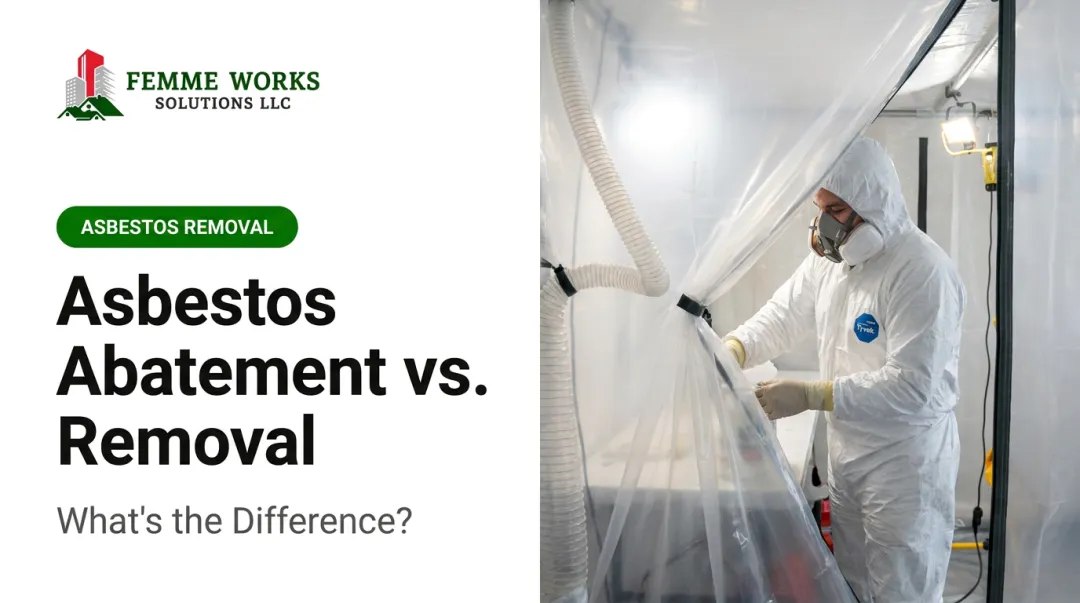
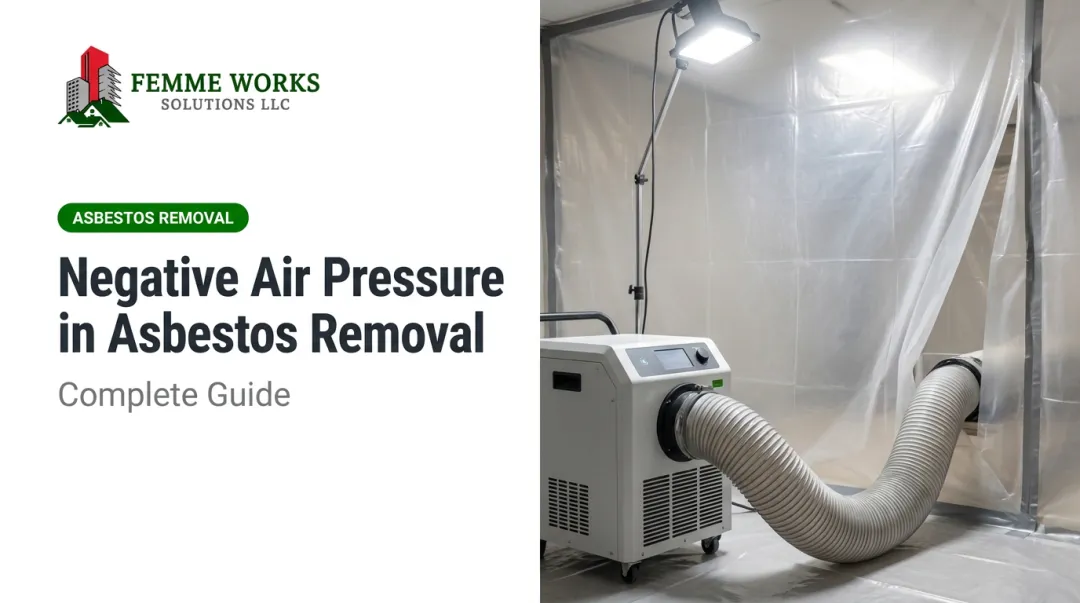
The work area is completely sealed off from the rest of the property using heavy-duty plastic sheeting. To prevent any fibers from escaping, the contained area is equipped with negative air pressure machines. These specialized units ensure clean air flows in while preventing contaminated air from flowing out. Warning signs are posted to alert everyone of the restricted area.
Step 3: Wet Removal Method to Suppress Fibers
Trained technicians wearing full personal protective equipment (PPE), including respirators, enter the containment zone. They carefully wet the ACMs with a special binding agent, or surfactant, to minimize dust. This "wet method" is a critical step that prevents the brittle amosite fibers from becoming airborne during removal.
Step 4: HEPA Decontamination and Air Quality Monitoring
After the material is removed, the area is meticulously cleaned using HEPA (High-Efficiency Particulate Air) vacuums designed to capture microscopic asbestos fibers. Air scrubbers may also be used to purify the air. Air samples are continuously monitored inside and outside the containment zone to ensure the area is safe for re-occupancy. All workers and equipment go through a multi-stage decontamination process before exiting.
Step 5: Compliant Asbestos Disposal
The removed asbestos is sealed in specially labeled, leak-proof bags. It is then transported by a licensed hauler to a designated hazardous waste facility, adhering to all EPA, MassDEP, and NHDES disposal regulations.
Why You Must Hire a Certified Professional for Amosite Removal
Amosite removal without proper licensing is extremely dangerous and illegal in most situations. Improper handling can contaminate an entire property, turning a localized problem into a widespread health hazard for occupants and tenants.
Handling amosite requires specialized equipment, training, and certifications to comply with strict federal (EPA, OSHA) and state laws. For homeowners and businesses in Massachusetts and New Hampshire, choosing a licensed and insured contractor is essential for safety and peace of mind.
When you hire Femme Works Solutions, you get a team with a proven track record. We protect your health and property by providing:
- Over 15 years of experience in safe hazardous material removal.
- Full licensing in Massachusetts, with strict adherence to EPA, DEP, and OSHA protocols.
- A commitment to the highest standards as a certified Woman/Minority-Owned Business.
- A trusted reputation, backed by over 80 five-star Google reviews.
Frequently Asked Questions
Can I remove amosite asbestos myself?
No. Removing amosite asbestos yourself is extremely hazardous, often illegal, and can contaminate your entire home. Safe abatement requires certified professionals using specialized containment and air filtration equipment.
What is the difference between amosite and chrysotile asbestos?
Amosite has straight, brittle fibers (amphibole family), while chrysotile has curly, flexible fibers (serpentine family). According to the CDC, amosite's needle-like fibers may pose a higher risk for mesothelioma because they can remain in the lungs longer.
How much does professional asbestos removal cost?
Costs vary based on the amount of asbestos, its location (e.g., pipes, siding), and how difficult it is to access. The best approach is to schedule a formal inspection with a certified company to get a detailed quote.