This isn’t just about construction delays; it's about your family's health, your home's value, and navigating a maze of safety regulations. Choosing the right removal company isn't just another contractor hire—it's a critical decision. The World Health Organization estimates that occupational asbestos exposure leads to more than 200,000 deaths every year globally, a sobering reminder of the stakes. This guide will walk you through how to hire a certified professional who can handle the job safely and correctly.
Key Takeaways
- Hiring a certified asbestos removal company is essential for safety, health, and legal compliance.
- Always verify state licenses (for Massachusetts or New Hampshire), specific asbestos liability insurance, and safety protocols.
- The professional abatement process involves inspection, containment, safe removal, air purification, and legal disposal.
- Asbestos removal must always be performed by certified licensed professionals. The risk of releasing dangerous fibers without proper containment and regulatory compliance is far too high.
Understanding Asbestos and Why Professional Removal is Crucial
Asbestos is a naturally occurring mineral valued for its fire resistance and insulating properties. Before its dangers were widely understood, it was a common ingredient in thousands of building products. If your home was built before the 1980s, you might find it in:
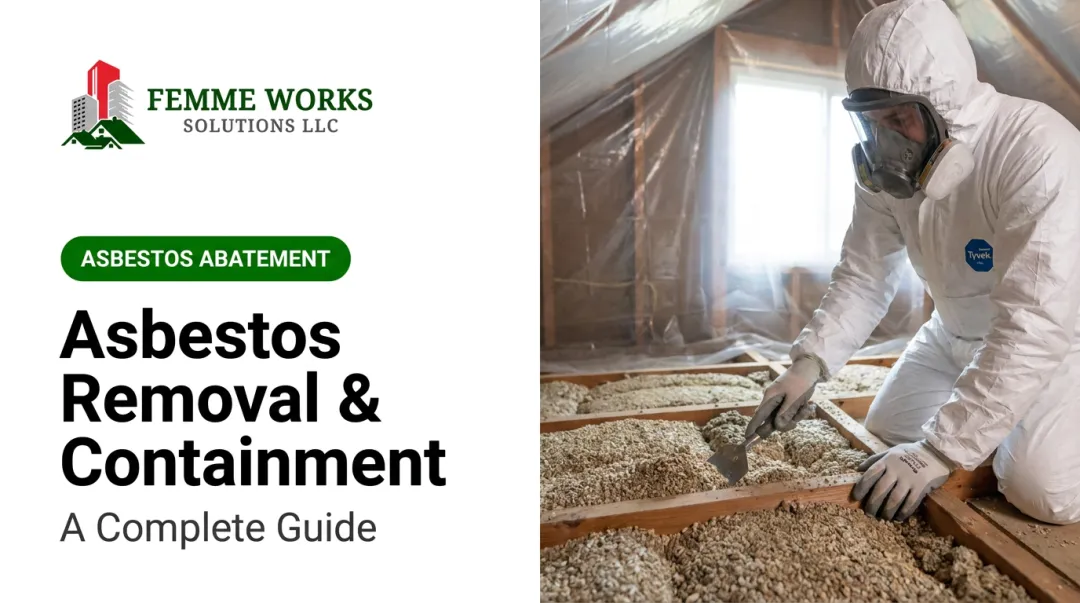
- Attic and wall insulation (especially vermiculite)
- Vinyl floor tiles and the backing on sheet flooring
- Roofing and siding shingles
- Textured paint and ceiling joint compounds
- Insulation wrap on hot water pipes and boilers
The danger isn't in its presence but in its disturbance. When these materials are damaged, cut, sanded, or broken during renovations, they release microscopic fibers into the air.
Once inhaled, these sharp fibers can become lodged in the lungs. This can lead to devastating diseases like asbestosis, lung cancer, and mesothelioma, with symptoms often appearing 20 to 30 years after exposure.
This is why professional abatement is non-negotiable. Only certified licensed professionals using controlled methods, specialized equipment, and strict legal protocols can ensure the job is done safely and compliantly.
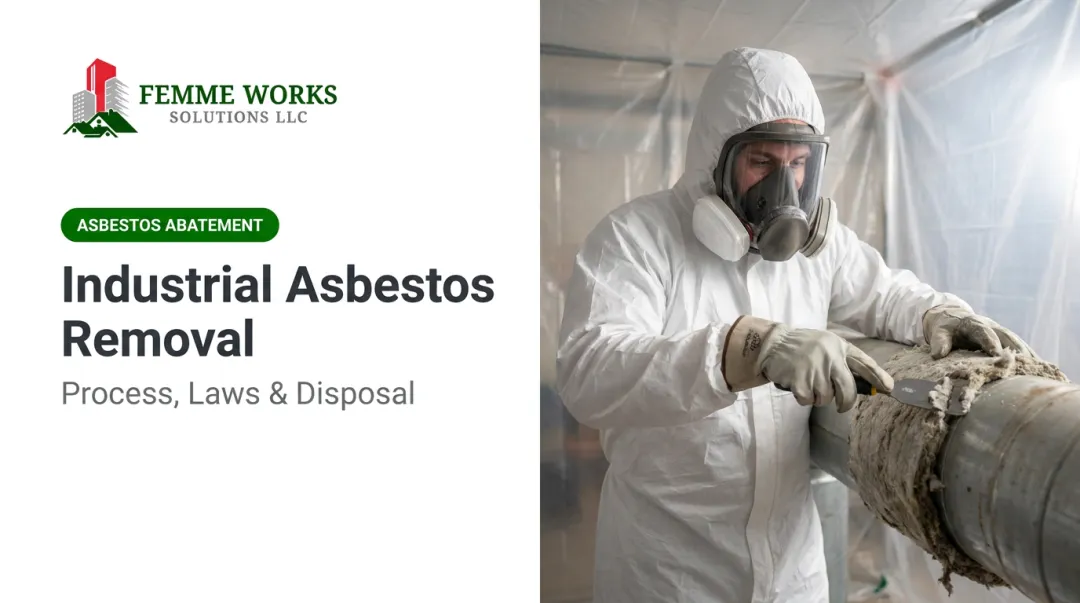
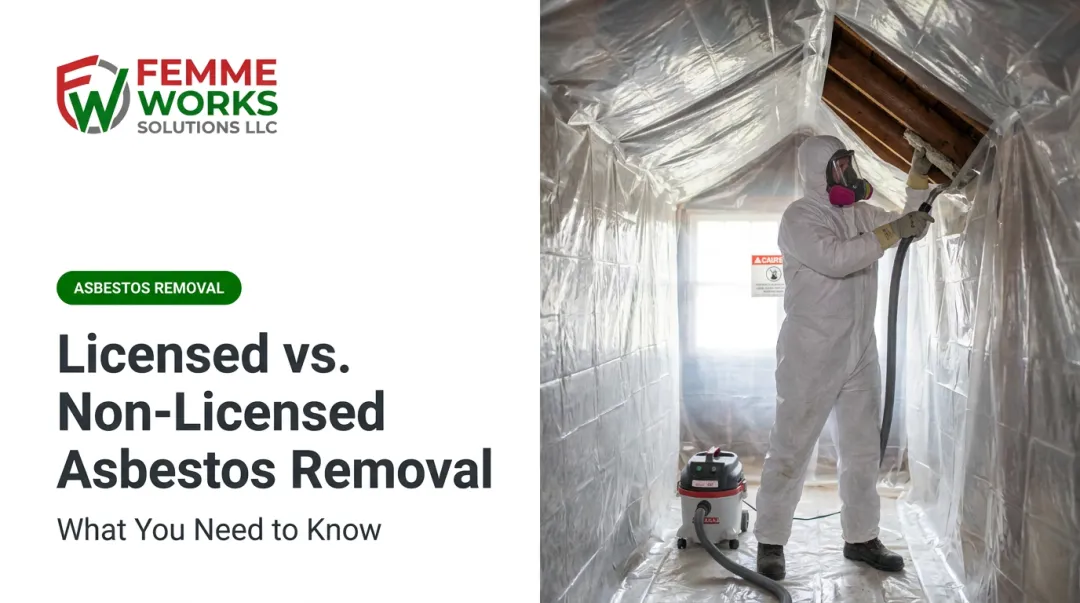
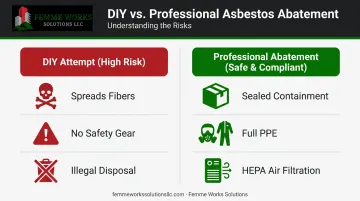
Professional abatement means a sealed work area with heavy-duty plastic, technicians in full-body suits and respirators, wetting methods to suppress fiber release, negative air pressure machines with HEPA filters, and legal transport of all waste to a licensed hazardous waste facility.
Key Factors to Consider When Hiring an Asbestos Removal Company
Vetting asbestos removal companies requires careful attention to detail. Use this checklist to find a trustworthy partner who puts safety first.
Licensing and Certification
The single most important factor is proper licensing. Any company you consider must be licensed for asbestos abatement in your state. This isn’t the same as a general contractor’s license.
Ask for proof and verify it yourself. For Massachusetts, you can check the state’s official list of licensed asbestos contractors. New Hampshire provides a similar list through its Department of Environmental Services (NHDES). Also, ensure the individual technicians working on your property are certified.
Insurance and Liability
Standard general liability insurance does not cover asbestos-related incidents. You need to confirm the company carries specific asbestos liability or pollution liability insurance. This protects you financially from accidental contamination or property damage.
Ask for a certificate of insurance and don't hesitate to call the provider to confirm the policy is active and covers asbestos abatement.
Safety Protocols and Compliance
A professional company will always provide a detailed, written work plan before starting. This document should outline their exact procedures for containment, removal, and decontamination.
Look for these key elements:
- Containment: Sealing the work area from the rest of the house with plastic sheeting.
- Air Pressure: Use of negative air machines to ensure contaminated air can't escape the work zone.
- PPE: Confirmation that all workers will wear appropriate personal protective equipment.
- Compliance: The plan should adhere to federal EPA and OSHA regulations as well as state rules from bodies like the Massachusetts Department of Environmental Protection (MassDEP).
Detailed Written Estimates
Get at least three written quotes. A legitimate estimate will break down all costs clearly, including testing, removal, air monitoring, and disposal fees.
Be wary of any quote that seems unusually low—it could be a red flag for cutting corners on safety, insurance, or legal disposal. A professional bid reflects the true cost of doing the job correctly and safely.
Experience and References
Look for a company with a long, proven track record. How many years have they been in business? Can they provide references from recent residential projects similar to yours? Check online reviews on platforms like Google to get a sense of other homeowners' experiences.
Disposal Methods
The job isn't finished until the hazardous waste is properly disposed of. A reputable contractor must explain their exact disposal process, including the name and location of the licensed facility they use.
They should also provide you with waste shipment records. This documentation serves as your paper trail for compliance and gives you peace of mind.
The Asbestos Removal Process: What to Expect Step-by-Step
Knowing what to expect can ease the stress of an abatement project. A professional abatement process is methodical, prioritizing total safety and thoroughness.
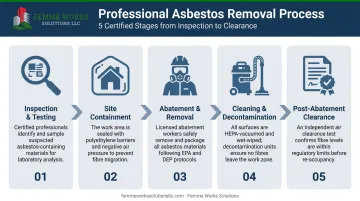
Initial Inspection and Testing A certified inspector first assesses the situation, taking small samples of suspected materials for lab analysis. This crucial step confirms the presence, type, and condition (friability) of the asbestos before any work begins.
Site Preparation and Containment To prepare the site, the crew establishes a containment zone. They seal the work area from the rest of the property with heavy plastic sheeting, shut down HVAC systems to prevent cross-contamination, and post clear warning signs.
Abatement and Removal Technicians in full personal protective equipment (PPE) enter the containment zone to perform the abatement. They use specialized techniques, like wetting materials to minimize airborne dust, while negative air pressure machines with HEPA filters run continuously to scrub the air and prevent fibers from escaping.
Cleaning and Decontamination After removing all asbestos-containing materials, the crew performs a meticulous cleanup. This involves using special HEPA vacuums, wet-wiping all surfaces, and ensuring all waste is double-bagged and sealed in labeled, leak-proof containers for safe transport.
Post-Abatement Clearance Before containment barriers come down, a final clearance test is required. An independent, third-party air monitoring professional takes air samples from the work area to ensure the fiber count is below the safe level (typically 0.01 fibers per cubic centimeter or less). The area is only deemed safe to re-enter after passing this critical test.
Why Choose Femme Works Solutions for Your Asbestos Abatement Needs
For homeowners in Massachusetts and New Hampshire, Femme Works Solutions offers a combination of certified expertise, proven experience, and a deep commitment to client safety. We understand the stress that comes with discovering asbestos, and our mission is to manage the entire process with professionalism and care, leaving you with a clean, safe environment.
Here’s what sets us apart:
- Fully certified and compliant with all EPA, OSHA, and MassDEP protocols, and licensed and insured in Massachusetts and New Hampshire.
- Proven experience with over 15 years in the industry and a reputation backed by more than 90 five-star Google reviews.
- A certified Woman/Minority-Owned Business (MBE) with a bilingual (Spanish-speaking) team to ensure clear communication for all clients.
Frequently Asked Questions
How much does it cost to get asbestos removed from my house?
Costs vary widely based on the amount of asbestos, its location (e.g., pipes vs. flooring), and accessibility. Because every job is unique, it's best to get a detailed, on-site estimate from a licensed professional.
Can asbestos be completely removed from a house?
Yes, a licensed abatement company can thoroughly remove asbestos-containing materials. Post-removal air testing is then performed by a third party to verify that the area is safe and fiber levels are below the clearance threshold.
How do I know if I have asbestos in my home?
You can't identify asbestos just by looking at it. If your home was built before 1980 and you have suspect materials, the only way to be certain is to have a sample professionally tested by a certified lab.
What's the difference between asbestos removal and encapsulation?
Removal (abatement) physically eliminates the hazardous material, offering a permanent solution. Encapsulation seals the material with a special coating to prevent fiber release and is often considered a temporary or partial fix.
How long does the asbestos removal process take?
The timeline depends on the project's size and complexity. A typical residential job, like removing pipe insulation, might take one to three days, which includes setup, removal, and waiting for clearance test results.
Is it safe to stay in my house during asbestos removal?
No, for safety reasons, occupants and pets must leave the property during the abatement process. The work area is sealed to prevent contamination, and you can only re-enter after the site has passed professional air clearance tests.