Many facilities rely on outdated, permanent insulation that becomes a costly headache during routine maintenance. This guide explores a modern solution: removable insulation blankets designed specifically for heat-traced pipes. We'll cover how these systems work, their key benefits, and the critical first step of preparing your facility for an upgrade.
TL;DR: Key Takeaways
- Heat tracing requires insulation to be effective; without it, most energy is lost.
- Removable insulation blankets offer easy access for maintenance, unlike permanent "hard" insulation that must be destroyed and replaced.
- Benefits include significant energy savings, improved workplace safety, and reduced maintenance downtime.
- Upgrading often requires removing old insulation, which may contain asbestos in buildings constructed before 1980.
- Professional removal of hazardous materials is a crucial first step for a safe and compliant insulation upgrade.
Understanding Heat Tracing: The Foundation of Pipe Temperature Control
Removable pipe insulation is designed to maximize the efficiency of heat tracing—the technology used to control pipe temperatures. Heat tracing, also known as trace heating, is the process of applying an electric heating element directly along the length of a pipe, tank, or vessel to control its temperature.
This system serves two primary purposes:
- It provides freeze protection by keeping water and other liquids from freezing, expanding, and rupturing pipes—a critical concern for any facility operating through a New England winter.
- It enables process temperature maintenance, ensuring contents like oil or chemicals remain at a specific temperature required for operational efficiency and product quality.
The "heating element" is typically a specialized cable. While there are several types, most applications use one of the following:
- Self-regulating cables automatically adjust their heat output based on ambient temperature, using more energy when it's cold and less when it's warm.
- Constant wattage cables deliver a consistent heat output across their entire length, ideal for applications needing uniform temperature.
- Mineral-insulated (MI) cables are built for high-temperature, harsh environments and can maintain temperatures up to 932°F (500°C).
The right cable depends entirely on your specific temperature needs and operating environment. But no matter which cable you use, its performance is directly tied to the quality of your insulation.
Why Insulation is Non-Negotiable for Heat Trace Effectiveness
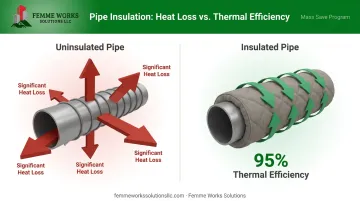
Running a heat trace system on an uninsulated pipe is like turning on a furnace in a room with all the windows open. The system will generate heat, but most of that expensive energy will radiate away into the surrounding air instead of being directed into the pipe.
Insulation works in tandem with the heat trace cable to create a complete thermal system. The cable creates the heat, and the insulation traps it, ensuring the energy is used efficiently to maintain the temperature of the pipe and its contents.
A well-designed system is highly effective. Industry benchmarks show that properly insulated pipes can achieve thermal efficiencies of 95% or greater, but only if the insulation is intact and appropriate for the job.
When insulation is missing, degraded, or—in many older buildings—made of hazardous materials like asbestos, the entire system fails. You're not just wasting energy; you're forcing the heat trace cable to work harder, leading to higher utility bills and a shorter equipment lifespan.
What is Removable Pipe Insulation and How Does it Work?
When inspecting older buildings, you'll often find "hard" insulation—rigid materials like asbestos, foam glass, or mineral wool wrapped in a permanent metal jacket. Once this old insulation is disturbed or needs to be removed for pipe maintenance, it often can't be reused. Modern removable insulation offers a flexible and practical replacement.
Defining Removable Insulation Blankets
Removable insulation blankets (or jackets) are custom-fabricated covers designed to fit snugly over pipes, valves, flanges, pumps, and other complex components. They are engineered with three layers:
- Outer Cover: A durable, protective layer, often made from silicone or PTFE-coated fiberglass, designed to resist moisture, chemicals, UV rays, and physical damage.
- Insulation Core: The "engine" of the blanket, containing high-performance insulation material like fiberglass, aerogel, or ceramic fiber to trap heat.
- Inner Lining: A layer that rests against the pipe surface, chosen for its temperature resistance. These layers are stitched together into a single unit with a secure fastening system, such as Velcro straps, D-rings, or buckles, allowing for easy installation and removal without any special tools.
Removable vs. Permanent "Hard" Insulation
The key difference between removable jackets and traditional insulation lies in accessibility and reusability. This becomes incredibly important during routine maintenance and inspections.
| Feature | Removable Insulation Blankets | **Old "Hard" Insulation (e.g., Asbestos) |
|---|---|---|
| Maintenance Access | Removed in minutes by one person; no special tools needed. | Requires certified specialists (like asbestos abatement teams) to safely cut off and dispose of. |
| Reusability | Fully reusable; can be reinstalled immediately after work is done. | Destroyed upon removal and requires hazardous material disposal. |
| Downtime | Minimal. Access is nearly instant. | Significant. Delays while waiting for insulators to remove and replace. |
| Long-Term Cost | Higher initial cost, but pays for itself through saved labor and reusability. | Low original installation cost, but now has high removal, disposal, and replacement costs. |
For any component that requires periodic inspection or service—like a valve or flange—old, permanent insulation creates a significant problem. You must pay certified professionals to safely remove and discard it, then pay again for new insulation. Upgrading to modern removable jackets after a professional abatement eliminates this cycle of waste and hazard for future maintenance.
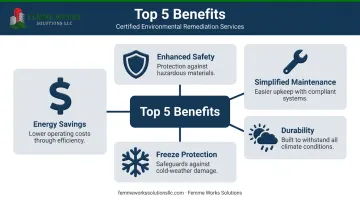
The Top 5 Benefits of Using Removable Insulation with Heat Trace Systems
Combining a quality heat trace system with custom-fit removable insulation blankets creates a powerful, efficient, and cost-effective solution for temperature management. Here are the top five reasons facilities are making the switch.
1. Superior Energy Efficiency and Cost Savings
Custom-fabricated removable blankets provide a snug fit that minimizes thermal gaps, ensuring heat is directed precisely where it's needed. The financial impact is substantial; an analysis by the National Insulation Association found that insulating previously bare valves can produce significant annual energy savings. Even a small plant insulating a modest number of valves can recover the cost of the blankets within a single heating season.
2. Enhanced Workplace Safety
Exposed hot pipes are a significant burn risk. Removable jackets lower surface temperatures to safe-touch levels, protecting employees from injury and ensuring regulatory compliance. For instance, OSHA standard 1910.261(k)(11) requires covering hot pipes near work areas to prevent contact.
3. Simplified Maintenance and Inspection
Removable jackets simplify maintenance. A single technician can unstrap a blanket in minutes for immediate access, eliminating the cost and time of hiring a crew to remove hard cladding. A refinery that made this switch reduced maintenance from 2,700 labor hours to just 1,500 labor hours, saving significant time and money.
4. Unmatched Durability and Weather Resistance
Built for tough industrial environments, high-quality jackets feature outer covers made from materials like Teflon-coated fiberglass. They withstand extreme temperatures, moisture, and chemicals. This protects both the pipe and the heat trace cable from damage, ensuring long-term system reliability.
5. Reliable Freeze Protection
The combination of a heat trace cable and a removable blanket offers the most robust defense against freezing. This superior thermal retention prevents burst pipes and costly production shutdowns. It ensures critical systems remain operational even in the harshest weather.
Preparing for an Upgrade: The Critical Step of Old Insulation Removal
Before installing a new, high-efficiency heat trace and insulation system, you must first address what’s already on your pipes. In many older commercial and industrial facilities across Massachusetts, that old insulation may contain hazardous materials.
Many buildings constructed before the 1980s used asbestos-containing materials (ACMs) for insulation. OSHA requires that any thermal insulation from that era be presumed to contain asbestos until tested by a professional.
Disturbing this material without proper containment can release dangerous fibers into the air, creating a severe health risk for employees and a major liability for your company.
This is why professional assessment and abatement is not just a good idea—it's a legal and safety requirement.
This is where Femme Works Solutions comes in. We specialize in the safe, compliant removal of asbestos and other hazardous materials, giving you a clean slate for your insulation upgrade.
Our team ensures every project is handled correctly:
- We are a fully licensed, insured, and certified Woman/Minority-Owned business.
- We bring over 15 years of experience serving Massachusetts and New Hampshire.
- All work strictly follows EPA, OSHA, and DEP protocols for safety.
This approach gives you peace of mind to move forward with your facility improvements.
Key Considerations for Choosing the Right System
When planning an upgrade, a few key factors will help you select the right removable insulation and heat trace combination.
Assess Your Application Needs
Start by assessing the basics of your application:
- Pipe diameter and typical operating temperature
- Lowest ambient temperatures the pipe will face
- Your primary goal: Is it simple freeze protection or maintaining a precise process temperature?
Answering these questions guides the selection of the heat trace cable and the insulation's thickness.
Material Selection
The materials used for the removable jacket are critical. The inner lining, insulation core, and outer cover must all be rated for your pipe's maximum temperature. Also consider the external environment—if the pipe is outdoors or exposed to chemicals, you’ll need a water- and chemical-resistant outer cover.
Custom vs. Off-the-Shelf
While standard-sized jackets are available, a custom-fabricated solution almost always delivers better performance. Complex shapes like valves, flanges, and pumps have irregular surfaces with many heat loss points. A custom blanket ensures a perfect fit, eliminating gaps and maximizing thermal efficiency.
Frequently Asked Questions
Can you insulate a heat trace?
Yes, and you absolutely should. Insulating a heat-traced pipe is essential for the system to work efficiently. Insulation traps the heat generated by the cable and directs it into the pipe, preventing energy waste and ensuring reliable temperature control.
What is removable insulation?
Removable insulation consists of custom-fit, reusable blankets or jackets that can be easily taken off for maintenance and inspection and then reinstalled without damage. They are designed to provide excellent thermal performance while allowing easy access to pipes and equipment.
What type of insulation is used in heat trace?
Materials like fiberglass, aerogel, and ceramic fiber are common for removable heat trace jackets. The material is chosen based on temperature requirements and enclosed in a durable, weather-resistant outer shell.