Ignoring remediation can lead to staggering fines, project-halting stop-work orders, and long-term legal liability. This guide provides a complete overview of the remediation process in demolition, explaining what it is, why it’s non-negotiable, and how it protects your workers, the community, and your bottom line.
Key Takeaways
- Environmental remediation is the safe removal of hazardous materials like asbestos, lead, and PCBs from a structure prior to demolition.
- It is a legal requirement driven by federal (EPA, OSHA) and state agencies to protect workers, the public, and the environment.
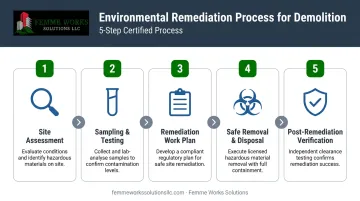
- The process involves site assessment, material testing, creating a work plan, safe removal and disposal, and final verification.
- Improperly handling remediation can result in massive fines, project delays, and serious health and legal consequences.
What Is Environmental Remediation in the Context of Demolition?
Environmental remediation for demolition is a specialized service focused on neutralizing or removing contaminants from buildings and soil. The primary goal is to prevent the release of hazardous substances into the air, soil, or water during and after demolition, protecting both human health and the environment.
This process is fundamentally different from general construction and demolition (C&D) waste management. While C&D recycling handles non-hazardous materials like concrete, wood, and metal, remediation specifically targets regulated hazardous substances that pose a direct threat.
The process is like a surgical procedure for a building. Before the main operation (demolition), a remediation specialist must first remove any dangerous materials to prevent contamination. This applies to all properties, from a home with asbestos floor tiles to an old commercial building with lead paint and mold.
Why Remediation is a Critical First Step in Demolition
Skipping straight to demolition without proper remediation is one of the costliest mistakes a property owner can make. The risks fall into three main categories: legal, health, and environmental.
Ensuring Regulatory Compliance and Avoiding Fines
Federal laws like the Resource Conservation and Recovery Act (RCRA) give the Environmental Protection Agency (EPA) the authority to regulate hazardous waste from "cradle-to-grave." Alongside OSHA, these agencies mandate the proper handling of dangerous materials.
If regulated substances like asbestos or lead paint are not removed first, the entire stream of demolition debris can become contaminated. Under the EPA's "mixture rule," mixing hazardous and non-hazardous waste can cause the entire batch to be classified as hazardous.
This exponentially increases disposal costs and exposes you to severe legal penalties.
Protecting Worker and Community Health
Demolition activities like breaking, crushing, and sawing can easily release hazardous particles into the air. These substances pose severe health risks to anyone on or near the site.
- Asbestos fibers can cause mesothelioma, asbestosis, and lung cancer.
- Lead dust can cause permanent neurological damage, especially in children.
- Mold spores can trigger severe allergic reactions and respiratory infections.
The danger is widespread. OSHA estimates that 1.3 million employees in construction and general industry are exposed to asbestos on the job. Proper remediation contains these threats at the source, protecting your crew and the surrounding community.
Preventing Long-Term Environmental Contamination
When hazardous materials are not properly removed, they can leach into the soil and groundwater. This can contaminate a site for decades, rendering it unsafe for future use and requiring far more expensive cleanup down the road. As the property owner, you hold the ultimate "cradle-to-grave" liability for any waste generated on your site, even long after the demolition is complete.
The Environmental Remediation Process: A Step-by-Step Overview
To ensure safety and compliance, every professional remediation process follows a proven, five-step framework to ensure safety and compliance.
Step 1: Site Assessment and Investigation
The process begins with a Phase I Environmental Site Assessment. A certified inspector reviews historical site records, building blueprints, and conducts a thorough physical inspection. This initial phase identifies potential areas of concern and flags materials that require further analysis.
Step 2: Sampling and Material Testing
Next, certified technicians carefully collect samples of suspected materials. This could include insulation, floor tiles, paint chips, caulking, or soil. These samples are sent to an accredited laboratory to confirm the presence and concentration of any hazardous substances.
Step 3: Developing the Remediation Work Plan
Based on the lab results, a site-specific work plan is created. This detailed document is the blueprint for the entire project and outlines:
- The exact scope of work.
- Strict safety protocols for workers.
- Containment measures to prevent cross-contamination.
- Specific removal and abatement methods.
- Logistics for transport and disposal.
- A clear project timeline and regulatory reporting plan.
Step 4: Safe Removal, Abatement, and Disposal
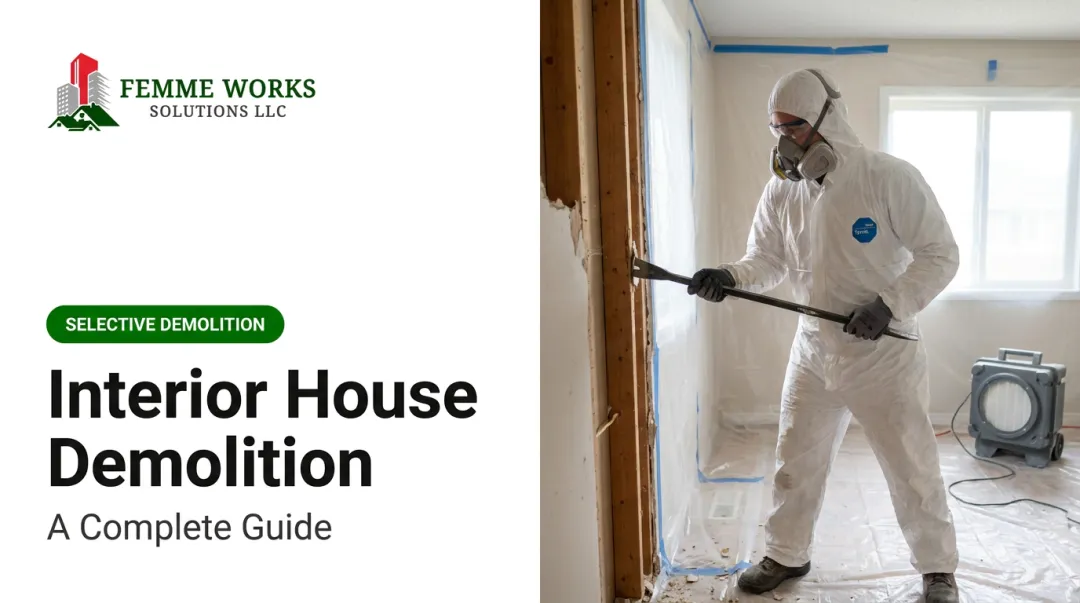
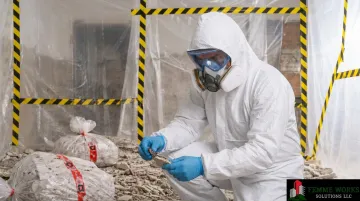
This is the hands-on phase. Technicians establish regulated work areas, often using containment barriers and negative air pressure machines to prevent fibers or dust from escaping. Wearing specialized personal protective equipment (PPE), they use approved methods to safely remove the hazardous materials.
All waste is then sealed in labeled, leak-proof containers. A licensed hauler transports it to a designated hazardous waste facility, following a strict chain-of-custody protocol to document its journey from the site to final disposal.
Step 5: Post-Remolition Verification
After the physical removal is complete, the work isn't finished. The area undergoes verification testing—such as air quality sampling—to confirm that contaminant levels have been reduced to a safe, acceptable level. Once the tests pass, a clearance report is issued.
This clearance report is your proof of a job done right and is critical for avoiding future liability. It underscores why hiring a fully certified and insured contractor is non-negotiable.
A qualified firm like Femme Works Solutions ensures every step meets strict EPA, OSHA, and DEP standards, providing the third-party air testing and documented clearance reports needed for compliance.
Common Hazardous Materials Requiring Remediation
While older buildings hold historical value, they often contain hazardous materials common in past construction eras.
Asbestos-Containing Materials (ACMs)
Once prized for its fire resistance and insulating properties, asbestos is now known to be a potent carcinogen. It becomes dangerous when its fibers are disturbed and become airborne. Common locations:
- Pipe and boiler insulation
- Vermiculite attic insulation
- Vinyl floor tiles and mastic adhesive
- Roofing shingles and siding
- Textured "popcorn" ceilings
Lead-Based Paint
The federal government banned lead-based paint for residential use in 1978. According to the CDC, approximately 29 million housing units in the U.S. still have lead-based paint hazards. Demolition can create vast amounts of lead dust, which is highly toxic if inhaled or ingested.
Polychlorinated Biphenyls (PCBs)
PCBs are man-made chemicals that were used in hundreds of industrial and commercial applications. They are most often found in structures built or renovated between the 1950s and 1970s. Common locations:
- Transformers and capacitors in electrical equipment
- Fluorescent light ballasts
- Caulking, sealants, and grout
Mold and Other Biological Contaminants
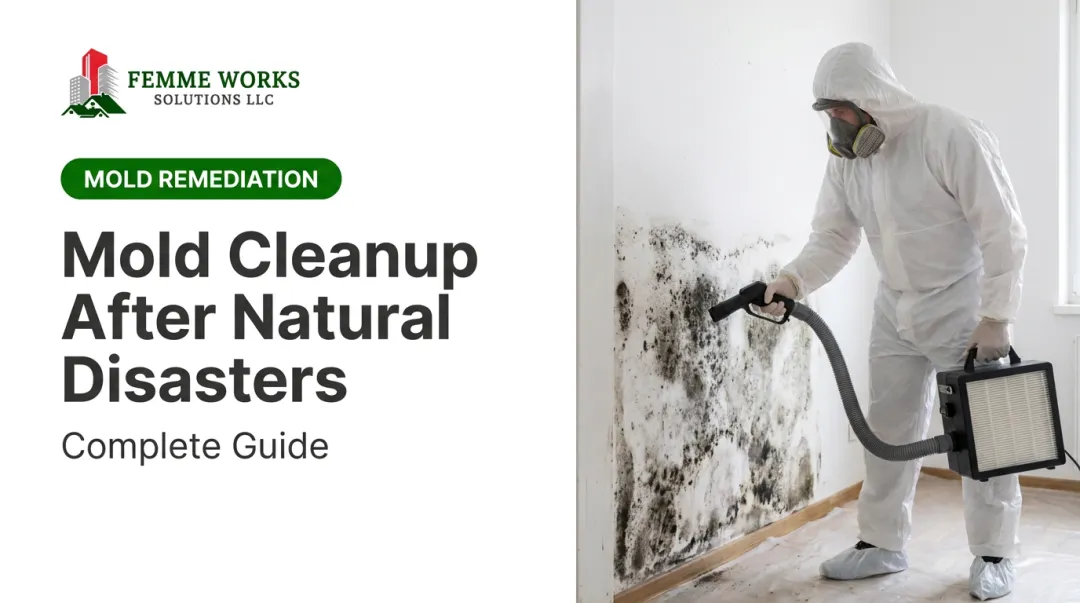
Water damage from leaks or floods can lead to significant mold growth within walls, ceilings, and flooring. Some molds release mycotoxins that cause serious health problems. Remediation is essential to protect workers and stop spores from spreading during demolition.
Key Factors That Influence a Remediation Strategy
No two remediation projects are identical. The strategy must be customized based on several critical factors.
- The specific contaminants and their spread determine the entire approach. A plan for friable asbestos pipe insulation is vastly different from one for PCB-contaminated soil, as the material's type, volume, and concentration dictate the methods and timeline.
- A building's unique conditions—including its structural integrity, accessibility, and proximity to neighbors—shape the work plan. A dense urban project, for instance, requires far stricter dust and noise controls than a remote industrial site.
- Navigating regulatory requirements is essential, as rules vary by material and location. State-specific DEP regulations in Massachusetts and New Hampshire can differ from federal EPA standards, and rules for a school are typically stricter than for a warehouse.
Your Project's Clean Slate Starts Here
Environmental remediation is not an optional add-on; it is the foundational first step of any safe, legal, and cost-effective demolition project. Understanding the process—from assessment to verification—empowers you to mitigate risks, protect health, and avoid the severe financial and legal fallout of non-compliance.
The most important decision you'll make is choosing your partner. Partnering with an experienced specialist who is fully certified and compliant with all DEP, EPA, and OSHA regulations ensures the job is done right, giving you a truly clean slate for whatever comes next.
Frequently Asked Questions
What environmental remediation tactics are used in demolition?
Tactics are chosen based on the contaminant. They include abatement for asbestos and lead, excavation for contaminated soil, and various forms of chemical or biological treatment to neutralize hazardous substances.
What is the difference between in-situ and ex-situ remediation?
In-situ means treating contaminants in place, like injecting chemicals into the soil. Ex-situ means removing the contaminated material (excavating it) and treating it at another location or disposing of it off-site.
Who is legally responsible for environmental remediation in a demolition project?
Under RCRA, the property owner has ultimate "cradle-to-grave" liability. Even with a certified contractor, the owner isn't absolved of responsibility, making it crucial to hire a compliant and insured professional.
How do I know if my property needs remediation before demolition?
Any building, especially one constructed before the 1980s, should undergo a professional site assessment and material survey. This is the only way to reliably identify potential hazards like asbestos, lead, and PCBs.
What happens if hazardous materials are discovered after demolition begins?
Work must stop immediately and the area must be secured to prevent disturbance. A certified remediation contractor is then required to assess the site and manage the hazardous material according to official protocols.
How long does environmental remediation typically take before demolition can start?
The timeline varies widely based on the project's scope. A small residential asbestos abatement may take just a few days, while a large industrial site with soil contamination could take weeks or even months.