Left untreated, mold can trigger respiratory issues, allergies, and other health problems. According to the Centers for Disease Control and Prevention (CDC), mold exposure can cause everything from a stuffy nose and coughing to more severe reactions in people with asthma. This guide will walk you through identifying the causes of attic mold, the steps for removal, and the crucial strategies for preventing its return.
TL;DR: Attic Mold Remediation Essentials
- Find the moisture source: Mold growth is caused by leaks, condensation, or poor ventilation.
- Call a certified professional: Attic mold almost always requires expert remediation to prevent cross-contamination and ensure complete removal.
- Fix the root cause: Address the moisture problem to prevent mold from returning permanently.
- Focus on prevention: Ensure proper attic ventilation, fix leaks quickly, and control humidity.
What Causes Mold in Your Attic?
Permanently solving an attic mold problem means eliminating its life source: moisture. Mold needs water, a food source (like wood, paper on drywall, or dust), and the right temperature to grow. In an attic, the moisture almost always comes from one of three culprits.
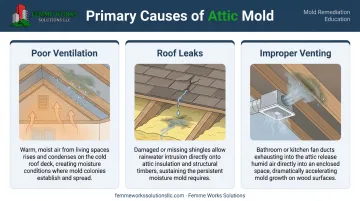
Poor Attic Ventilation
Your attic is designed to breathe. A proper ventilation system allows cool, dry air to enter through soffit vents (under the eaves) and exit through ridge or gable vents near the roof's peak. When this airflow is blocked or inadequate, warm, moist air rising from your living space gets trapped.
This humid air then hits the cold underside of your roof sheathing and condenses—turning from vapor back into liquid water. This constant condensation creates the perfect damp environment for mold to flourish on the rafters and plywood.
Roof Leaks and Water Intrusion
Even a minor roof leak can introduce enough water to fuel a major mold colony. These leaks are often slow drips that go unnoticed for months or even years. Look for tell-tale signs like water stains on the wood, discolored or clumpy insulation, and rusted roof nails.
Common sources of water intrusion include:
- Damaged or missing shingles
- Cracked flashing around chimneys, skylights, or vents
- Ice dams that form in winter, forcing water back up under the roofing material
Improper Venting
One of the most common and avoidable causes of attic mold is improper venting. Bathroom fans, kitchen range hoods, and clothes dryers should always be vented directly to the outside of the home. Venting them into the attic is a critical mistake.
This practice dumps gallons of warm, moisture-laden air directly into the enclosed space every week. The attic simply can't handle this concentrated humidity, leading to widespread condensation and aggressive mold growth.
Why Attic Mold Requires Professional Remediation
Attic mold is not a job to handle without professional training. The combination of porous wood surfaces, confined spaces, and the risk of disturbing contaminated insulation means that improper handling can spread spores throughout the home. Certified remediation companies follow strict EPA and OSHA protocols and use industry-grade equipment to ensure safe, complete removal.
When You Absolutely Need a Professional
It's time to call in certified experts when you encounter any of the following:
- The mold covers an area larger than 10 square feet.
- Mold has infested porous materials like insulation, drywall, or unsealed wood.
- You suspect mold is hidden behind walls or under flooring.
- A strong, musty odor persists throughout the house, not just in the attic.
- Anyone in your household has respiratory issues or is sensitive to mold.
A professional remediation company has the training and specialized equipment—like HEPA-filtered air scrubbers and negative air machines—to remove mold safely without cross-contaminating your home.
For homeowners in Massachusetts and New Hampshire, hiring a local, certified expert is crucial. A company like Femme Works Solutions, for example, uses its 15+ years of experience to adhere to strict EPA and OSHA safety protocols while protecting your family and property.
The 5-Step Professional Attic Mold Remediation Process
Attic mold remediation requires professional intervention to prevent cross-contamination and ensure complete eradication. Our certified process follows strict industry and safety protocols. Here's how our experts handle it.
Safety is our number one priority from start to finish.
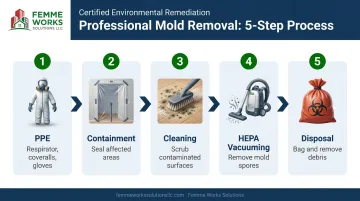
Step 1: Establish Safety Controls and Protective Gear
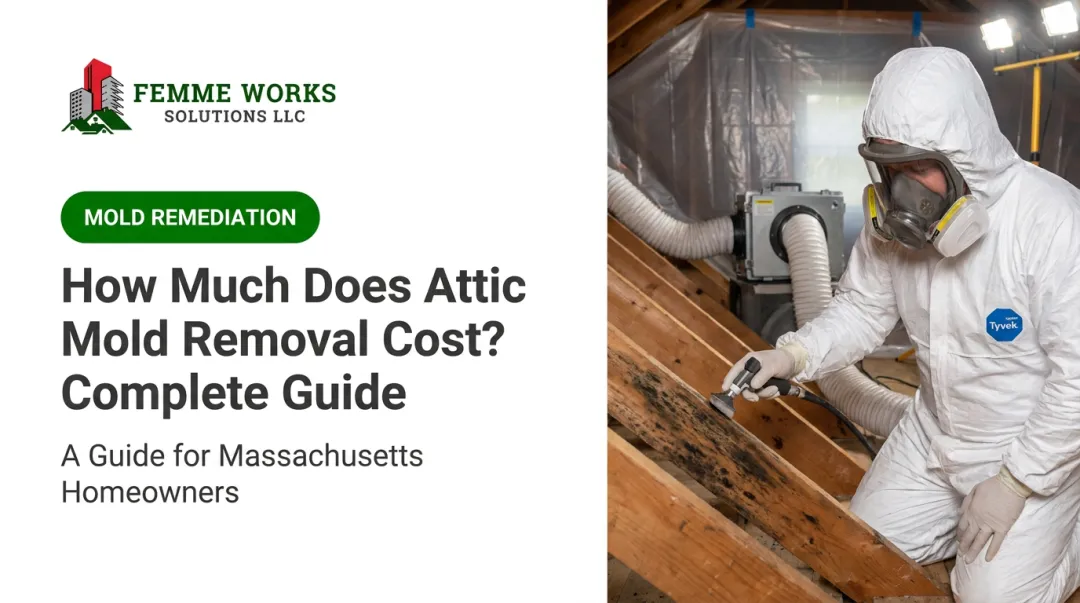
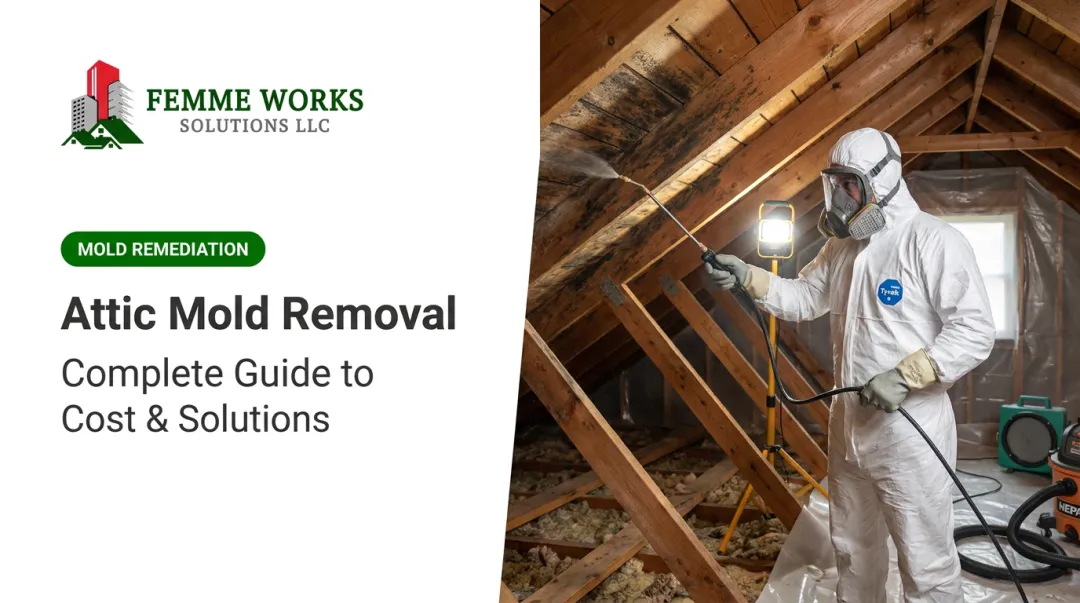
Before our technicians enter the attic, they suit up in full professional-grade Personal Protective Equipment (PPE) — including NIOSH-approved respirators, non-vented safety goggles, long-cuffed gloves, and disposable coveralls — to protect themselves from hazardous airborne spores. This is a non-negotiable first step.
Step 2: Contain the Area and Ventilate to the Outside
To prevent spores from spreading, we establish a full containment zone. This involves sealing off the attic entryway with heavy-duty plastic sheeting and using specialized equipment like negative air machines and air scrubbers to create a vacuum effect, ensuring all contaminated air is filtered and vented safely outside.
Step 3: Clean Affected Surfaces
Our team uses industry-approved techniques like wire brushing, sanding, or media blasting to physically remove mold from surfaces. We then apply EPA-registered antimicrobial agents designed to kill mold at its roots, especially in porous materials like wood. Simply scrubbing with detergent is not enough to eliminate the problem.
Step 4: HEPA Vacuum and Dry Thoroughly
Once the surfaces are clean, we use commercial-grade vacuums equipped with HEPA filters to capture any lingering spores from the air and surfaces. A standard shop vac would only spread them. Afterward, we deploy high-velocity fans and industrial dehumidifiers to ensure the attic is completely dry, eliminating the moisture that allows mold to return.
Step 5: Safely Dispose of Materials
Seal all contaminated materials—rags, brushes, disposable PPE, and any removed insulation—in heavy-duty plastic garbage bags. We seal the bags shut while still inside the containment area before safely removing them from your home for disposal according to local and state regulations for hazardous materials.
Common Mold Remediation Mistakes to Avoid
Improper mold handling can worsen the problem and create serious health risks. Here's what certified professionals are specifically trained to prevent:
- Using bleach on porous surfaces. The EPA advises against it for most mold issues. While bleach can kill surface mold, it can't penetrate porous materials like attic wood sheathing to eliminate the roots, meaning the mold often returns.
- Not fixing the underlying water issue. Simply cleaning visible mold is a temporary fix. If the root cause — a roof leak, condensation, or poor ventilation — is not addressed, the mold will inevitably return. A professional remediation plan always solves the water problem first.
- Spreading spores throughout your home. Disturbing mold without proper containment releases millions of spores into the air. These can travel through your HVAC system and contaminate your entire home, turning a localized issue into a widespread problem. Femme Works Solutions uses containment barriers and negative air machines to prevent this.
How to Prevent Attic Mold from Returning
Once your attic is clean and dry, preventing mold from returning is your top priority. Take these steps to keep your home safe.
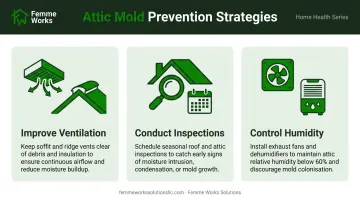
Improve Attic Ventilation
The goal is a cool, dry attic.
- Ensure your soffit vents are not blocked by insulation.
- Install baffles to maintain a clear channel for air to flow from the soffits.
- Check that your ridge or gable vents are clear of debris.
Conduct Regular Roof and Attic Inspections
Twice a year (in the spring and fall), do a quick check of your attic. Look for any new signs of water stains, active drips, or damp insulation. Catching a small leak early can prevent a massive mold problem later.
Control Indoor Humidity
The moisture in your attic often starts in your main living area. Keep your home's humidity level between 30% and 50%.
- Always use exhaust fans when cooking or showering.
- Make sure your clothes dryer vents directly outside.
- Consider using a dehumidifier in damp areas like basements.
These preventative measures are the most effective way to protect your investment in mold remediation and ensure your attic remains a healthy, safe part of your home. If you're unsure about your ventilation or suspect a new leak, a professional inspection can offer peace of mind.
Your Partner in Safe Mold Remediation in MA & NH
Attic mold remediation is a serious task where identifying the root cause and ensuring safety are the top priorities. Widespread, recurring, or structurally embedded mold requires professional expertise — attempting removal without proper training and equipment risks spreading contamination and leaving the problem unresolved.
For a comprehensive inspection and safe mold remediation in Massachusetts or New Hampshire, trust the certified experts at Femme Works Solutions. As a woman-owned business with over 15 years of experience and 80+ five-star reviews, we are committed to protecting your health with transparent, compliant, and guaranteed service.
Call us today at (978) 701-4140 or request your free inspection online.
Frequently Asked Questions
Can you kill mold just by spraying it?
No, spraying only kills surface mold. Effective removal requires physically scrubbing and removing the mold to eliminate its root structure and fixing the moisture source to stop it from growing back.
What are the first signs of mold in an attic?
The most common initial signs are a persistent musty odor, visible black or green stains on wood surfaces, damp or discolored insulation, and excessive condensation on the underside of the roof.
How much does professional attic mold remediation cost?
Costs vary widely based on your attic's size, the extent of the mold growth, and the materials involved. The only way to get an accurate price is through a professional inspection that results in a detailed, itemized quote.
Is attic mold covered by homeowners insurance?
It depends on the policy and the cause. Mold from a sudden, covered event like a storm-damaged roof might be covered, but mold from long-term neglect or poor maintenance is typically excluded.
Can I live in my house during attic mold remediation?
Yes, in most cases. Professionals use containment barriers and negative air pressure systems to completely isolate the attic, preventing any spores or dust from reaching your living spaces.
What's the difference between mold and mildew?
Mildew is a type of surface-level fungus, often appearing as a gray or white powdery patch. Mold is typically fuzzier or slimier, comes in various colors, and penetrates deeper into materials, causing more damage.