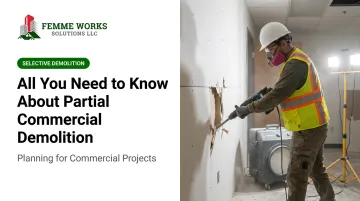
This guide is your starting point for understanding partial commercial demolition. We'll cover what it is, when it's the right choice, and how the process works from start to finish. Whether you're planning a tenant fit-out, a building addition, or modernizing an outdated facility, knowing the essentials of selective demolition is the first step to a successful project.
TL;DR: Key Takeaways
- Partial demolition removes specific building sections and is ideal for renovations or expansions.
- The process requires detailed planning, permits, and strict safety protocols to protect the structure.
- Safety is critical, especially when handling hazardous materials like asbestos found during work.
- Hiring a licensed, experienced contractor is the key to an on-time, on-budget project.
What is Partial Commercial Demolition?
Partial commercial demolition, also known as selective demolition, is the surgical removal of specific interior or exterior components of a structure while preserving the rest of an operational building.
Unlike complete demolition, which levels an entire building to clear a lot, the goal of partial demolition is to prepare a space for renovation, retrofitting, or additions. It's about precision and strategy, not brute force.
Common Types of Partial Demolition
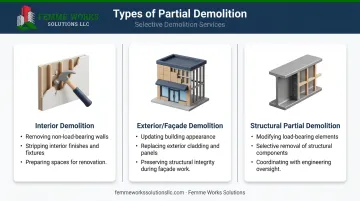
The scope of work is tailored to the project's specific goals and often includes:
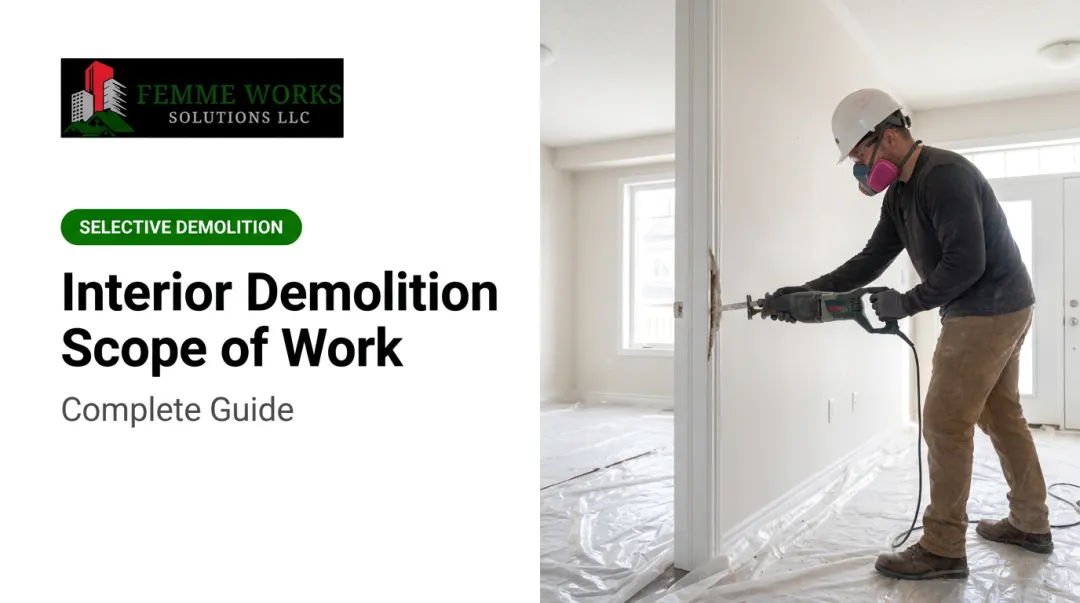
- Interior Demolition: The most common type, this involves gutting interior spaces. Crews remove non-load-bearing walls, ceilings, and MEP systems to create a "white box" ready for a new tenant build-out.
- Exterior/Façade Demolition: This focuses on removing a building's outer skin, like cladding or storefronts, to update its appearance or fix structural issues. This is often done while the building remains operational.
- Structural Partial Demolition: The most complex type, this targets load-bearing elements like walls or columns for major additions or reconfigurations. It requires extensive engineering and shoring to ensure building stability.
When to Choose Partial Demolition Over a Complete Teardown
Deciding between selective demolition and a complete teardown is a strategic choice for property owners and developers. While a full teardown has its place, partial demolition is often the smarter, more cost-effective option in several key scenarios.
- Preparing for new tenants by reconfiguring an existing layout. This is essential when converting a large store into smaller units or gutting an office for a modern design.
- Integrating building additions by creating seamless connection points. This involves carefully removing sections of walls to connect a new wing or floor to the existing structure.
- Upgrading buildings for modernization or code compliance. Selective demolition allows access to hidden infrastructure for updating electrical and plumbing or meeting ADA compliance for accessibility.
- Preserving historic buildings with significant façades or structural elements. This method allows for modernizing the interior while protecting the building's historical character and value.
The Partial Commercial Demolition Process: A Step-by-Step Guide
Partial commercial demolition is a carefully planned, multi-step process designed to ensure safety, efficiency, and predictability. Here's what you can expect.
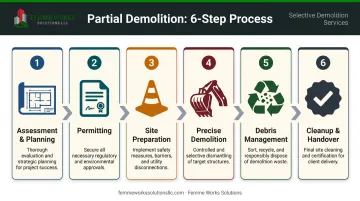
Step 1: Engineering Assessment and Strategic Planning
Before a single wall comes down, a thorough structural survey is non-negotiable. As required by OSHA, a competent person must assess the building's condition to identify all load-bearing elements. This phase also involves mapping out utilities like electrical, plumbing, and gas lines to create a detailed demolition plan that guarantees the building's stability throughout the project.
Step 2: Permitting and Regulatory Approvals
Proper permitting is critical. In our operating areas of Massachusetts and New Hampshire, this involves securing approvals from local authorities.
This process includes environmental checks, especially for hazardous materials. For example, any project involving asbestos requires a notification to be filed with MassDEP at least 10 working days before work begins. A professional contractor handles all necessary paperwork to ensure full compliance.
Step 3: Site Preparation and Safety Measures
With a plan and permits in hand, the crew prepares the work zone. This involves:
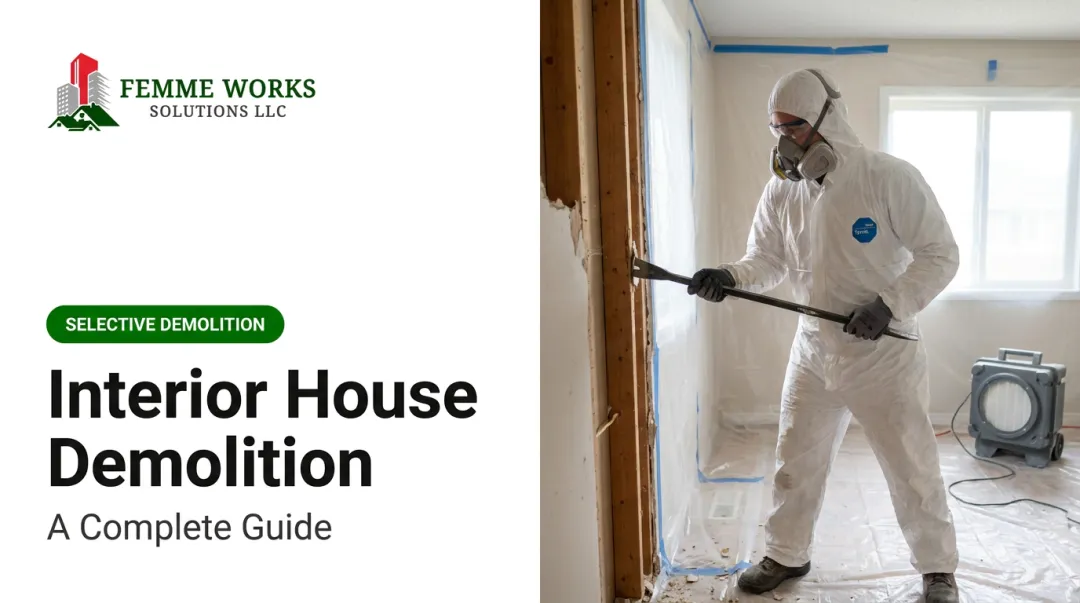
- Installing dust barriers and protective coverings for fixtures that will remain.
- Establishing negative air pressure systems if hazardous materials are present.
- Setting up clear safety protocols, signage, and restricted access zones.
- Shutting off and capping all relevant utility lines feeding into the demolition area.
Step 4: Precise Demolition and Deconstruction
This is where the skilled work begins. Crews use a combination of specialized equipment—like compact excavators, robotic hammers, and concrete saws—and manual techniques to carefully dismantle the targeted structures. Every cut, break, and removal is done with precision to avoid impacting the remaining structure.
Step 5: Debris Management and Recycling
Demolition generates a massive amount of waste. In 2018 alone, the U.S. generated over 600 million tons of construction and demolition (C&D) debris, with over 90% coming from demolition.
Responsible contractors sort materials like metal, concrete, and wood on-site for recycling. In Massachusetts, materials like asphalt, brick, concrete, metal, and wood are actually banned from landfills, making proper sorting and recycling a legal requirement.
Step 6: Site Cleanup and Handover
The final step is preparing the site for the next phase. The crew conducts a thorough cleaning of the space, removing all equipment and leftover debris. A final inspection ensures the area is safe, stable, and ready for the construction or renovation team to take over.
Critical Safety and Compliance Considerations
Partial demolition involves unique risks that demand expert management. More than just knocking down walls, it's about protecting people, property, and the environment.
Structural Integrity
The number one priority is protecting the remaining structure. Any mistake could compromise the entire building. Professional crews use temporary supports, shoring, and bracing to ensure stability, especially when removing load-bearing elements. This is a job for experienced engineers and demolition experts, not a general laborer.
Hazardous Material Abatement
Older commercial buildings are often full of hidden hazards. Selective demolition frequently uncovers materials like lead paint, mold, and asbestos in walls, ceilings, flooring, and pipe insulation.
According to OSHA, any thermal insulation and surfacing material in buildings constructed no later than 1980 is presumed to contain asbestos until proven otherwise. Federal (EPA, OSHA) and state regulations require that these materials be handled and removed only by certified and licensed professionals.
This is where an integrated contractor can save you significant time and headaches. A company like Femme Works Solutions, certified in both selective demolition and asbestos abatement, streamlines the project.
Using a single, certified team for both tasks prevents the costly delays and communication gaps that arise with separate contractors. This integrated approach ensures the entire process is managed seamlessly and maintains full compliance from start to finish.
Utility Management
Working around live utilities is incredibly dangerous. A clear lockout/tagout procedure is essential to ensure electrical, gas, and water lines are fully deactivated before work begins. This requires careful coordination with utility companies and a meticulous on-site verification process.
Worker and Public Safety
Protecting people is paramount. This includes the on-site crew as well as any tenants, employees, or pedestrians nearby. Key safety measures include:
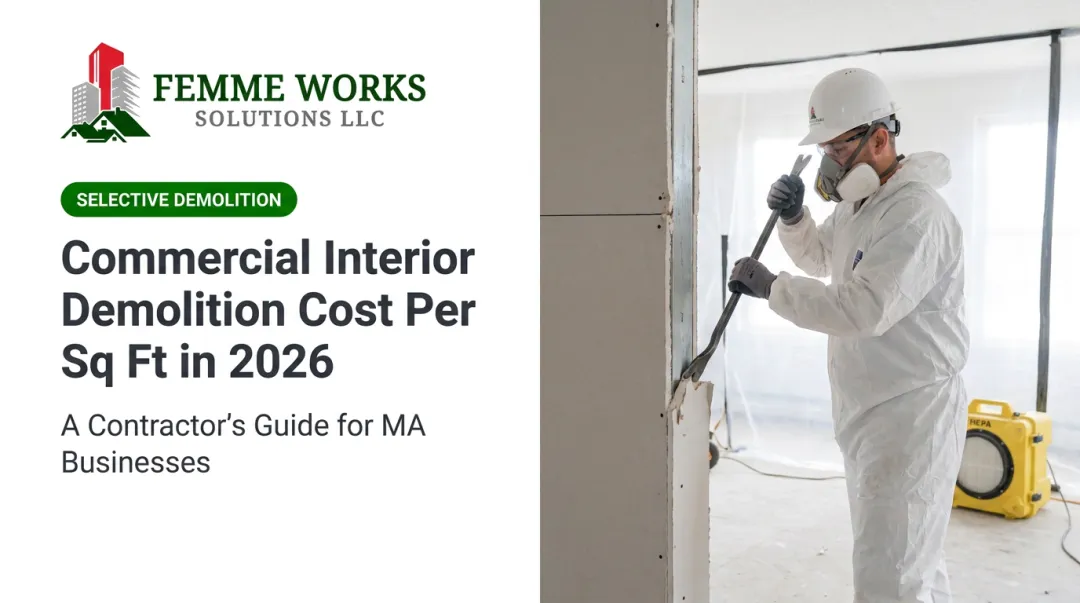
- Dust Control: Using water mists and HEPA-filtered air scrubbers to manage airborne particles.
- Noise Mitigation: Scheduling loud activities during off-hours and using sound-dampening materials.
- Securing the Work Area: Using sturdy barriers and clear signage to prevent unauthorized entry.
Choosing the Right Partial Demolition Contractor
The success of your project hinges on hiring the right partner. Here's what to look for when vetting a contractor for your project in Massachusetts or New Hampshire.
- Confirm they hold all required state licenses for demolition and, if needed, asbestos abatement. Ask for proof of comprehensive liability and workers' compensation insurance—this is a non-negotiable step.
- Look for a specialist, not a generalist. Your contractor should have a proven track record in selective commercial demolition. Ask for case studies or references from similar projects to verify their expertise.
- Ask about their safety and compliance records. A reputable contractor will readily share their OSHA compliance history and processes for handling hazardous materials according to local and federal regulations.
Ready to take the next step in transforming your commercial space? Contact the certified professionals at Femme Works Solutions for a consultation.
Frequently Asked Questions
What is partial commercial demolition?
It's the selective removal of specific building components, like interior walls or an old façade, to prepare a space for renovation or remodeling while leaving the main structure intact.
What is the difference between partial and complete commercial demolition?
Partial demolition renovates a building for reuse, focusing on specific sections. Complete demolition removes the entire structure to clear the land for new construction.
How much does partial commercial demolition cost?
Costs vary widely based on project size, complexity, accessibility, and whether hazardous material abatement is needed. For an accurate estimate, it's best to get a site-specific quote from a licensed and insured contractor, especially if hazardous materials like asbestos are a concern.
What are the main types of commercial demolition?
The two main categories are complete (total) demolition and partial (selective) demolition. Partial demolition can be further broken down into sub-types like interior, exterior, and structural demolition.