This guide is here to cut through the noise. We'll give you a clear, practical plan for identifying potential mold, understanding the real risks, and knowing exactly when you can handle it yourself versus when it’s time to call a professional. Your health and your home's integrity are too important for guesswork.
TL;DR: Identifying and Handling Mold
- Look for slimy, fuzzy, or soot-like spots in dark green, gray, or black.
- Trust your nose—a persistent musty or earthy smell is a major warning sign.
- Inspect damp, dark areas like basements, bathrooms, and under sinks.
- Treat all indoor mold as a health risk that can cause allergies and breathing issues.
- Call professionals for mold covering over 10 sq. ft. or if it's hidden from view.
What is Black Mold, Really? More Than Just a Color
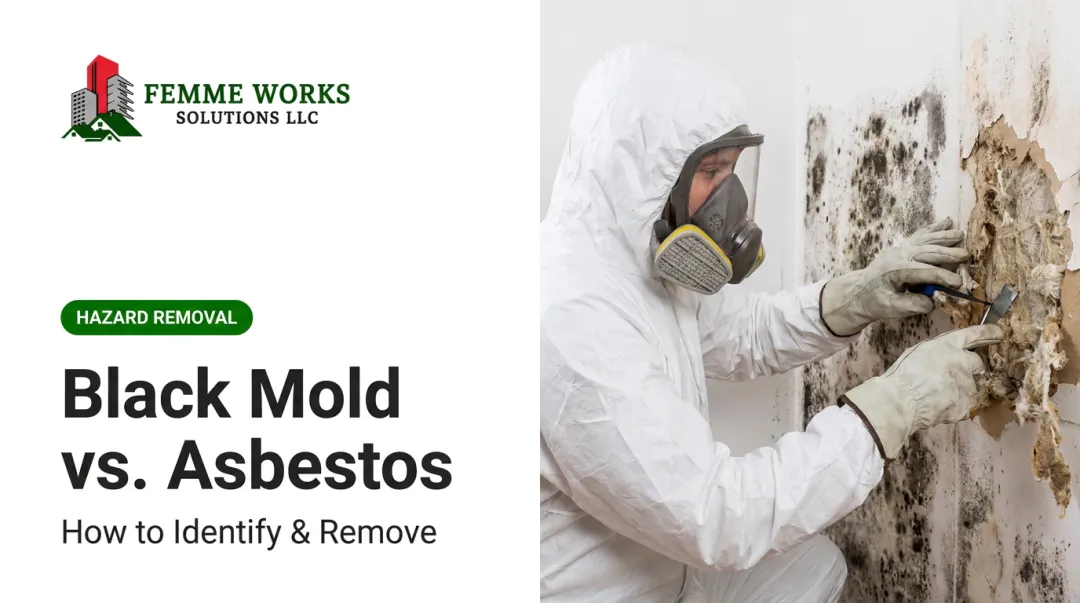
The term “black mold” typically refers to Stachybotrys chartarum, a greenish-black mold that can grow on materials high in cellulose, like drywall and fiberboard. It has a reputation for being "toxic" because it can produce mycotoxins.
However, the Centers for Disease Control and Prevention (CDC) makes a critical point: many types of mold are black, and you can't determine if a mold is dangerous just by looking at it. Ultimately, any mold growing inside your home is a sign of a moisture problem that needs to be fixed.
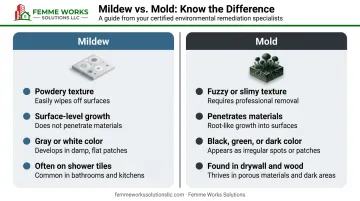
It's also helpful to distinguish between mold and mildew:
- Mildew is a surface-level fungus that looks powdery and often grows on shower tiles.
- Mold is a deeper fungus that penetrates materials like wood and drywall, causing more significant damage.
A 3-Step Guide to Identifying a Mold Problem in Your Home
If you suspect you have a mold issue, a systematic check can help you confirm it. Here’s how to investigate safely.
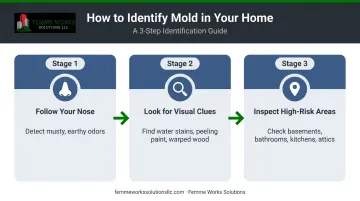
Step 1: Follow Your Nose (The Odor Test)
Your sense of smell is one of your best tools for detection. Mold has a distinct odor that's often described as musty, earthy, or similar to the smell of rotting leaves or damp soil.
Because mold can thrive behind walls, under carpets, or above ceiling tiles, a persistent musty smell is often the first sign of a hidden problem. If a room smells damp and musty even when it's dry, it’s worth a closer look.
Step 2: Look for Visual Clues and Water Damage
If you smell something, the next step is a visual inspection. Black mold may appear slimy and wet with an active moisture source, or dry and powdery if the source has dried up.
Don't just look for mold itself. Look for the signs of the water problems that allow it to grow. Use a flashlight to check dark corners, inside cabinets, and behind appliances for clues like:
- Water stains or discoloration on ceilings, walls, or floors
- Peeling, bubbling, or cracking paint or wallpaper
- Warped wood or bulging drywall
- Visible condensation on windows or pipes
Step 3: Inspect High-Risk Areas
Mold won't grow just anywhere. It needs moisture, so focus your search on the dampest parts of your home. Grab your flashlight and check these common hotspots:
- Bathrooms: Around showers, tubs, sinks, and toilets, and inside vanities.
- Kitchens: Under the sink, behind the refrigerator, and around the dishwasher.
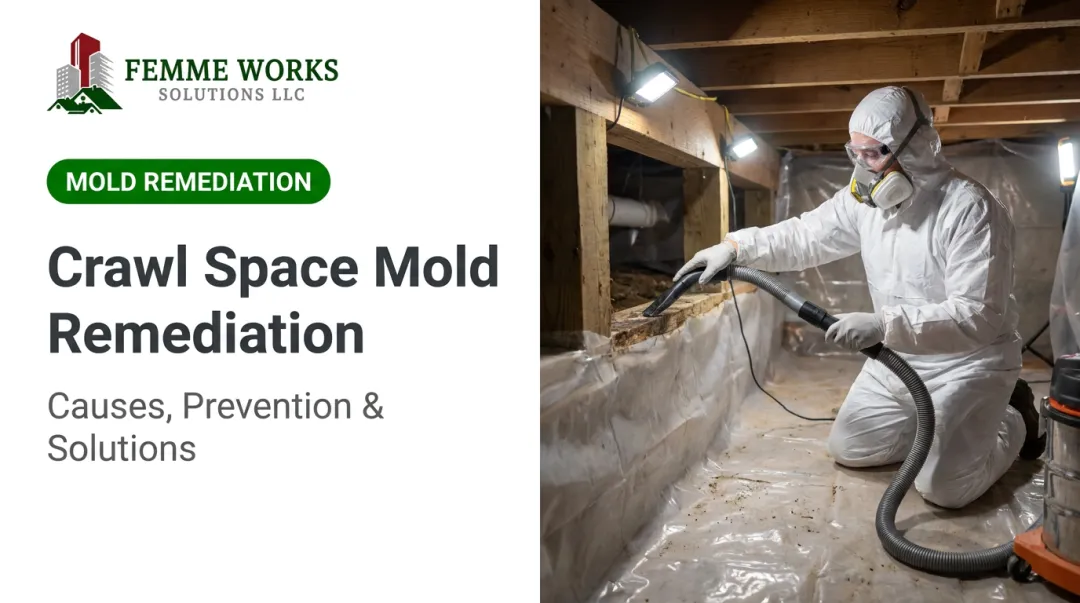
- Basements and Crawl Spaces: Pay close attention to corners, areas with past flooding, and around sump pumps.
- Windows: On sills and frames where condensation collects.
- HVAC Systems: Around air conditioning units, intake vents, and inside ductwork.
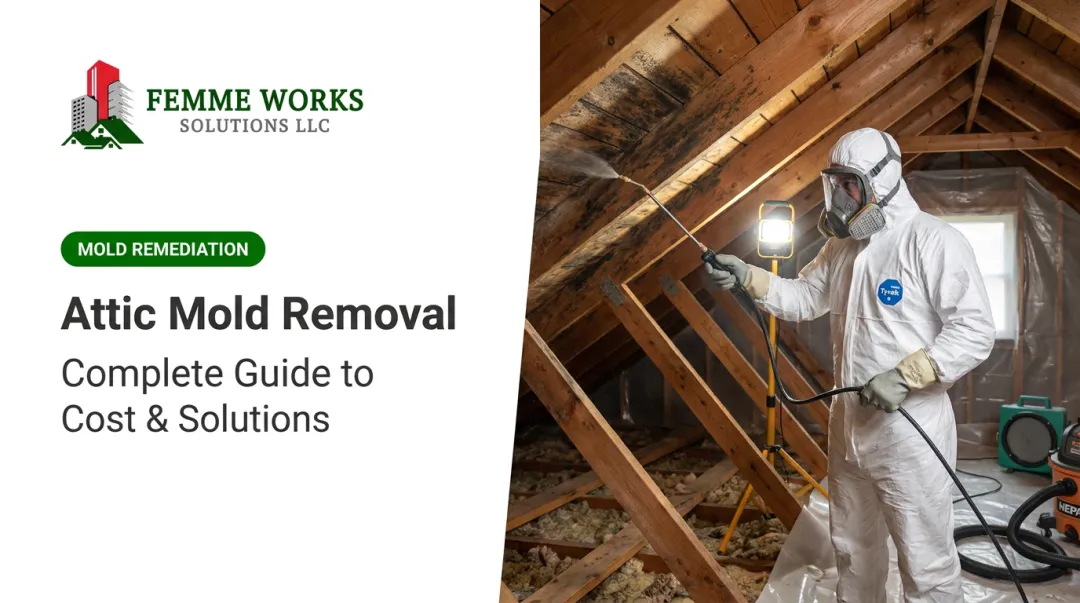
- Attics: Especially if you've had roof leaks or poor ventilation.
In older homes across Massachusetts and New Hampshire, fieldstone foundations and aging plumbing can create persistent dampness, making basements particularly vulnerable to mold growth.
The Dangers of Mold Exposure: Risks to Your Health and Property
Finding mold isn't just a cosmetic issue. It poses real risks to your family's health and your home's structure.
Health Risks Associated with Mold
According to the EPA, mold exposure can trigger a range of health issues, primarily affecting the respiratory system. The most common effects are allergic reactions and irritation. Symptoms can include:
- Sneezing and runny or stuffy nose
- Red, itchy eyes
- Skin rashes
- Coughing and wheezing
Reactions can be more severe for those with asthma or mold allergies, often triggering asthma attacks. The CDC warns that children, the elderly, and individuals with compromised immune systems face the highest risk of serious health complications.
Structural Damage to Your Property
Mold isn't just sitting on a surface; it's actively consuming it. It survives by digesting the organic materials it grows on, such as the cellulose in drywall, paper backing on insulation, and wood framing.
If left untreated, this process can compromise the structural integrity of your home. Wood can rot, drywall can crumble, and flooring can weaken. Over time, a small mold problem can lead to thousands of dollars in repairs—costing far more than the initial mold remediation.
What to Do When You Find Mold: Getting Professional Remediation
When mold is found, contacting a certified remediation professional is the safest path. A licensed team can accurately assess the full extent of contamination, contain the affected area, and remove mold safely following EPA, OSHA, and DEP protocols.
When to Call a Professional Immediately
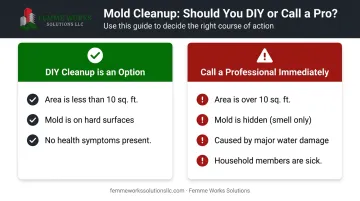
Mold problems require professional remediation to prevent spreading spores and creating larger health hazards. Call a professional immediately if you encounter any of these scenarios:
- The moldy area is larger than 10 square feet.
- You smell mold but can't find it, suggesting it's hidden inside walls, under floors, or in your HVAC system.
- The mold growth is the result of major water damage or sewage backup.
- Household members are already experiencing mold-related health symptoms.
If you're facing these issues, contact a certified and insured specialist. Professional remediation teams use state-of-the-art equipment like HEPA air scrubbers and negative air machines to contain and remove mold safely.
For homeowners in Massachusetts and New Hampshire, a local certified company like Femme Works Solutions can provide remediation services that comply with all EPA and OSHA protocols, ensuring the underlying moisture source is fixed to prevent regrowth.
How to Prevent Mold Growth Before It Starts
The single most effective way to prevent mold is to control moisture. Mold spores are everywhere, but they can't grow without water. Here are a few actionable steps to keep your home dry and mold-free.
- Control Humidity: Keep indoor humidity levels between 30% and 50%. Use dehumidifiers and air conditioners during humid months.
- Improve Ventilation: Use exhaust fans in bathrooms and kitchens to vent moisture outside. Make sure your clothes dryer vents to the exterior.
- Fix Leaks Promptly: Repair any leaks in your roof, walls, or plumbing as soon as you find them.
- Dry Spills Quickly: According to the EPA, mold can begin to grow on a damp surface in as little as 24 to 48 hours. Clean and thoroughly dry any areas after a spill or flood within this timeframe.
- Manage Condensation: Ensure your home has proper insulation on exterior walls, windows, and pipes to reduce condensation buildup.
However, if you've already found significant mold or a persistent moisture problem that these steps can't solve, it's time to call a professional. A certified mold remediation specialist has the right equipment and training to safely remove contamination and fix the underlying issue for good.
Frequently Asked Questions
How to tell if it's toxic black mold?
You can't identify "toxic" mold by sight alone, as many types of mold are black. All indoor molds should be treated with caution, as they can cause health issues. The only way to confirm the species is through professional lab testing.
What can be mistaken for black mold?
Common look-alikes include simple dirt, soot from candles or a fireplace, and mildew. Dark-colored mildew can look similar but is a surface-level fungus, while mold penetrates deeper into the material.
Can you still live in a house with black mold?
It is not recommended, especially for sensitive individuals. While a small, isolated area might be contained, a significant infestation requires immediate professional remediation and potential temporary relocation for safety.
Can I just paint over mold?
No, this is a dangerous mistake. Painting over mold doesn't kill it; the mold will continue to grow underneath the paint, destroying the drywall or wood. The moisture source must be fixed and the mold properly removed first.
What is the first step to prevent mold?
The single most important step is to control moisture. This means fixing all leaks, ensuring good ventilation in bathrooms and kitchens, and using a dehumidifier to keep indoor humidity levels low.