Understanding the difference between licensed and non-licensed asbestos removal is critical for ensuring the safety of your family or employees, staying compliant with the law, and managing costs. This guide breaks down the key distinctions based on US regulations, helping you make an informed decision. The right approach always depends on the type of material, its condition, and the risk of releasing dangerous asbestos fibers into the air.
Key Takeaways
- Licensed Removal: Required for high-risk, friable materials (like pipe insulation) and involves strict government oversight.
- Non-Licensed Removal: Applies to low-risk, solid materials (like vinyl tiles) with less formal regulatory rules.
- The Key Difference: "Friability"—how easily a material crumbles and releases fibers—determines the license type needed.
- Always Consult a Pro: Misclassifying the work can lead to severe health risks and major legal penalties.
Licensed vs. Non-Licensed Asbestos Removal: A Quick Comparison
To understand the core differences at a glance, here’s a simple breakdown of the two approaches.
| Feature | Licensed Removal | Non-Licensed Removal |
|---|---|---|
| Risk Level | High-risk. Materials are friable or can easily become friable. | |
| Common Materials | Sprayed acoustic ceilings, thermal pipe insulation, asbestos insulating board (AIB), loose-fill insulation. | Asbestos cement products (siding, roofing), vinyl floor tiles, roofing felt, gaskets. |
| Regulatory Oversight | Strict adherence to EPA, OSHA, and state regulations (e.g., MassDEP). Requires advance notification to government agencies. | Governed by OSHA safety standards, but with fewer formal notification requirements. |
| Required Procedures | Full containment enclosures, negative air pressure machines, decontamination units, extensive PPE, third-party air monitoring. | Wetting materials, using hand tools to minimize dust, HEPA vacuums, and appropriate PPE. |
What is Licensed Asbestos Removal?
Licensed asbestos removal is a tightly regulated process designed for handling materials that pose a significant threat of releasing asbestos fibers. This work is legally required for materials classified as friable, which the EPA defines as any material containing more than 1% asbestos that can be crumbled, pulverized, or reduced to powder by hand pressure when dry. Think of old, brittle insulation wrapped around a pipe—if you can crush it with your hand, it's friable.
This type of removal is considered a Class I asbestos work activity by OSHA, the highest risk category.
Key Characteristics of Licensed Removal Work
Because the risk is so high, the safety protocols are incredibly stringent. A licensed project isn't just about careful removal; it's about creating a completely sealed and controlled environment.
Key protocols include:
- Creating full containment by completely sealing the work area from the rest of the building with thick plastic sheeting to trap airborne fibers.
- Using HEPA-filtered machines to establish negative air pressure, which ensures air flows into the sealed zone, not out of it.
- Establishing multi-stage decontamination units that workers must pass through, including an equipment room, shower, and clean room.
- Filing legal notifications with government agencies before work begins, such as the 10-day notice required by MassDEP in Massachusetts.
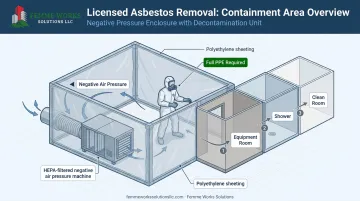
Common materials that almost always require licensed removal are sprayed-on "popcorn" ceilings, thermal insulation on pipes and boilers, and asbestos insulating board (AIB).
What is Non-Licensed Asbestos Removal?
Non-licensed asbestos removal involves handling asbestos-containing materials (ACMs) that are considered low-risk. This is because the dangerous fibers are firmly locked within a solid matrix, making them unlikely to become airborne if handled correctly. This work generally applies to non-friable materials.
However, "non-licensed" does not mean "unregulated"—a common misconception. Even for these lower-risk projects, professionals must be properly trained to handle the materials safely.
They are required to follow specific precautions outlined in OSHA's asbestos standards for the construction industry to keep the material intact and prevent fiber release.
Examples of Non-Licensed Asbestos Work
The critical factor for non-licensed work is that the material must be in good, solid condition. If it's damaged, the risk level changes immediately.
Common non-licensed projects include:
- Removing intact asbestos cement siding or roofing sheets.
- Lifting vinyl asbestos floor tiles in whole pieces.
- Disposing of asbestos-containing gaskets or roofing felt.
The key is to remove these materials without breaking, cutting, sanding, or grinding them. If a non-friable material like an asbestos cement sheet is shattered into pieces, the work may escalate to a state requiring licensed-level precautions because the fibers are no longer safely contained.
How to Determine Which Type of Removal You Need
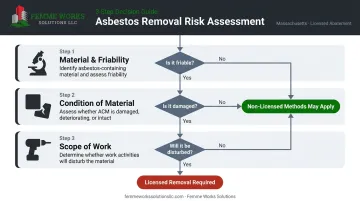
As a property owner, determining the right course of action starts with a basic risk assessment. Ask yourself these three questions to get a clearer picture.
1. What is the Material and is it Friable?
The first step is identification. Some materials, like old pipe lagging, are almost always high-risk. Others, like floor tiles, vinyl sheeting, or ceiling tiles, are impossible to identify by eye. You'll need professional testing from a certified lab to confirm if asbestos is present and, if so, what type. This analysis is the foundation for any safe removal plan and is a service licensed contractors can manage for you.
2. What is the Condition of the Material?
Condition is just as important as the material itself. An intact asbestos cement siding panel poses a low risk. A pile of broken, weathered pieces of that same siding is a much higher risk because the edges are exposed and can release fibers.
For example, intact vinyl floor tiles can often be removed using non-licensed methods. But if those same tiles are cracked, crumbling, or have been damaged over time, the risk of fiber release increases significantly.
3. What is the Scope of the Work?
Finally, consider what needs to be done. A project that involves carefully unscrewing and removing an asbestos panel whole is very different from a demolition that requires cutting, drilling, or breaking it. Any action that creates dust dramatically increases the risk. A professional will assess the planned work to determine if it will disturb the material and make it friable. This assessment is a critical first step in any licensed asbestos abatement project.
Why You Should Always Hire a Certified Professional
Even for projects in the non-licensed category, asbestos work without proper training and certification is a dangerous gamble. Certified professionals use specific techniques, like wetting materials and using specialized HEPA vacuums, to minimize dust. They also follow the legal requirements for waste disposal, which are strict for all types of asbestos, and maintain the necessary regulatory compliance throughout the project.
Hiring a fully licensed and insured contractor provides peace of mind. A company like Femme Works Solutions is certified and compliant with all EPA, OSHA, and Massachusetts DEP protocols. This ensures every project—licensed or not—is handled safely, protecting both your health and property value.
As a Woman/Minority-Owned business with over 15 years of experience, we also pride ourselves on transparent, expert service that has earned the trust of communities across the region.
If you suspect you have asbestos in your Massachusetts or New Hampshire property, don't guess. Contact the certified experts at Femme Works Solutions for a professional assessment and a clear, transparent plan for safe removal.
Frequently Asked Questions
What is an example of non-licensed asbestos work?
A common example is the careful removal of intact asbestos cement roofing sheets or non-friable vinyl asbestos floor tiles. The key is that the material is in good condition and can be removed without breaking it apart.
What is the maximum amount of asbestos you can remove without a license?
In the US, rules focus on the material's condition (friability), not a specific square footage limit. Most renovation and demolition projects fall under EPA regulations, which typically require a professional survey regardless of the amount.
Do I need a license to remove asbestos from my own home?
Some states (like MA and NH) allow exemptions for homeowners working on their own single-family homes, but it is extremely risky. You must still follow strict disposal regulations and use specialized safety equipment, making professional removal the safest option.
What is the difference between friable and non-friable asbestos?
Friable asbestos (e.g., old insulation) crumbles easily by hand and readily releases dangerous fibers. Non-friable asbestos has fibers locked in a solid material like cement or vinyl and only becomes hazardous if drilled, sawn, or broken.
What are the legal penalties for improper asbestos removal?
Penalties are severe and include tens of thousands of dollars in fines from agencies like the EPA. Authorities can also issue stop-work orders, and you could face civil lawsuits for endangering public health.
How is asbestos waste disposed of?
All asbestos waste is considered hazardous. It must be sealed in specially marked, leak-proof bags or containers while still wet. It is then transported to a landfill that is specifically licensed to accept asbestos-containing materials.