The terms "asbestos abatement" and "asbestos removal" get thrown around, often interchangeably. But they aren't the same thing. Understanding the difference is critical for making a safe, cost-effective, and legally compliant decision for your property. This guide breaks down exactly what each term means and which approach is right for your situation.
TL;DR: Abatement vs. Removal
- Asbestos Abatement is the broad term for any procedure used to control asbestos-containing materials (ACMs) and prevent fiber release. It's the overall strategy to make an area safe.
- Asbestos Removal is a specific type of abatement that involves physically taking all ACMs out of the building. It's the most permanent but often most disruptive solution.
- Other abatement methods include encapsulation (sealing the asbestos) and enclosure (building a barrier around it).
- The right choice depends on the material's condition, location, and your future plans for the property, and always requires a professional assessment.
Asbestos Abatement vs. Removal: A Quick Comparison
While removal is a form of abatement, the choice between removing asbestos and managing it in place involves different goals, costs, and long-term responsibilities.
| Aspect | Asbestos Abatement | Asbestos Removal |
|---|---|---|
| Scope | A broad process including removal, encapsulation, or enclosure to make an area safe. | A specific action focused only on physically eliminating asbestos materials. |
| Primary Goal | To control the hazard and eliminate exposure risk, which may not require physical removal. | To permanently eliminate the source of the asbestos hazard from the building. |
| Common Use Cases | Used when materials are intact, hard to access, or removal would cause structural damage. | Required when materials are damaged (friable) or will be disturbed by renovations or demolition. |
| Upfront Cost | Generally lower for non-removal methods (encapsulation or enclosure). | Higher due to intensive labor, containment protocols, and specialized disposal. |
| Long-Term Outlook | If asbestos remains, it requires ongoing monitoring and must be disclosed upon property sale. | A permanent solution that can increase property value, with no future management needed. |
What is Asbestos Abatement? (The Overall Strategy)
Asbestos abatement is the umbrella term for all procedures used to control the release of asbestos fibers. Regulated by agencies like the Environmental Protection Agency (EPA) and the Occupational Safety and Health Administration (OSHA), the primary goal of any abatement project is to protect human health.
According to the EPA's Asbestos Hazard Emergency Response Act (AHERA), a "response action" can include several different approaches. The method chosen depends on the material's condition and location.
The Main Types of Asbestos Abatement
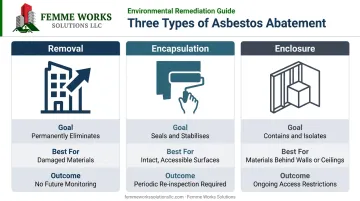
There are three primary methods a certified professional might recommend:
- Removal is the physical extraction of asbestos-containing materials (ACMs). As the most common and permanent solution, it completely eliminates the hazard from the property.
- Encapsulation coats the material with a special sealant that binds asbestos fibers together, preventing them from becoming airborne. It’s a viable option for materials in good condition.
- Enclosure involves building an airtight barrier, like a new wall, around the ACMs to isolate them. The asbestos is left in place but is safely sealed off from the environment.
What is Asbestos Removal? (The Permanent Solution)
Asbestos removal is the most definitive form of abatement. It involves the complete and safe extraction of all asbestos-containing materials from a designated area. It is a highly regulated process that requires licensed and certified professionals to perform safely and legally in compliance with EPA, OSHA, and DEP regulations.
Improper removal can be more dangerous than leaving the material alone, as it can release dangerous concentrations of asbestos fibers into the air.
The Asbestos Removal Process at a Glance
A professional removal project follows strict, methodical steps to ensure safety and compliance.
- Assessment and Planning: A certified inspector identifies the location and condition of all ACMs. They create a site-specific removal plan that complies with all state and federal regulations.
- Containment: The work area is sealed with thick plastic sheeting and placed under negative air pressure. This step prevents cross-contamination by ensuring contaminated air cannot escape, maintaining a pressure differential required by OSHA regulations.
- Removal and Disposal: Technicians wearing full personal protective equipment (PPE) wet the materials to minimize dust before removal. All ACMs are then sealed in specially labeled, leak-proof bags for transport to a licensed hazardous waste facility.
- Final Cleaning and Clearance Testing: The contained area is meticulously cleaned using HEPA (High-Efficiency Particulate Air) vacuums. A third-party industrial hygienist often performs air testing to confirm that the fiber count is below the safe threshold for re-occupancy.
Abatement vs. Removal: Which is Right for Your Property?
The best approach isn't a one-size-fits-all answer. A certified asbestos contractor will evaluate several key factors to recommend a plan, with the condition of the material being paramount.
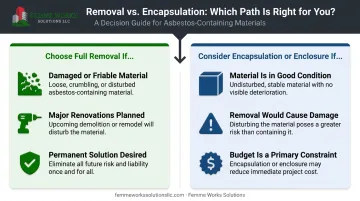
You should consider full removal if:
- The ACM is damaged (friable): Material that is crumbling, flaking, or water-damaged is considered "friable asbestos" by the EPA and is highly likely to release dangerous fibers.
- Major renovations are planned: Any work that will disturb the ACM (like cutting, drilling, or sanding) requires full removal to ensure safety during the project.
- A permanent solution is desired: Removal provides complete peace of mind, eliminates future monitoring, and removes disclosure requirements for property sales.
You might consider encapsulation or enclosure if:
- The ACM is in good, stable condition: If the material is intact and in an area where it's unlikely to be disturbed, managing it in place is often a safe, effective option.
- Removal would cause significant damage: Asbestos is sometimes integrated with complex pipe systems or structural elements, making removal more destructive than abatement.
- Budget is a primary constraint: While encapsulation has a lower upfront cost, it is not a permanent fix. The asbestos remains and requires long-term management.
Even with encapsulation or enclosure, the presence of asbestos must be managed over the long term and disclosed to future buyers.
Why a Certified Professional is Crucial for Your MA or NH Property
Navigating asbestos regulations is complex, and states like Massachusetts and New Hampshire have specific protocols under MassDEP and NHDES on top of federal EPA and OSHA requirements. Choosing a certified, insured, and experienced contractor is non-negotiable for the safety of your family, tenants, or employees. This work must not be delegated to a general contractor or handyman without proper asbestos certification.
For homeowners and property managers in Massachusetts and New Hampshire, Femme Works Solutions offers the specialized expertise required. We ensure every project is handled safely, from initial assessment to final clearance testing, backed by:
- Over 15 years of experience in asbestos abatement.
- Full licensing and compliance with all EPA, OSHA, MassDEP, and NHDES protocols.
- Transparent communication and meticulous work.
- A trusted reputation, reflected in our 97 five-star Google reviews.
- MBE certification as a woman and minority-owned business.
Don't leave your safety to chance. Contact Femme Works Solutions at (978) 701-4140 for a comprehensive assessment and a clear plan to make your property safe.
Frequently Asked Questions
What is the definition of asbestos?
Asbestos is a naturally occurring mineral made up of flexible fibers that are resistant to heat, electricity, and corrosion. These qualities made it a popular additive in a wide range of construction materials like insulation, flooring, and roofing.
What does it mean to remove asbestos?
Asbestos removal is the process of safely taking out, containing, and disposing of asbestos-containing materials from a building. This work must be done by licensed professionals in compliance with strict safety regulations to prevent fiber release.
Can asbestos be 100% removed?
Yes. When performed by certified professionals following regulated procedures, the physical asbestos-containing materials can be completely removed. Post-removal clearance air testing is then used to verify that the area is safe and meets clearance standards.
What happens after asbestos removal?
After removal, the contained area is deep-cleaned using HEPA vacuums and undergoes air quality testing. Once the area is verified as safe, containment barriers are removed, and the space is ready for re-occupancy or renovation.
Is asbestos abatement expensive?
Costs vary widely based on the abatement method, the amount and type of material, and its location. While professional abatement is an investment in health and property value, full removal is typically more expensive upfront than encapsulation or enclosure.
Do I have to move out of my house during asbestos abatement?
For safety, you must stay out of the contained work area during the project. Depending on the scope and location of the work, you may need to temporarily leave the house for a few days to eliminate any risk of exposure.