For property owners and contractors, disturbing these materials without a plan isn't just a health risk. It’s a recipe for crippling project delays, huge fines from agencies like the EPA and OSHA, and long-term legal liability. This guide will walk you through how to identify, handle, and dispose of common hazardous materials to keep your demolition project safe, compliant, and on track.
TL;DR: Key Safety Takeaways
- Assume hazardous materials are present in older buildings until a professional assessment proves otherwise.
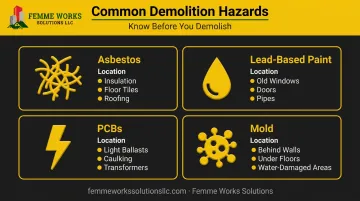
- The most common hazards are asbestos, lead paint, PCBs, and mold, each requiring specific handling protocols.
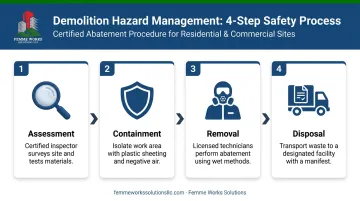
- Safe management involves a strict four-step process: professional assessment, site containment, specialized removal, and compliant disposal.
- Hazardous materials must be handled by a licensed and certified remediation contractor who follows State, DEP, and EPA regulations for hazardous material removal.
Identifying the Unseen Dangers: Common Hazardous Materials in Demolition
Demolishing buildings constructed before the 1980s often uncovers materials now known to be toxic. Common demolition activities—like breaking, cutting, or sanding—can release these invisible fibers and dust, posing a serious threat to workers and the surrounding environment.
Asbestos-Containing Materials (ACMs)
Asbestos was a popular building material for its fire-resistant and insulating properties. The primary risk comes from inhaling airborne fibers, which can cause incurable diseases like asbestosis and mesothelioma, often with symptoms not appearing for 20 to 40 years.
Common locations for asbestos include:
- Insulation in attics and walls (especially vermiculite)
- Vinyl floor tiles and the black mastic adhesive underneath
- Acoustic ceiling tiles
- Roofing shingles and siding
- Wrapping on old pipes and boilers
Lead-Based Paint (LBP)
Before it was banned for consumer use in 1978, lead was a common ingredient in paint. During demolition, chipping or sanding this paint creates lead-contaminated dust that can be easily inhaled or ingested.
Lead is a potent neurotoxin that is especially dangerous for children and pregnant women, capable of causing permanent brain and nervous system damage.
Polychlorinated Biphenyls (PCBs)
PCBs are resilient, man-made chemicals used in many industrial and commercial applications until they were banned in 1979. These probable human carcinogens can be absorbed through the skin or inhaled during demolition.
Because PCBs do not break down easily, they also pose a significant long-term environmental threat.
Look for PCBs in older buildings in:
- Fluorescent light ballasts
- Electrical transformers and capacitors
- Caulking and glazing compounds
- Oil-based paints and floor mastics
Mold and Biological Contaminants
Water damage from leaks or floods often leads to significant mold growth hidden behind walls or under floors. Demolition can disturb these colonies, releasing spores and mycotoxins into the air.
Inhaling these contaminants can trigger severe allergic reactions, asthma attacks, and other respiratory problems for workers and even future occupants of the site.
Other Hazardous Substances
Beyond the main culprits, be aware of other potential hazards that require careful handling:
- Mercury: Found in old thermostats, pressure gauges, and fluorescent light bulbs.
- CFCs (Chlorofluorocarbons): Refrigerants present in old HVAC systems and appliances.
- Chemical Residues: Left behind in industrial or commercial buildings from their previous use.
A Step-by-Step Guide to Safely Managing Demolition Hazards
Managing hazardous materials isn't optional—it's a non-negotiable process mandated by federal and state regulations. Following these steps is essential for ensuring safety and legal compliance on any demolition project.
Step 1: Professional Site Assessment and Testing
Before a single wall comes down, a certified inspector must conduct a hazardous materials survey. This foundational step informs the entire project's scope and safety protocols.
The assessment includes a visual inspection, a review of the building's history, and collecting bulk samples of suspect materials. These are sent to a lab for analysis using methods like Polarized Light Microscopy (PLM) for asbestos or X-ray Fluorescence (XRF) for lead.
Step 2: Containment and Site Preparation
Once hazardous materials are confirmed, the work area must be completely isolated to prevent cross-contamination. This is a critical step to protect the rest of the property and neighboring areas.
Containment methods include:
- Establishing regulated work zones: Using heavy-duty plastic sheeting (critical barriers) to seal off all doorways, windows, and HVAC vents.
- Using negative air pressure machines: These machines are equipped with HEPA filters and run continuously to ensure that air flows into the contained area, not out of it, trapping any airborne particles.
- Posting warning signs: Clearly marking the boundaries of the work zone to prevent unauthorized entry.
Step 3: Safe Removal and Abatement
Removal must be performed only by licensed technicians wearing proper Personal Protective Equipment (PPE), including full-body coveralls, gloves, and NIOSH-approved respirators.
Specialists use techniques like "wet methods" to minimize dust, misting materials with water to suppress fibers before removal. The waste is then placed in sealed, specially labeled disposal bags, and HEPA-filtered vacuums are used for cleanup.
Step 4: Compliant Disposal and Documentation
You can't just throw hazardous waste into a standard dumpster. It must be transported by a licensed hauler to a designated disposal facility that is permitted to accept it.
The entire process is tracked using a waste manifest—a legal document creating a chain of custody from the job site to final disposal. This proves the waste was handled according to specific regulations, such as the EPA's NESHAP rules for asbestos.
Common and Costly Mistakes to Avoid on a Demolition Site
Cutting corners with hazardous materials can turn a manageable project into a financial and public health disaster. Here are the most critical errors to avoid.
Skipping the Pre-Demolition Survey
This is the single biggest mistake. Proceeding without professional testing is a gamble with health and a major legal violation. If hazardous materials are discovered after work has started, it can trigger immediate stop-work orders, massive regulatory fines, and costly cleanup projects.
Using Incorrect or No PPE
Standard dust masks and work clothes offer zero protection against microscopic asbestos fibers or lead dust. Failing to provide and enforce the use of proper respirators and protective suits puts your workers' long-term health at direct risk.
Failing to Contain the Work Area
If the work area isn't properly sealed, hazardous dust can easily spread through the HVAC system or on workers' clothing. This can contaminate the entire building, turning a localized issue into a property-wide cleanup nightmare that multiplies the cost and complexity of the project.
Why Certified Professionals Are Essential
Handling hazardous materials is a high-stakes job governed by strict regulations from the EPA, OSHA, and state agencies like the DEP. Proper handling by certified professionals protects workers, the public, and a project's financial and legal health.
For property owners and contractors in Massachusetts and New Hampshire, partnering with a fully licensed, insured, and experienced company is the only way to ensure safety and compliance with all applicable requirements.
With over 15 years of experience in asbestos abatement and selective demolition, Femme Works Solutions has the expertise to manage these complex projects. Our certified team ensures every step, from initial inspection to final disposal, is handled correctly, giving you peace of mind and a clean slate for your next venture.
Frequently Asked Questions
What are the hazardous materials in demolition?
Common hazardous materials include asbestos, lead-based paint, and mold, all of which our certified teams are equipped to handle. Other substances like polychlorinated biphenyls (PCBs) and mercury may also be present, especially in older structures.
What are the three types of demolition?
The main types are mechanical demolition (using excavators and heavy equipment), deconstruction (carefully dismantling a structure to salvage materials for reuse), and implosion (using explosives to bring down large structures).
What are the primary disposal methods for hazardous waste?
Common methods include disposal in secure, specially designed landfills, high-temperature incineration, chemical treatment to neutralize the hazard, and in some cases, recycling or recovery of materials like mercury.
How does OSHA define demolition?
OSHA defines demolition as "the dismantling, razing, destroying, or wrecking of any building or structure or any part thereof." This work falls under its strict construction safety standards.