For homeowners, property managers, and contractors in Massachusetts and New Hampshire, understanding this process is key. Interior demolition is a precise, calculated job that is crucial for safety, compliance, and the overall success of any renovation. This guide provides a complete overview of what to expect, from how the process works and key factors that shape complexity to why professional oversight is absolutely essential.
Key Takeaways
- Interior demolition selectively removes components like walls, floors, and ceilings while keeping the building's main structure intact.
- It's the critical first step for major renovations, layout changes, or removing materials damaged by water, fire, or mold.
- The process involves planning, permitting, site preparation, systematic demolition, and complete debris removal.
- Project scope, hazardous materials like asbestos, and the removal of load-bearing walls are key factors affecting complexity and cost.
- Hiring a certified professional is vital for safety, efficiency, and compliance with EPA and OSHA regulations.
What Is Interior House Demolition?
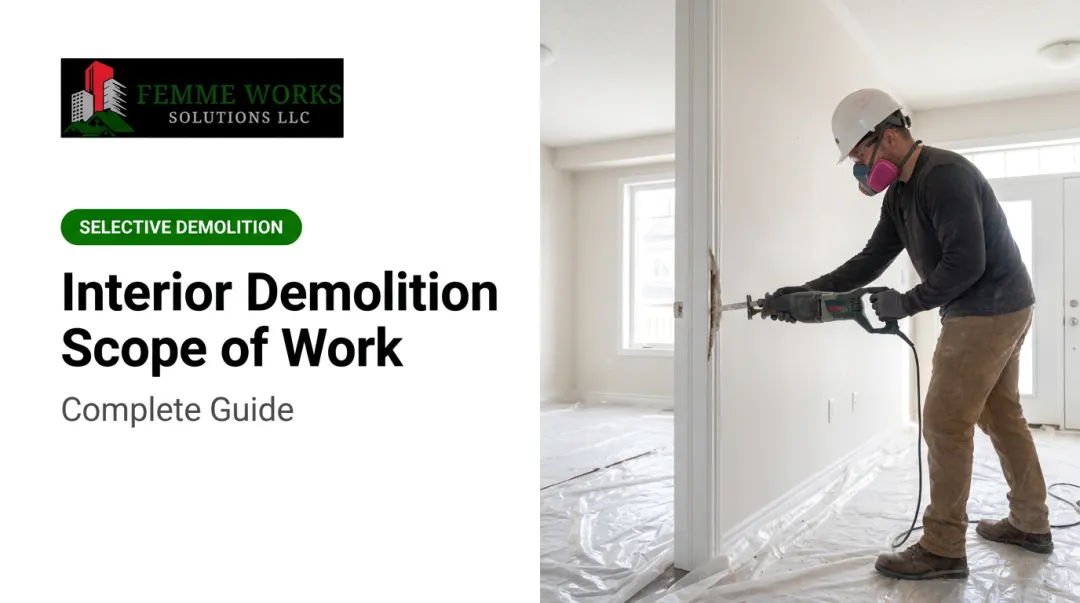
Interior demolition, also known as selective demolition, is the non-structural teardown of indoor spaces. The primary goal is to create a "clean slate" for remodeling, reconfiguring a layout, or repairing damage, all without affecting the building's exterior or structural integrity.
This is different from full demolition, which involves tearing down an entire structure. It's also more involved than "soft demolition," which typically only refers to removing surface-level finishes like carpets and light fixtures. Selective demolition is the methodical process of gutting a space down to the studs so the next phase of construction can begin.
Common Applications for Interior Demolition
This process is the foundation for many common renovation projects, including:
- Complete kitchen and bathroom guts
- Preparing basements for finishing
- Creating open-concept floor plans by removing non-load-bearing walls
- Retrofitting commercial spaces for new tenants
- Removing materials damaged by water, fire, or mold
Why Professional Demolition is Non-Negotiable for Your Remodel
Interior demolition carries significant risks that require professional expertise, proper certification, and compliance with EPA, OSHA, and DEP regulations. Without professional oversight, it is alarmingly easy to make costly and dangerous mistakes.
Accidentally cutting live electrical wires, rupturing hidden plumbing lines, or damaging a load-bearing wall can lead to thousands of dollars in emergency repairs. Workplace safety data shows that 74% of electrical fatalities involve non-electrical workers, a stark reminder of the risks of handling hidden wiring without proper training.
The most critical issue, however, is hazardous materials. Homes in Massachusetts and New Hampshire built before 1980 often contain asbestos in insulation, flooring, or drywall. Disturbing these materials without proper containment releases toxic fibers into the air — a serious health hazard.
Safe removal requires certified professionals who comply with EPA and MassDEP regulations. A professional contractor also handles all debris disposal legally and secures the necessary permits to keep your project on track.
For projects in Massachusetts and New Hampshire, working with a fully licensed, insured, and certified contractor like Femme Works Solutions is crucial. As a woman-owned business with over 15 years of experience, Femme Works Solutions specializes in selective demolition and are certified for asbestos abatement, ensuring your project meets all safety and environmental compliance standards from start to finish.
How the Interior Demolition Process Works: A Step-by-Step Guide
A professional interior demolition project is a systematic process designed to move from strategic planning to a build-ready site safely and efficiently.
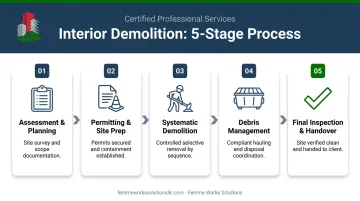
Step 1: Initial Assessment and Planning
The process begins with a thorough site inspection. A project manager identifies the full scope of work, locates structural elements like load-bearing walls, and maps out all utilities — including electrical, plumbing, and HVAC systems.
This assessment also flags potential hazards that must be addressed before work begins, aligning with OSHA's requirement for a pre-demolition engineering survey.
Step 2: Permitting and Site Preparation
With a plan in place, the contractor secures all necessary permits from your local municipality in Massachusetts or New Hampshire. Before demolition starts, the site is prepared: utilities are shut off and any floors, fixtures, or furniture that will remain are protected.
The work area is then sealed off with heavy-duty plastic barriers to contain dust. At Femme Works Solutions, we use negative air machines to ensure dust and contaminants are isolated from the rest of your property.
Step 3: Systematic Demolition
The demolition itself is a carefully planned sequence. Crews use specialized tools to dismantle and remove materials with precision. This typically involves:
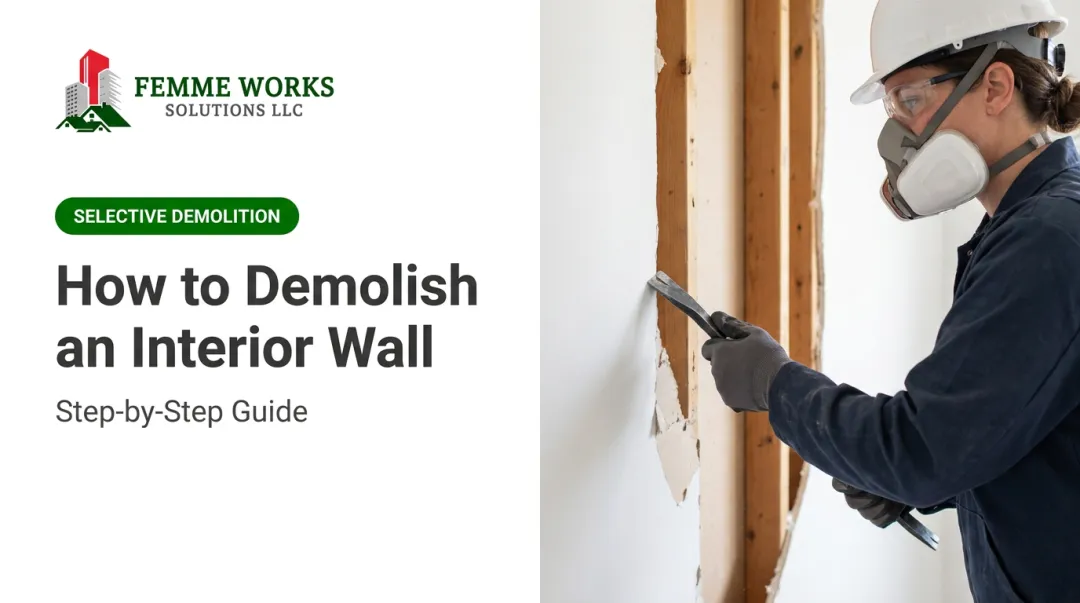
- Tearing out drywall and plaster
- Removing flooring like tile, hardwood, or carpet
- Taking down non-load-bearing walls
- Disconnecting and removing old fixtures, cabinetry, and appliances
Step 4: Debris Management and Hauling
As materials are removed, they are sorted for proper disposal or recycling. A professional service manages all debris from start to finish.
This means all waste is loaded into a dumpster and hauled away legally. Debris is removed throughout the project to maintain a safe, organized, and hazard-free worksite.
Step 5: Final Inspection and Site Handover
Once all demolition is complete and debris is removed, a final walkthrough is conducted. This inspection ensures the work matches the project plan and that the site is broom-clean, safe, and ready for your general contractor to begin the next phase of construction.
Key Factors That Impact Demolition Complexity and Cost
No two demolition projects are identical, and several variables influence the final price and timeline. Understanding these factors will help you budget for your renovation.
- Scope and Size: The larger the area, the higher the labor and disposal needs. A professional assessment will define the scope based on your specific conditions.
- Structural Elements: Removing a non-load-bearing wall is simple, but taking out a load-bearing wall requires an engineer and new supports, significantly increasing complexity and cost.
- Hazardous Materials: Discovering asbestos, lead paint, or mold requires specialized abatement by certified professionals. This is a legal safety requirement that adds to the budget.
- Location and Accessibility: Difficult access increases labor costs. A high-rise Boston condo or a home with limited dumpster access will be more complex than a job site with an open driveway.
- Debris Type and Volume: The weight of materials affects disposal costs. Heavy debris like plaster and tile is more expensive to haul away than lighter materials such as drywall and carpet.
Price depends on an individual assessment of the job. Request a free quote from Femme Works Solutions for an accurate figure based on your specific project.
Common Demolition Mistakes and How Professionals Prevent Them
Demolition without proper expertise, certification, and equipment leads to serious problems. Here are the most common mistakes and why certified professionals are the right choice for any demolition project.
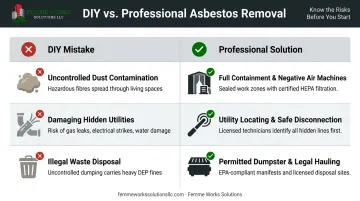
Mistake 1: Underestimating Dust and Debris
The sheer volume of dust created during demolition is significant. Without professional containment systems, fine particles of drywall, plaster, and insulation can permeate every corner of a property, settling on furniture and causing extensive cleanup issues.
If this debris enters your HVAC system, you could face professional duct cleaning to remediate the contamination, according to the EPA.
Mistake 2: Ignoring Hidden Dangers
Walls and floors hide a network of essential utilities including water pipes, live electrical wires, and gas lines. Professionals use specialized tools and experience to locate and safely work around these hidden systems, preventing floods, fires, or serious injury.
Mistake 3: Improper Waste Disposal
You can't just leave a pile of old drywall and broken tile on the curb. Municipalities have strict regulations for disposing of construction and demolition debris, and illegal dumping comes with hefty fines. In Boston, for example, illegal dumping can result in significant fines. A professional demolition contractor handles all disposal legally and responsibly as part of their service, saving you from navigating complex rules and potential penalties.
Your Renovation Starts Here
Interior house demolition is the foundational step for any successful renovation. It requires careful planning, precision, compliance with EPA, OSHA, and DEP regulations, and a deep understanding of building systems and safety protocols. The risks — especially concerning structural elements and hazardous materials common in older New England homes — make hiring a certified and experienced professional essential for protecting your property and project timeline.
If you're planning a renovation in Massachusetts or New Hampshire, contact the experts at Femme Works Solutions for a comprehensive consultation and ensure your project starts on a safe, compliant, and solid foundation.
Frequently Asked Questions
How much does interior house demolition cost?
Every project is different. Cost depends on scope, location, materials being removed, and whether hazardous materials like asbestos are present. Safe removal of hazardous materials requires certified professionals. Always get a detailed, free quote before proceeding.
What does interior house demolition typically include?
A standard project includes the removal of non-load-bearing walls, ceilings, floors, fixtures, and cabinetry. The service also covers site preparation, dust control, and complete hauling and disposal of all debris.
Is it cheaper to demolish the interior of a house or remodel it?
Demolition is a part of the remodeling process, not an alternative to it. A "gut remodel" that includes demolition is more expensive than cosmetic updates but is necessary for making major layout changes or repairing significant damage.
Do I need a permit for interior demolition in Massachusetts?
Permit requirements in Massachusetts vary by the project's scope. While removing flooring may not require one, any work involving walls or altering plumbing and electrical systems almost always does. It's best to consult with a licensed Massachusetts contractor who understands local municipal codes.
How long does a typical interior demolition project take?
A single room, like a bathroom or kitchen, can often be completed in 1-3 days. A full-floor gut renovation could take a week or more, depending on the square footage and complexity of the job.