The answer is yes… and a very firm no. While a HEPA filter is scientifically capable of capturing airborne asbestos fibers, relying on a standalone air purifier for safety is a dangerous mistake. It addresses a symptom, not the source, creating a false sense of security that can have devastating consequences.
This guide explains the science behind HEPA filtration, its critical limitations when it comes to asbestos, and why professional abatement is the only true path to a safe, asbestos-free home.
TLDR: HEPA Purifiers and Asbestos
- HEPA filters can capture microscopic airborne asbestos fibers with high efficiency.
- They cannot remove or seal the source of asbestos in your walls, insulation, or tiles.
- Relying only on an air purifier is not a substitute for professional asbestos abatement and can be extremely dangerous.
- Professionals use industrial-grade HEPA filtration as one part of a comprehensive, multi-step safety protocol that a home unit cannot replicate.
Understanding the Asbestos Threat in Your Home
Asbestos is a naturally occurring mineral fiber that was once a staple in construction for its excellent heat resistance and insulating properties. Before its dangers were widely understood, it was used in thousands of building products. If your home was built before the 1990s, there's a chance it contains asbestos.
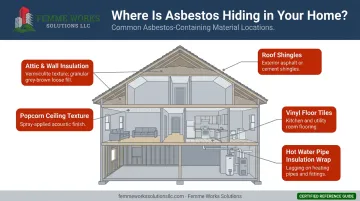
Common places to find asbestos in older homes include:
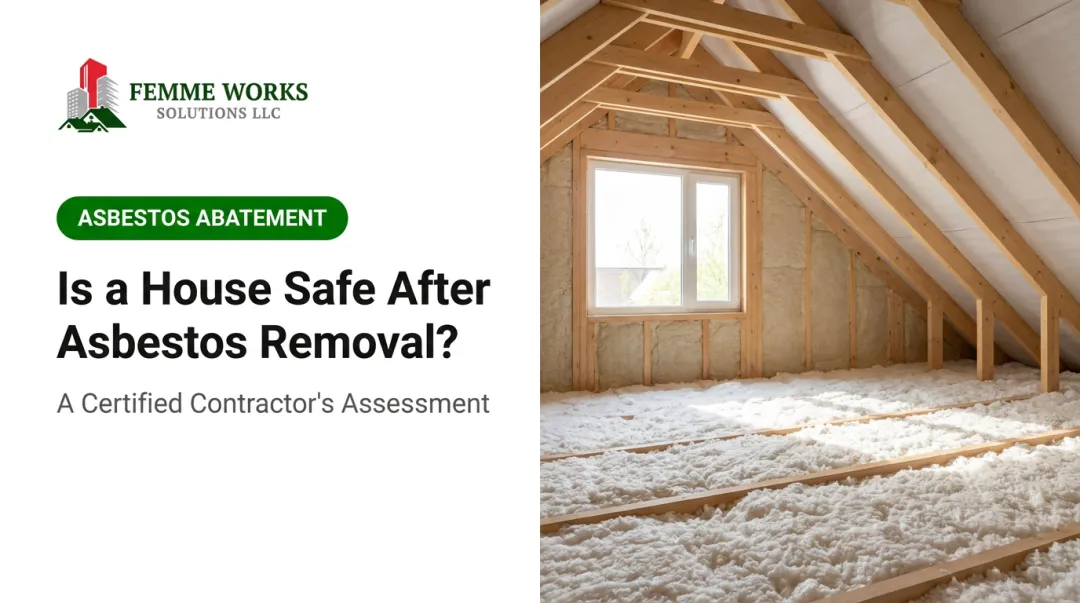
- Attic and wall insulation (especially vermiculite)
- Vinyl floor tiles, sheet flooring, and adhesives
- "Popcorn" ceilings and textured paints
- Shingles, siding, and roofing materials
- Insulation wrap on hot water pipes and boilers
- Joint compound used on drywall
The primary health risk comes from inhaling microscopic asbestos fibers when they become airborne. This can happen during renovations, from accidental damage, or as materials deteriorate over time.
According to the National Cancer Institute, signs of asbestos-related diseases can take 10 to 40 years or more to appear after exposure. These diseases include asbestosis (scarring of the lungs), lung cancer, and mesothelioma—a rare and aggressive cancer.
What is a HEPA Air Purifier and How Does It Work?
HEPA stands for High-Efficiency Particulate Air. It's not a brand but a rigorous efficiency standard for air filters. A filter must be certified to remove at least 99.97% of airborne particles 0.3 microns in size to earn the "true HEPA" designation.
A HEPA filter works like an incredibly fine-meshed net made of dense, randomly arranged fibers. As air is forced through it, particles are trapped in three ways:
- Interception: Particles following the airflow get stuck to a fiber.
- Impaction: Larger particles can't change direction with the air and slam directly into fibers.
- Diffusion: The smallest particles move erratically and eventually collide with a fiber.
The 0.3-micron benchmark is used because it's what experts call the "most penetrating particle size" (MPPS). As the U.S. Environmental Protection Agency (EPA) explains, this is the hardest particle size for a filter to capture. Particles that are both larger and smaller are trapped with even higher efficiency.
Can a HEPA Purifier Really Remove Asbestos from the Air?
The Science of Particle Size and Capture
Now for the core question: can this technology handle something as dangerous as asbestos? Scientifically, the answer is yes.
Asbestos fibers can vary in size, but they typically fall well within the capture range of a true HEPA filter. Most health-relevant fibers are between 0.7 and 90 microns long, making them easy targets for a filter designed to trap particles down to 0.3 microns and below.
Think of it like this: a HEPA filter is a fine net capable of catching tiny fish as they float down a river. If an asbestos fiber passes through the filter, it will almost certainly be captured.
This is precisely why the Occupational Safety and Health Administration (OSHA) mandates that professionals use HEPA-filter vacuums during asbestos cleanup. The technology is proven to work for capturing these dangerous airborne particles.
But this is where the good news ends, and the critical, life-saving caveats begin.
The Critical Limitations: Why Air Purifiers Are NOT an Asbestos Solution
The net might catch the fish floating by, but it does nothing to stop them from spawning upstream. This is the fundamental flaw in relying on an air purifier.
The Source of the Problem Remains
Crucially, an air purifier does absolutely nothing to remove or contain the asbestos-containing materials (ACMs) in your home. The deteriorating pipe wrap, the crumbling ceiling texture, or the cracked floor tiles are still there, ready to release more fibers the next time they're disturbed.
The "Dynamic Equilibrium" Problem
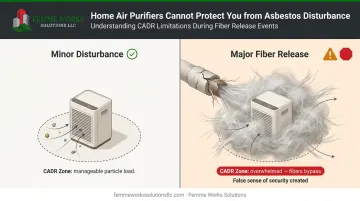
An air purifier's effectiveness is measured by its Clean Air Delivery Rate (CADR). This number tells you how quickly it can clean a room of a certain size. While it might handle low levels of background dust, it cannot keep up with a significant fiber release.
A simple bump against an insulated pipe, a small leak that damages a ceiling, or a minor DIY project can release millions of fibers into the air at once. This will instantly overwhelm your purifier's CADR.
This sudden release exposes you and your family long before the machine can catch up, creating a dangerous false sense of security.
Settled Fibers and Surface Contamination
Air purifiers only capture what's floating in the air. They are powerless against the fibers that have already settled on your floors, furniture, countertops, and carpets. These settled fibers don't just stay put; they can easily be kicked back into the air by walking, dusting, or regular vacuuming.
The Dangers of Filter Changes on Contaminated Equipment
If your purifier's filter has been capturing asbestos, it is now hazardous material that requires professional handling:
- Removing the filter without certified containment procedures can release a concentrated cloud of fibers.
- The contaminated filter cannot be disposed of in regular trash — it is regulated hazardous waste.
- Certified professionals follow strict protocols for bagging and disposing of all hazardous materials.
Your Next Step: Professional Assessment
If you suspect you have asbestos in your home, setting up an air purifier is not the first step. The only safe first step is to leave the material alone and call a certified professional for an assessment.
For homeowners in Massachusetts and New Hampshire, a certified and experienced team like Femme Works Solutions can provide a professional assessment, testing, and a comprehensive remediation plan that guarantees safety and compliance with all EPA and OSHA regulations.
The Professional Protocol: How Certified Experts Use HEPA Technology
When asbestos abatement professionals arrive, they bring HEPA technology—but it's a world away from a simple room purifier. Their entire process is built around containment and source removal.
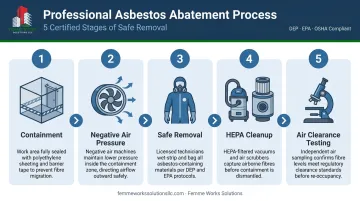
Creating Negative Air Pressure
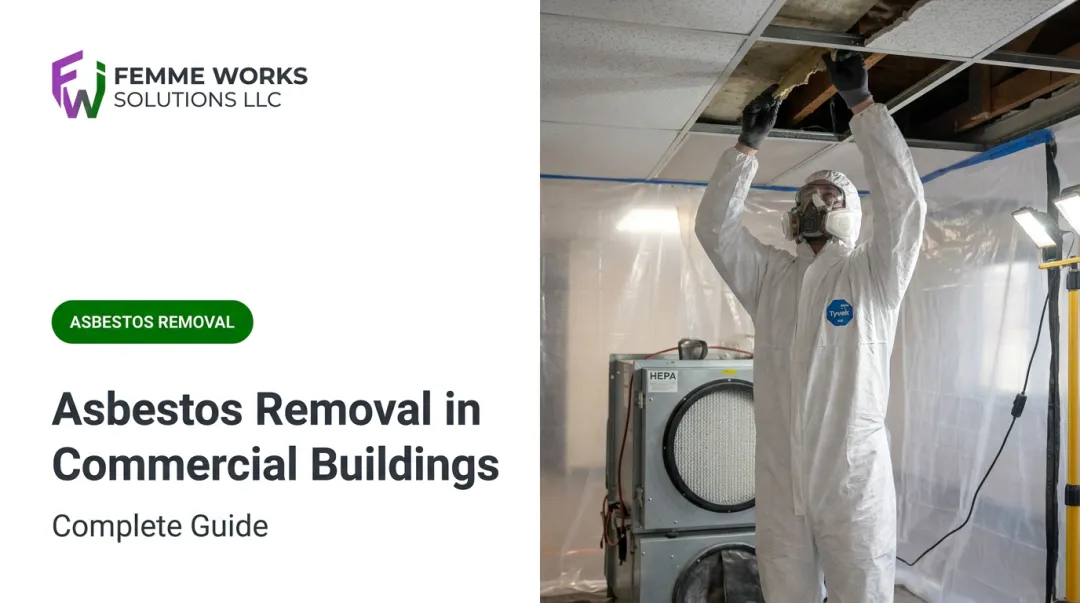
The first thing a team like Femme Works Solutions does is build a fully sealed containment zone around the work area. They then use industrial-grade negative air machines that vent filtered air outside.
This creates a vacuum effect, ensuring that air from the house flows into the containment zone, not the other way around. This makes it impossible for stray asbestos fibers to escape into the rest of your home during removal.
Safe Removal and Cleanup
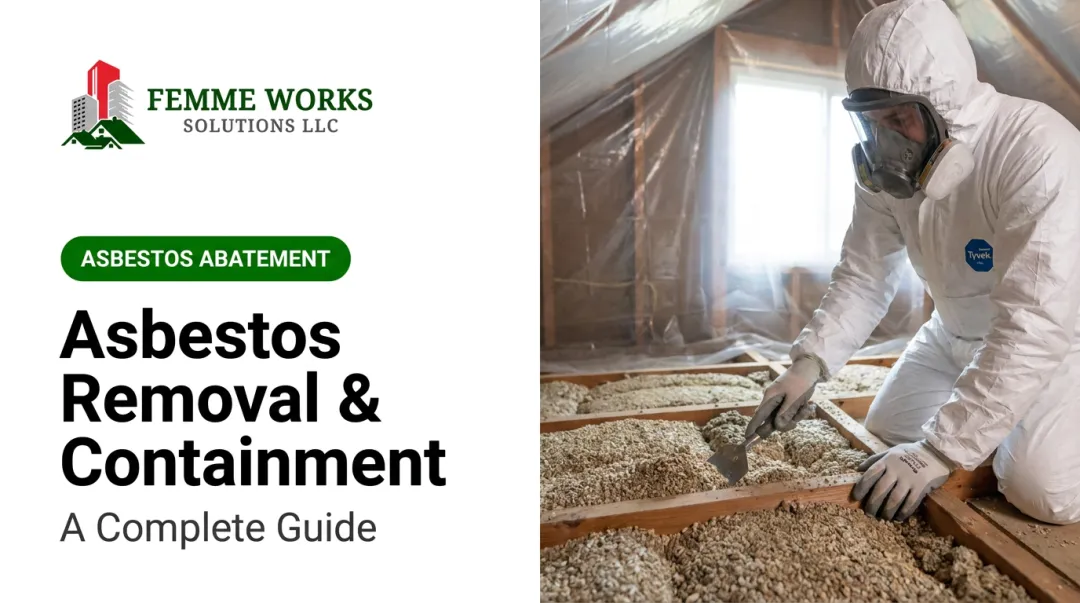
Inside the containment area, every action is carefully controlled. Certified technicians use specialized tools and wet methods to minimize fiber release while removing the asbestos source material.
After the source is gone, the cleanup begins. This involves a meticulous process using:
- HEPA Vacuums: Every surface—walls, floors, and ceilings—is vacuumed with powerful, certified HEPA equipment.
- Microfiber Wipes: Surfaces are then wet-wiped to capture any remaining microscopic dust.
- Air Scrubbers: Throughout the project, industrial HEPA air scrubbers run continuously to filter the air within the containment zone, capturing any particles disturbed during the work.
Post-Abatement Air Clearance Testing
How do you know the job is truly done and your home is safe? You don't guess. After a professional abatement, an independent third-party industrial hygienist is brought in to conduct aggressive air sampling.
This test verifies that the asbestos fiber count in the air is below the mandatory safety threshold. Only after passing this clearance test is the containment taken down and the area deemed safe for re-entry.
An air purifier can't offer you that certainty. Professional abatement can.
Frequently Asked Questions
Do HEPA air purifiers work for asbestos?
Yes, a HEPA purifier can capture airborne fibers, but it's an unsafe and incomplete solution. It cannot remove the asbestos source, clean settled fibers, or manage a significant fiber release.
Can I just run an air purifier instead of hiring a professional?
No. This is extremely dangerous because the asbestos source remains in your home. Relying on a purifier creates a false sense of security while the hazard continues to exist and potentially release fibers.
How long can asbestos fibers stay airborne?
Due to their microscopic size and aerodynamic shape, asbestos fibers can remain suspended in the air for long periods, potentially for days in undisturbed areas, posing an ongoing inhalation risk.
What are the first steps if I find asbestos in my home?
Do not disturb the material in any way. Immediately isolate the area by closing doors and vents, then call a licensed asbestos abatement professional for testing and expert advice.
Is it safe to live in a house with undisturbed asbestos?
If asbestos-containing material is in good condition and left completely undisturbed, the risk is low. The danger begins when it is damaged, disturbed, or deteriorates, which releases fibers into the air.