Dealing with asbestos requires certified licensed professionals who follow EPA, OSHA, and DEP protocols — this is not work that can be safely managed without proper certification and specialized equipment. This guide is for homeowners, property managers, and contractors across Massachusetts and New Hampshire who need to know the facts. We'll break down why professional removal is non-negotiable, what the step-by-step abatement process looks like, key cost factors, and safe alternatives to removal.
Key Takeaways
- Asbestos was a common ingredient in popcorn ceilings from the 1950s to the early 1980s for its texture and fire resistance.
- Disturbing it releases dangerous fibers that can cause mesothelioma and lung cancer; professional removal is a legal and safety requirement.
- The professional process involves testing, full containment, wetting the material, careful scraping, HEPA air purification, and certified disposal.
- Proper abatement is crucial for your health and your home's resale value — request a free quote to get an accurate figure for your specific project.
- Encapsulation (sealing the ceiling) is a possible alternative, but only if the ceiling is in perfect, undamaged condition.
What Is Asbestos in Popcorn Ceilings?
Popcorn ceilings, also known as acoustic or stipple ceilings, were incredibly popular for their ability to hide imperfections and dampen sound. To achieve this texture and durability, many manufacturers added asbestos fibers to the mixture.
From the 1950s until the U.S. Environmental Protection Agency (EPA) banned most spray-applied asbestos products in 1978, asbestos was a common additive. It typically made up 1% to 10% of the ceiling material.
Because contractors used existing inventory even after the ban, homes built as late as the mid-1980s can still have asbestos-containing popcorn ceilings.
The only way to know for sure is to have a sample tested by an accredited lab. If your home was built before 1985 and has textured ceilings, you should assume it contains asbestos until proven otherwise.
Why Professional Asbestos Removal is Critical
You can't see, taste, or smell asbestos fibers, which is what makes them so dangerous. Attempting to scrape or remove a popcorn ceiling yourself can have severe, long-lasting consequences for your health, legal standing, and property.
Severe Health Risks
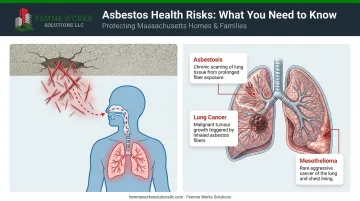
When a popcorn ceiling is scraped, sanded, or damaged, it releases microscopic asbestos fibers into the air. Inhaling these sharp, durable fibers can lead to devastating diseases, including:
- Asbestosis: A chronic lung disease that causes scarring of the lung tissue and severe shortness of breath.
- Lung Cancer: Asbestos exposure significantly increases the risk of developing lung cancer.
- Mesothelioma: A rare and aggressive cancer that forms in the lining of the lungs, abdomen, or heart.
The most frightening aspect of these diseases is their long latency period. Symptoms often don't appear until decades after exposure. According to the CDC, the time between first exposure and a mesothelioma diagnosis can range from 20 to 71 years.
Legal and Regulatory Requirements
Federal, state, and local laws are in place to protect public health. Agencies like the EPA and the Occupational Safety and Health Administration (OSHA) have strict regulations for handling and disposing of asbestos.
In states like Massachusetts and New Hampshire, only licensed and certified professionals are legally allowed to perform asbestos abatement. Failing to follow these regulations can result in heavy fines and legal liability.
Risk of Contamination and Protecting Property Value
Improper removal endangers all occupants and can contaminate an entire home. Asbestos fibers can easily spread through your HVAC system, settling on furniture, carpets, and personal belongings.
A small problem in one room can quickly become a whole-house contamination issue, leading to a far more expensive and disruptive cleanup.
When you decide to sell your home, you'll need to disclose the presence of asbestos. Professional abatement provides you with a Clearance Report, certified proof that the hazard has been properly removed. This documentation protects your property's value and gives future buyers peace of mind.
The Professional Asbestos Popcorn Ceiling Removal Process: A Step-by-Step Guide
Professional asbestos abatement is a meticulous process designed to protect everyone involved. At Femme Works Solutions, our trained and licensed team follows a strict protocol to ensure safety and compliance from start to finish. Here’s what a professional job looks like—and why you should never attempt it yourself.
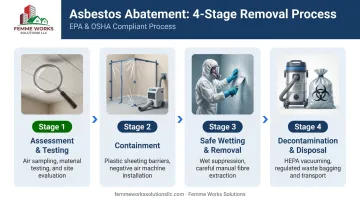
Initial Assessment and Asbestos Testing A certified inspector visits your property to assess the ceiling's condition and take a small, discreet sample. This sample is sent to an accredited laboratory for Polarized Light Microscopy (PLM) testing to confirm if asbestos is present and at what concentration.
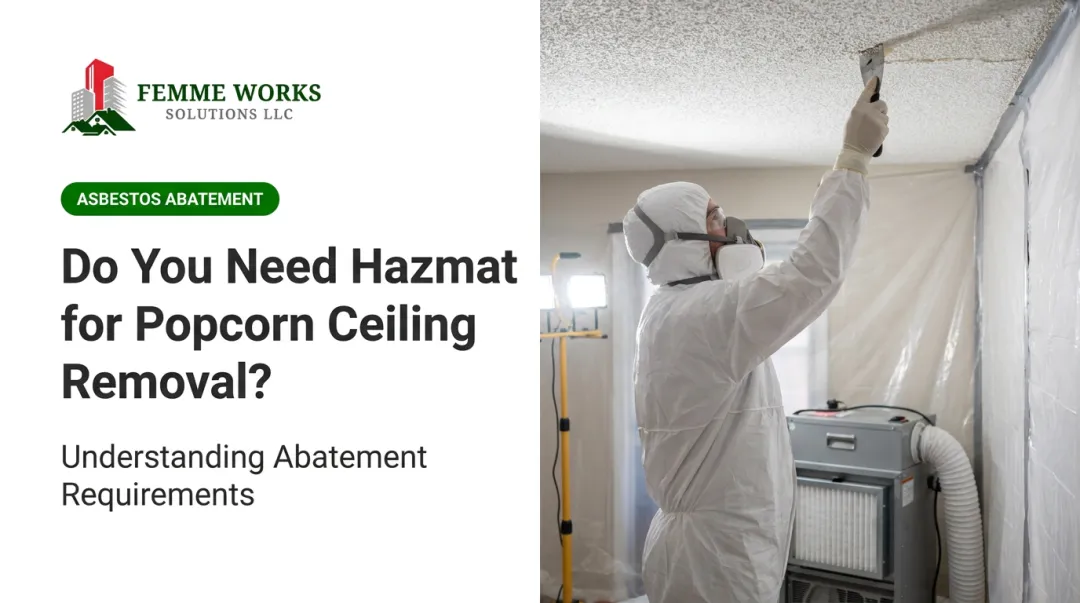
Meticulous Preparation and Containment Before removal begins, the work area is completely isolated from your home using thick plastic sheeting to seal all doorways and vents. A negative air pressure machine with HEPA filters ensures air flows into the containment zone, not out, preventing fiber escape. All furniture is either removed or securely covered.
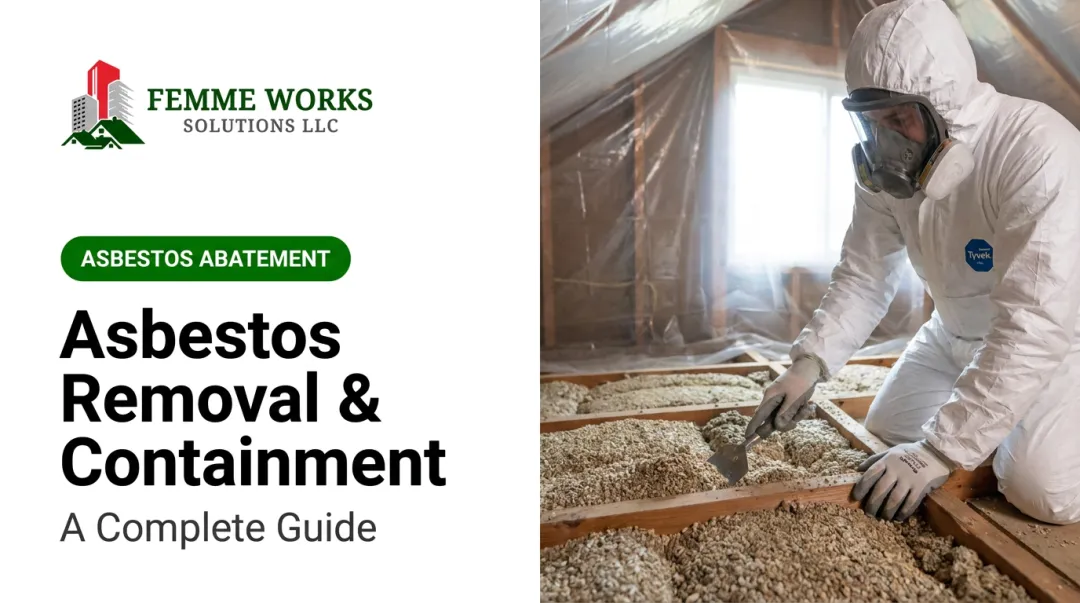
Safe Removal (The Wetting Method) Our abatement professionals wear full personal protective equipment (PPE), including disposable coveralls and specialized respirators. We spray the ceiling with a wetting agent, a solution that binds asbestos fibers and prevents them from becoming airborne. Once saturated, the material is carefully scraped off with specialized hand tools.
Decontamination and Disposal All asbestos-containing debris is double-bagged in specially marked, sealed disposal bags for transport to a licensed hazardous waste landfill. The entire work area is then meticulously cleaned using HEPA vacuums and wet-wiping techniques to capture any remaining fibers.
After cleaning, independent air testing is performed to confirm the air is safe. Once clearance is achieved, the containment is taken down, and you receive a final Clearance Report documenting that the job was completed safely and in full regulatory compliance.
Key Factors That Influence Your Removal Project (and Its Cost)
The cost for professional asbestos popcorn ceiling removal varies based on several key factors. An accurate quote requires a detailed, on-site estimate from a certified contractor.
- Size and Height of the Area: Pricing is typically based on square footage. Taller ceilings require more scaffolding and labor, which increases the project cost.
- Condition of the Ceiling: Painted ceilings are more difficult to remove because the paint acts as a barrier, requiring more time and effort. Damaged textures may also need more extensive containment.
- Accessibility and Furnishings: Empty rooms are faster to prep than spaces filled with heavy furniture or built-ins. Extensive preparation work increases labor costs.
- Local Regulations and Disposal Fees: Permit and hazardous waste disposal fees vary by location. An experienced contractor like Femme Works Solutions understands Massachusetts and New Hampshire rules, ensuring all costs are included upfront.
Alternatives to Full Removal: When Is Encapsulation a Better Option?
In some situations, full removal may not be necessary. Asbestos encapsulation involves sealing the asbestos-containing material with a special, durable coating that prevents fibers from being released. The EPA defines this as treating the material with a sealant that "binds the asbestos fibers together or coats the material so fibers are not released."
Encapsulation is only a viable option under very specific conditions:
- The ceiling must be in excellent structural condition, with no crumbling, peeling, water damage, or flaking.
- You have no plans for major renovations that would disturb the ceiling, such as installing recessed lighting or moving walls.
While encapsulation is often less expensive and disruptive, it is not a permanent solution. The asbestos remains in your home, requiring legal disclosure when you sell, and the risk of fiber release returns if the surface is ever damaged.
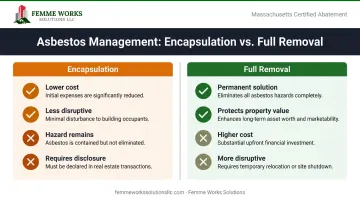
Full removal is the only way to permanently eliminate the hazard. A certified professional can inspect your ceiling and help you decide which approach is best for your property and long-term plans.
Frequently Asked Questions
How likely is a popcorn ceiling to contain asbestos?
If your home was built before the mid-1980s, the likelihood is high. However, the only way to be certain is to have a sample professionally tested by an accredited lab.
How much does it cost to remove an asbestos popcorn ceiling?
The final price depends on an individual assessment of the job — including ceiling size, height, condition, paint layers, accessibility, and local disposal fees. A custom on-site quote is essential. Contact Femme Works Solutions for a free assessment.
Can I just paint over an asbestos popcorn ceiling?
While painting can help seal in the fibers (a basic form of encapsulation), it's not a permanent solution and doesn't remove the underlying hazard. Any future damage, scrapes, or drilling into the ceiling will still release dangerous fibers.
Do I have to leave my house during asbestos removal?
Yes. For your safety, all residents and pets must vacate the property during the abatement process. You cannot return until the work area has been thoroughly cleaned and passed post-abatement air testing.
How long does the removal process take?
For a typical residential project, the entire process—including setup, removal, cleaning, and air testing—usually takes 2 to 5 days. The exact timeline will depend on the size and complexity of the job.
What happens to the asbestos waste after removal?
All waste is securely double-bagged, labeled as hazardous material, and transported by licensed professionals to a designated landfill. This entire process strictly follows all EPA and local disposal regulations.