This guide breaks down everything you need to know. We'll cover what a pre-demolition survey is, why it's essential, the step-by-step process, and the serious risks of cutting this corner. By the end, you'll see why due diligence upfront protects your team, your budget, and your reputation.
TL;DR: Key Takeaways
- A pre-demolition survey is a detailed inspection to find structural issues, hazardous materials like asbestos, and utility connections before work starts.
- It's legally required by federal (OSHA, EPA) and state laws to prevent fines and work stoppages.
- The main goals are ensuring worker safety, protecting the environment, and avoiding unexpected costs and delays.
- The process includes a site inspection, material sampling, structural assessment, and a final detailed report.
- Skipping a survey can result in legal penalties, severe accidents, and significant financial liability.
What Is a Pre-Demolition Condition Survey?
A pre-demolition condition survey is a formal investigation by a qualified professional to document a structure and its surroundings before demolition. The goal is to create a detailed risk profile identifying all potential structural, chemical, and environmental hazards.
This is far more than a simple pre-bid walkthrough. While a walkthrough is for estimating costs, a condition survey is an evidence-based assessment required for safety and compliance.
It uncovers hidden dangers that could otherwise lead to disaster, turning unknown variables into a clear, actionable plan.
Why Pre-Demolition Surveys Are a Non-Negotiable Step
Treating a pre-demolition survey as optional is a critical mistake. It's a non-negotiable step that protects everyone involved, from the workers on-site to the property owner's bottom line.
Ensuring Worker and Public Safety
Demolition is one of the most hazardous construction activities. A survey brings these dangers to light by identifying the unknown factors that OSHA warns are common on these sites, including:
- Unapproved structural modifications
- Hidden materials like lead and asbestos
- Weaknesses in structural components
By identifying structurally unsound floors, asbestos-containing materials (ACMs), lead paint, and live utility lines, you can create a site-specific safety plan. This ensures workers have the correct personal protective equipment (PPE) and procedures, preventing catastrophic accidents and exposure to harmful toxins.
Maintaining Legal and Regulatory Compliance
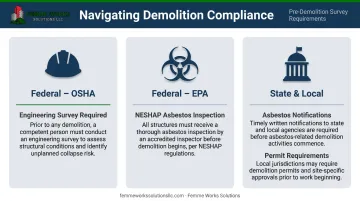
Federal and state regulations are clear: a survey is mandatory. The law isn't just red tape; it's designed to prevent the worst-case scenarios.
- Federal Requirements: OSHA standard 1926.850(a) explicitly requires an "engineering survey...by a competent person" to check for the "possibility of unplanned collapse." Similarly, the EPA’s NESHAP regulations mandate a thorough inspection for asbestos before any demolition begins.
- State-Specific Laws: In our service areas of Massachusetts and New Hampshire, state laws add another layer of enforcement. MassDEP and NHDES both require asbestos inspections and formal notifications before demolition permits are issued, even if no asbestos is found.
Failure to comply results in immediate work stoppages and severe penalties.
Protecting Your Budget and Timeline
Discovering hazardous materials or a critical structural flaw mid-demolition is a project manager's nightmare. It brings work to a halt, triggers costly change orders, and can delay the project for weeks or months.
A pre-demolition survey prevents these surprises. By identifying issues like extensive asbestos or the need for complex utility rerouting beforehand, you can build accurate budgets and realistic timelines. One industry case study showed that combining abatement and demolition scopes based on survey findings saved an estimated $134,000 and 45 working days.
How a Pre-Demolition Survey Works: A Step-by-Step Guide
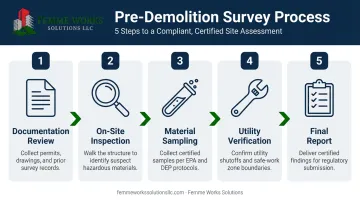
A professional pre-demolition survey is a methodical process that ensures every potential hazard and structural issue is identified before work begins. The process follows five key steps:
Step 1: Documentation Review and Initial Planning
The process starts with a review of existing building plans, historical records, and any past hazardous material reports. This helps the inspector understand the structure's age, construction methods, and previous uses, which can indicate the likely presence of certain materials.
Step 2: Comprehensive On-Site Inspection
A qualified inspector conducts a thorough physical walkthrough. They visually assess all accessible areas, including the building's frame, floors, walls, ceilings, and roofing. The inspection also covers adjacent structures that could be affected by the demolition. The inspector looks for visual cues of deterioration, water or fire damage, and suspected hazardous materials.
Step 3: Material Sampling and Laboratory Analysis
During the inspection, samples of suspect materials are carefully collected. This can include:
- Insulation
- Floor and ceiling tiles
- Roofing materials
- Caulking and glazing
- Paint chips
These samples are sent to an accredited laboratory for analysis to confirm the presence and concentration of hazardous substances like asbestos, lead, or PCBs.
Step 4: Utility and Service Line Verification
As required by OSHA, the survey must locate and confirm the status of all utilities. This includes electric, gas, water, sewer, and steam lines. The survey ensures a plan is in place to have these services shut off, disconnected, and safely capped by the utility companies before any demolition work begins.
Step 5: Preparation of the Final Survey Report
The process concludes with a comprehensive report. This document details all findings—including lab results, photos, and diagrams mapping any hazards—and provides clear recommendations for remediation and safe demolition procedures.
What a Comprehensive Survey Identifies: Beyond the Obvious
A thorough survey looks for more than just cracks in the walls. It uncovers hidden liabilities that require specialized handling.
Hazardous Materials
Many buildings constructed before the 1980s contain hazardous materials that are dangerous when disturbed during demolition. Common culprits include:
- Asbestos in materials like insulation, floor tiles, siding, roofing, and pipe wrap.
- Lead-based paint, which the EPA estimates is in 87% of homes built before 1940.
- Polychlorinated Biphenyls (PCBs), often located in older fluorescent light ballasts and caulking.
- Mercury from components such as thermostats, pressure gauges, and fluorescent lamps.
Identifying these materials is critical, as their removal is highly regulated. Once asbestos is confirmed, a certified and experienced firm like Femme Works Solutions must handle the safe, compliant abatement to meet all EPA and DEP protocols.
Structural and Environmental Risks
Beyond chemical hazards, a survey identifies physical and environmental dangers. This includes structural weaknesses from decay or damage that could lead to an unplanned collapse. Inspectors also look for other environmental risks like underground storage tanks (USTs), which can leak and cause soil contamination, or pest infestations that need to be addressed.
The High Cost of Skipping a Survey: Risks and Consequences
Failing to conduct a proper pre-demolition survey is a gamble with severe consequences. The fallout isn't just financial—it's legal and reputational.
- Face steep legal penalties from regulators like OSHA, with fines exceeding $16,550 per violation. A recent South Boston case saw proposed fines of over $690,000 for demolition violations.
- Suffer major financial fallout, including emergency remediation costs, months-long project delays, and potential civil lawsuits on top of regulatory fines.
- Risk permanent reputational damage that makes it difficult to secure future projects, partners, or permits due to a perceived disregard for safety.
Frequently Asked Questions
What is a pre-demolition condition survey?
It is a critical safety and compliance inspection performed by a professional to identify hazards like asbestos, lead paint, and structural weaknesses before any demolition work begins.
Is a pre-demolition survey required by law?
Yes. Federal regulations from OSHA and the EPA, along with state and local laws in places like Massachusetts and New Hampshire, often mandate these surveys to ensure safety and prevent environmental contamination.
What happens if asbestos is found during the survey?
All work that could disturb the asbestos must stop immediately. A licensed abatement contractor, such as Femme Works Solutions, must be hired to safely remove and dispose of the material according to strict regulatory standards.
Who is qualified to perform a pre-demolition survey?
The survey must be conducted by a "competent person" as defined by OSHA—someone with specific training and certification in building safety, structural assessment, and hazardous material identification. This is typically a licensed environmental consultant or inspector.
How long does a pre-demolition survey take?
The time required varies by the building's size, age, and complexity. A small home may take a few hours, while a large facility could take several days—plus additional time for lab analysis of any samples.
Can I do a pre-demolition survey myself?
No. Due to the specialized knowledge, safety protocols, and legal certifications required for identifying and handling hazardous materials, a survey must be performed by a qualified and licensed professional.