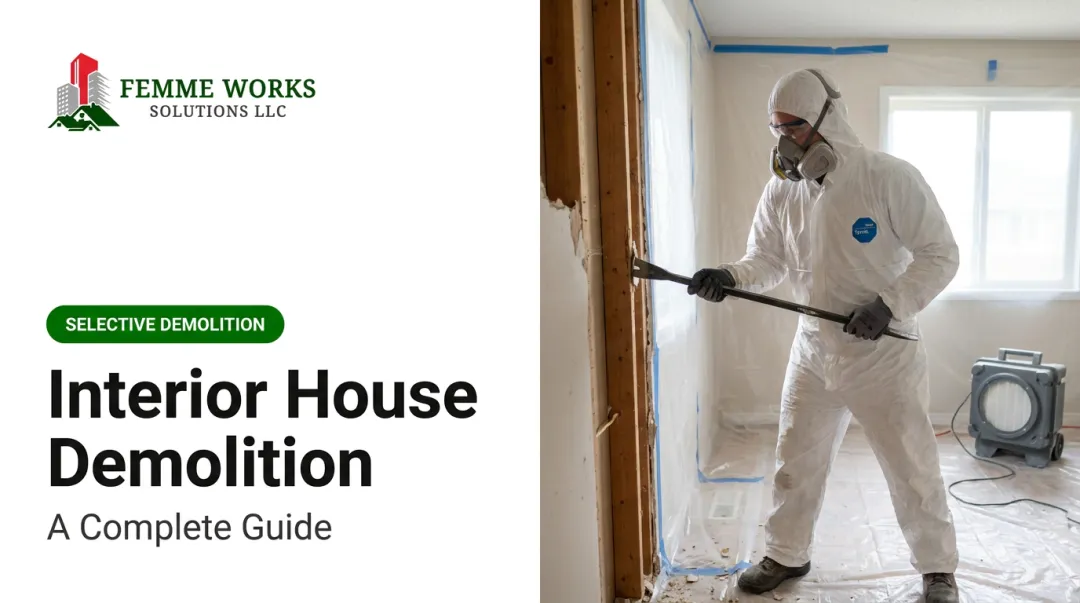
A detailed Interior Demolition Scope of Work (SOW) is the foundational document that prevents these issues. It’s the blueprint that ensures every stakeholder—from the property owner to the general contractor and the demolition crew—is on the same page. This guide will break down exactly what goes into a comprehensive SOW to ensure your next project is safe, efficient, and on-budget.
TL;DR: Key Elements of an Interior Demolition SOW
- A Scope of Work (SOW) details all project tasks, safety protocols, and exclusions.
- Include a pre-demolition survey, hazardous material check, and protect/remove lists.
- A clear SOW prevents scope creep, ensures EPA/OSHA compliance, and enables accurate bids.
- Building age, occupancy, and hazardous materials are key factors that shape the scope.
What Is an Interior Demolition Scope of Work (SOW)?
An interior demolition Scope of Work (SOW) is a formal document that provides a complete description of the work required to strip out the inside of a building while leaving the main structure intact. Its primary purpose is to create a single source of truth for everyone involved, eliminating the ambiguity that leads to costly misunderstandings.
Don't confuse an SOW with a bid or a quote. A bid is the price a contractor offers to do the work. The SOW is the detailed agreement on what that price actually covers, from the first swing of a hammer to the final debris haul-away.
Why a Detailed SOW is Critical for Your Project
A vague SOW is the leading cause of project disputes and budget overruns. In the broader construction industry, large projects are often up to 80% over budget and take 20% longer than scheduled to complete. A well-defined SOW is your best defense against becoming another statistic.
Accurate Bidding and Budgeting
When the scope is crystal clear, contractors can provide precise pricing. A detailed SOW lists every wall to be removed, every fixture to be disconnected, and every material to be salvaged. This prevents the dreaded "That wasn't in the original scope" conversation and minimizes the need for expensive change orders down the line.
Ensuring Safety and Compliance
Interior demolition involves significant risks, from hidden utilities to hazardous materials like asbestos. A comprehensive SOW forces a proactive approach to safety by mandating compliance with federal and state regulations, including those from OSHA and the EPA. This ensures every step of the project is performed safely and legally.
Clear Accountability
The SOW defines exactly who is responsible for what. It outlines the demolition contractor's duties and, just as importantly, what is excluded from their work. This clarity protects both you and the contractor, setting clear expectations and creating a legal record to prevent or resolve disputes.
Key Components of a Comprehensive Interior Demolition SOW
An effective SOW includes several distinct, detailed sections. Leaving any of these out invites confusion and risk.
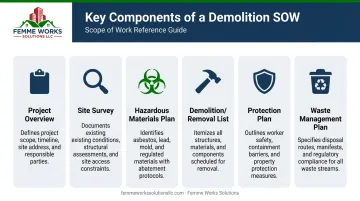
Project Overview and Objectives
This section sets the stage. It should be a high-level summary that includes fundamental information:
- Project address and specific location (e.g., "Suite 300, 3rd Floor")
- Client and property owner information
- Key contacts for all parties (project manager, site supervisor)
- A concise summary of the project's goal, such as "Prepare the 5,000 sq. ft. commercial space for a complete restaurant fit-out."
Pre-Demolition Survey and Site Assessment
Before any work begins, a thorough site assessment is non-negotiable. OSHA regulations explicitly require an engineering survey to identify potential hazards. This part of the SOW must document that the following have been completed:
- Identify all load-bearing walls, columns, and beams that must not be disturbed.
- Locate and plan for the disconnection of all electrical, plumbing, gas, and HVAC systems.
- Document the site's pre-demolition state with photos and videos, including any existing damage.
Hazardous Materials Identification and Abatement Plan
This is often the most critical step, especially in buildings constructed before the 1980s. Federal and state laws require the identification and proper handling of hazardous materials before demolition. The SOW must detail the plan for testing and, if necessary, abating materials such as:
- Asbestos-containing materials (ACM) in flooring, insulation, and ceilings
- Lead-based paint
- Mold
This survey must be performed by a licensed and certified environmental contractor. For example, a specialist firm like Femme Works Solutions can conduct detailed inspections to identify these hazards.
The SOW must include an abatement plan that is fully compliant with EPA and Massachusetts DEP protocols, protecting both workers and future occupants.
Detailed Demolition and Removal List
This is the heart of the SOW. It should be an itemized, room-by-room list of everything that will be removed. Vague descriptions are not acceptable. Be specific.
Examples include:
- Walls: Removal of all non-load-bearing gypsum board partitions.
- Ceilings: Removal of all 2'x4' acoustical ceiling tiles and grid systems.
- Flooring: Removal of all carpet, VCT, and associated mastic.
- Fixtures: Disconnection and removal of all sinks, toilets, and light fixtures.
- Millwork: Removal of all built-in reception desks and cabinetry.
- MEP: Safe removal of identified HVAC ductwork, electrical conduit, and plumbing lines back to the source.
Items to Remain and Protection Plan
Equally important is a list of what should not be touched. The SOW must specify all items that are to remain and detail how they will be protected from damage. This includes things like structural columns, historic architectural features, windows, elevators, and sprinkler systems. The plan should specify the use of barriers, dust control systems, and plywood coverings.
Waste Management and Debris Disposal Plan
Demolition creates a massive amount of waste. In fact, demolition activities account for more than 90% of all construction and demolition debris generated in the U.S. The SOW must outline a clear plan for handling it, including:
- Designated routes for removing debris from the building
- On-site sorting procedures for recycling metals, concrete, and wood
- Proper disposal methods for both general C&D waste and any hazardous materials, all in compliance with local regulations
Key Factors That Influence the Demolition Scope
No two demolition projects are identical. The SOW must be tailored to the unique conditions of the building and the project's specific goals.
Building Age and Construction Type
An older building is far more likely to contain hazardous materials like asbestos and lead paint, automatically expanding the scope to include testing and potential abatement. The building's construction—whether it's concrete, steel, or wood-framed—will also dictate the demolition methods and structural precautions required.
Occupancy Status
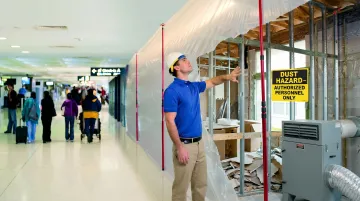
Demolishing a space within an occupied building is far more complex than working in a vacant one. The SOW must include additional measures to protect adjacent tenants and the public, such as:
- Scheduling loud activities during off-hours to control noise.
- Using negative air machines, HEPA air scrubbers, and physical barriers to contain dust and prevent debris from migrating.
- Monitoring vibrations to ensure demolition activities do not impact the building's structural integrity or sensitive equipment nearby.
Structural Considerations
The SOW must be informed by a structural engineer's report. Removing a load-bearing wall without proper analysis and temporary shoring can have catastrophic consequences. The scope must clearly identify all structural elements that are off-limits or require specialized engineering controls to modify.
Asset and Salvage Recovery
Sometimes, a client wants to save certain materials for reuse or resale. This could include architectural fixtures, copper piping, commercial kitchen equipment, or hardwood flooring. If asset recovery is a goal, the SOW must specify these items and describe the careful "deconstruction" methods required to remove them without damage.
Regulatory and Permitting Requirements
The scope must account for all local rules. This includes securing the necessary demolition permits, coordinating utility shut-offs with local providers, and adhering to any municipal ordinances regarding work hours, noise, or dust control.
Common Mistakes and Oversights in a Demolition SOW
Avoid these common pitfalls to keep your project on track:
- Vague Language: Using phrases like "remove miscellaneous items" invites disputes and costly change orders.
- Bad: Remove flooring from office area.
- Good: Mechanically remove approximately 2,500 sq. ft. of glued-down carpet and pad in Office Area A. Scrape concrete subfloor clean of all adhesive.
- Omitting Utility Disconnection Protocols: Failing to detail the safe shut-off and capping of all electrical, plumbing, and gas lines is a serious safety violation. The SOW must specify who is responsible and confirm all utilities are verifiably disconnected before work starts to meet OSHA and local code requirements.
- Neglecting Site Logistics and Cleanup: Where will debris containers be placed? Is there designated parking? What are the daily cleanup expectations? A lack of clear site logistics in the SOW leads to project delays, safety hazards, and property damage.
Frequently Asked Questions
What is typically included in interior demolition?
Interior demolition typically involves the non-structural removal of interior walls, ceilings, flooring, and MEP (mechanical, electrical, plumbing) systems and fixtures. The goal is to strip a space back to its structural shell to prepare for a renovation or new build-out.
What's the difference between a scope of work and a bid?
The SOW describes the "what" and "how" of the project—the detailed task list and procedures. The bid is the "how much"—the price a contractor charges to perform the work described in the SOW. A solid SOW is required to get an accurate bid.
Who is responsible for creating the interior demolition SOW?
It's a collaborative effort. The property owner or general contractor defines the goals, while an experienced demolition contractor like Femme Works Solutions refines the technical details, safety protocols, and logistics into a final document.
Does an interior demolition SOW need to include hazardous material testing?
Yes. For buildings constructed before the 1980s, testing is a critical step and often legally required by OSHA and EPA regulations. This ensures worker safety, protects public health, and guarantees proper waste disposal.
How much does interior demolition cost?
The cost depends on an individual assessment of the job — including complexity, location, materials, and the presence of hazardous materials. A detailed SOW paired with a professional on-site review is the only way to get an accurate quote for your specific project.