That bumpy texture could be hiding asbestos — a serious health and safety concern that requires certified professional assessment before any work begins. According to the National Association of Home Builders, about 47% of owner-occupied homes in the U.S. were built before 1980, meaning millions of homeowners face this potential hazard.
This guide will walk you through everything you need to know about popcorn ceiling removal. We'll break down the key factors that influence your final quote and clarify when you absolutely must call a professional.
TL;DR: Popcorn Ceiling Removal Key Takeaways
- Asbestos Testing is Essential: Professional testing is required for any home built before the mid-1980s before any work begins.
- Biggest Variables: The presence of asbestos is the number one factor, followed by ceiling height and the final finish you choose.
- Professional Removal Required: Asbestos removal is a job for certified, licensed professionals following EPA, OSHA, and DEP protocols — no exceptions. For confirmed asbestos-free ceilings, property owners may explore non-abatement options, but a professional assessment is still recommended.
- Get a Free Quote: Every project is different. Request a free assessment so pricing reflects your specific conditions, size, materials, and location.
The Homeowner's Asbestos Guide for Popcorn Ceilings
Before any removal work begins, it's crucial to understand a key material that can impact the project's scope and safety: Asbestos is a mineral fiber that was once a popular additive in building materials for its fire resistance and durability. It was commonly mixed into the textured spray used to create popcorn ceilings.
Health Risks of Asbestos
The danger isn't in the ceiling itself, but in the microscopic fibers that are released when the material is disturbed — like during scraping, sanding, or demolition. According to the Occupational Safety and Health Administration (OSHA), inhaling these fibers can lead to serious and fatal diseases, including:
- Mesothelioma: A rare and aggressive cancer of the lining of the lungs or abdomen.
- Asbestosis: A chronic lung disease that causes scar-like tissue to form, leading to breathing problems.
- Lung Cancer: Asbestos exposure significantly increases the risk of developing lung cancer.
Given these severe health risks, identifying asbestos before any work begins is a critical safety step.
Testing is Non-Negotiable
You cannot identify asbestos just by looking at it. For any home built before the mid-1980s, professional testing is the only way to know for sure. Do not scrape, sand, or disturb the ceiling until you have a definitive lab result.
An inspector will take a small, sealed sample and send it to a certified lab for analysis. This step provides the critical information you need to proceed safely and legally.
If the test comes back positive, federal and state regulations (from agencies like the EPA) dictate exactly how the material must be handled and disposed of. This is why federal and state regulations make professional abatement a legal requirement to ensure home and family safety.
What Determines Popcorn Ceiling Removal Cost?
Every project is unique, and the only way to get an accurate number is a professional on-site assessment. The price depends on an individual evaluation of your specific job — including ceiling size, condition, accessibility, whether asbestos is present, and your location. Request a free quote from a certified contractor who can review your exact conditions before work begins.
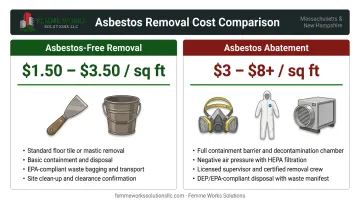
Asbestos-Free Removal
For a ceiling that has tested negative for asbestos, the removal process is more straightforward. The scope typically covers labor for scraping, minor prep work, and basic cleanup.
Asbestos Abatement
If your ceiling contains asbestos, the project shifts from removal to abatement — a highly regulated process that requires certified professionals and specialized equipment. Abatement covers full worksite containment, negative air machines, safety gear, compliant hazardous waste disposal, and certified labor. These safety requirements make abatement substantially more involved than standard removal, and the quote will reflect that.
Key Factors That Influence Removal
Several key factors will influence the final scope and quote for your project.
Ceiling Height and Accessibility
Standard 8-foot ceilings are the baseline. If you have vaulted or high ceilings (over 9 feet), expect labor requirements to increase. Crews will need scaffolding instead of standard ladders, which adds to setup time and complexity.
Ceiling Condition
Has the popcorn ceiling been painted? If so, the paint acts as a sealant, preventing the water solution used to soften the texture from soaking in. This makes scraping much more difficult and time-consuming. Existing damage like cracks or water stains will also need to be repaired after the texture is gone, which is an additional consideration.
Scope of Work and Refinishing
Removing the popcorn texture is only half the battle. The drywall underneath is often unfinished and will need to be prepared for paint. Your final quote will depend on the new finish you choose.
- Skim Coating: Applying a thin layer of joint compound to create a modern, smooth finish.
- New Texture: Applying a different texture, like knockdown or orange peel.
- Priming & Painting: The final step to complete the look.
Each of these is a separate line item on your quote.
Furniture and Room Preparation
A quote might assume the room is empty. If the contractor's team has to move heavy furniture, cover all walls and floors with plastic, and mask off fixtures, the complexity goes up. You can often reduce labor by handling this prep work yourself before the crew arrives.
Geographic Location
Labor rates and disposal fees vary significantly across the country. In regions with a high concentration of older homes, like much of Massachusetts and New Hampshire, contractors are well-versed in asbestos projects.
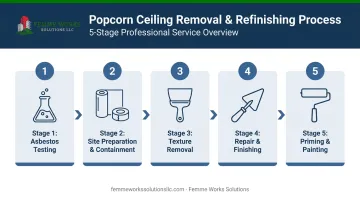
The Full Removal & Refinishing Process: Step-by-Step
Understanding the entire project lifecycle helps you know what to expect from start to finish.
- Asbestos Testing: This is the mandatory first step for any home built before the mid-1980s. The results dictate the rest of the process.
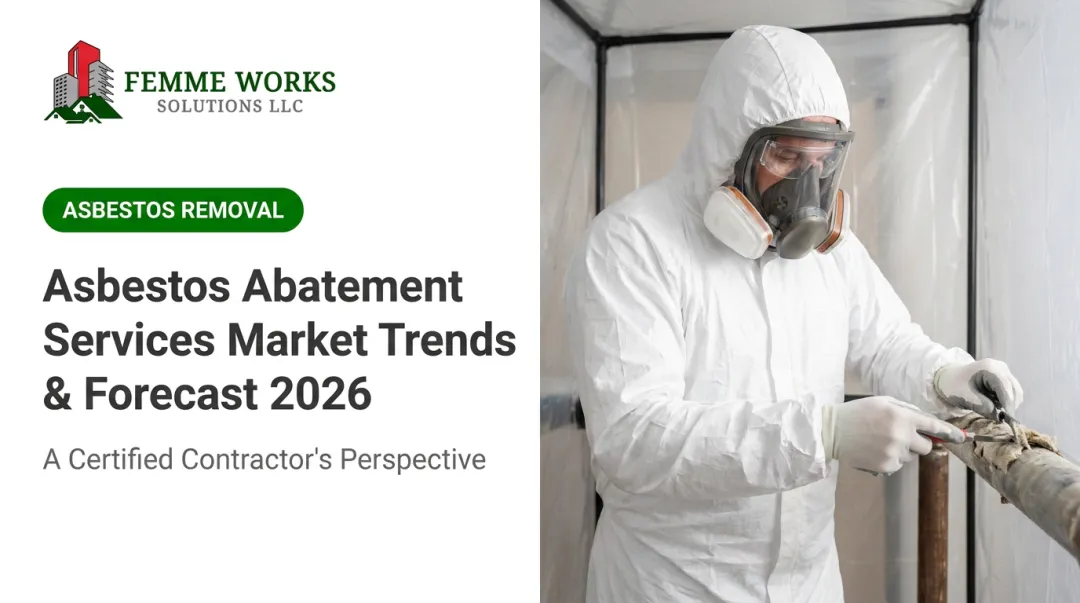
- Site Preparation & Containment: Professionals remove all furniture and fixtures, then cover floors and walls with heavy-duty plastic. The work area is sealed off from the rest of the house. For asbestos projects, this involves creating a fully contained, negative-pressure environment.
- Texture Removal: For non-asbestos ceilings, the texture is typically wetted down to minimize dust and then scraped off. For asbestos abatement, the process is far more rigorous, following strict containment and safety protocols to prevent fiber release.
- Repair & Finishing: After removal, the crew repairs any damage to the underlying drywall. They then apply a skim coat for a smooth surface or add a new texture, followed by sanding to prepare for paint.
- Priming and Painting: The final step is to prime and paint the new, clean ceiling, completing the room's transformation.
Professional Abatement: What the Regulations Require
The Professional Route
Hiring a professional ensures efficiency, a high-quality finish, and peace of mind. They have the right tools, techniques, and insurance to get the job done correctly and cleanly.
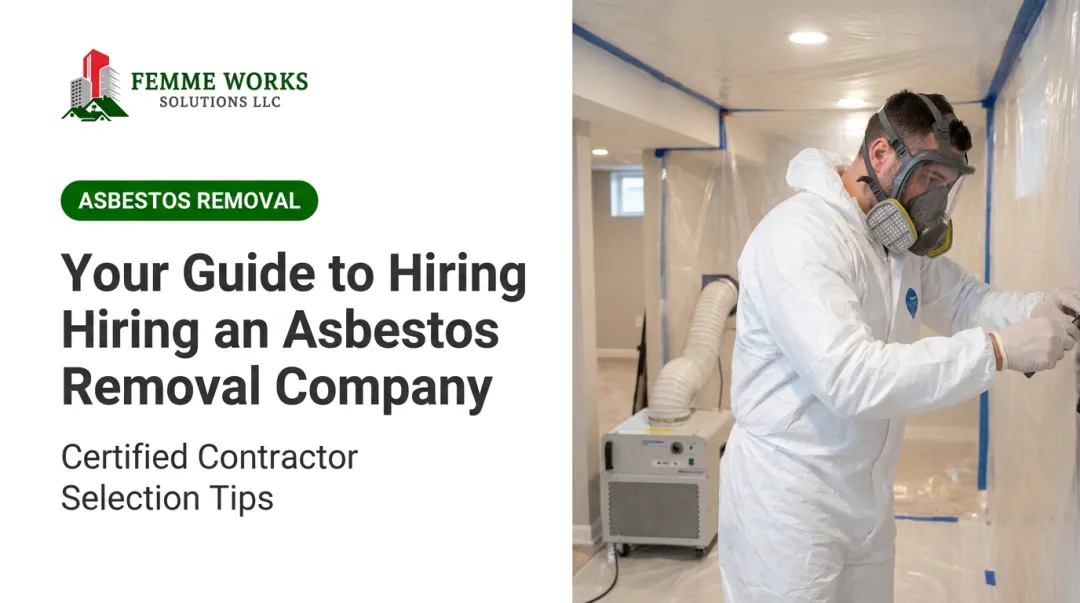
Hiring a certified asbestos pro is non-negotiable when asbestos is present. It isn't just a good idea — it's a legal and safety requirement. Companies like Femme Works Solutions, with over 15 years of experience serving Massachusetts and New Hampshire, are trained to handle hazardous materials according to strict EPA and OSHA protocols.
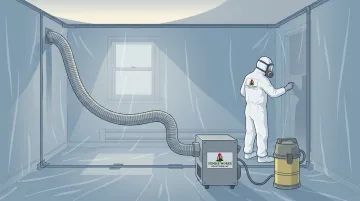
A certified pro brings more than just a scraper to the job. They use state-of-the-art equipment that you can't rent at a local hardware store:
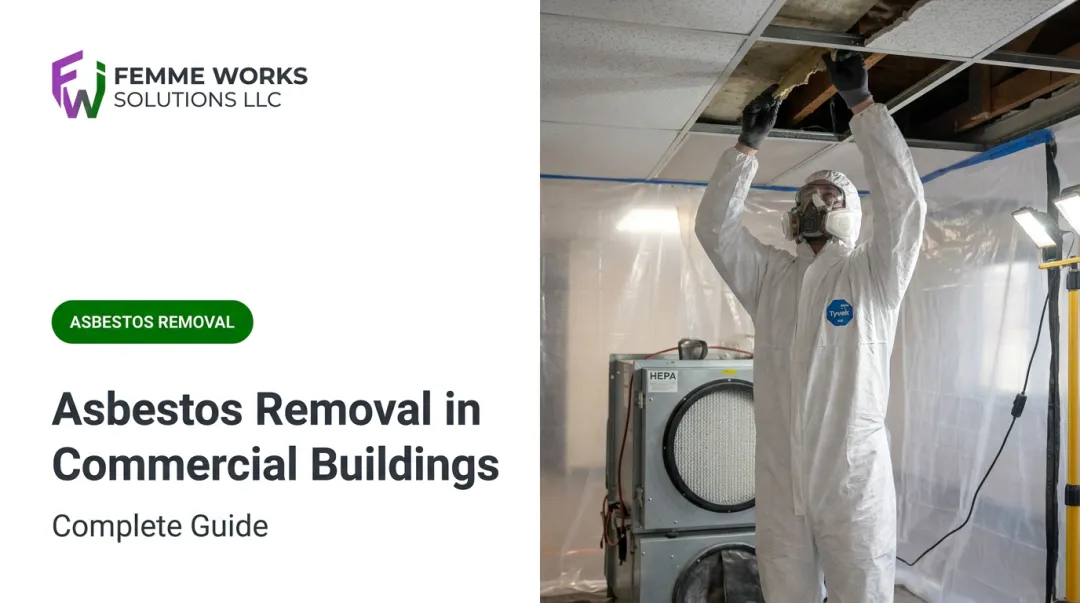
- Negative-air machines create a vacuum in the work area, preventing airborne asbestos fibers from escaping into your home.
- HEPA (high-efficiency particulate air) filters in vacuums and air scrubbers capture microscopic asbestos particles.
- Full containment systems completely seal off the work area with plastic sheeting and establish a decontamination zone.
Hiring a licensed and insured professional protects your family's health, ensures the project complies with all regulations, and preserves your property's value.
Frequently Asked Questions
How much does asbestos popcorn ceiling removal cost?
Every project is different. The final price depends on an individual assessment of the job — ceiling size, height, condition, accessibility, location, and disposal requirements. Contact Femme Works Solutions for a free quote based on your specific property.
Is it worth removing an asbestos popcorn ceiling?
Yes, it is worth it to eliminate a known health hazard, especially if the ceiling is damaged, crumbling, or if you're planning a renovation. Removal improves indoor air quality and increases your home's value and appeal to potential buyers.
Can an asbestos popcorn ceiling be removed if it has been painted?
Yes, but the process is more difficult. The paint layer prevents water from softening the texture, which means the removal process requires more intensive labor and time to scrape it off safely.
What are the signs of asbestos in a popcorn ceiling?
No. Asbestos fibers are microscopic and require identification by a certified lab. For homes built before the mid-1980s, it is safest to assume asbestos is present until professional testing proves otherwise.
Can I just cover an asbestos popcorn ceiling instead of removing it?
Yes, this process is called encapsulation. While it contains the fibers, the asbestos hazard remains behind the new ceiling. You are still legally required to disclose its presence when selling your home.
How long does the popcorn ceiling removal process take?
A non-asbestos project may take 2-3 days for a few rooms. Certified asbestos abatement is more complex due to safety protocols and typically takes 3-5 days or longer, depending on the project size.