A visually clean room isn't enough to guarantee safety. A home is only confirmed to be safe through a strict, multi-step verification process that ends with scientific proof. This guide walks you through that exact process, explaining how professionals verify that the air in your home is clean and safe to breathe again.
Key Takeaways
- A home is considered safe only after it passes mandatory, independent air clearance testing.
- The process involves a waiting period, a thorough visual inspection, and aggressive air sampling.
- Lab analysis must confirm the airborne fiber level is below the strict safety standard.
- You must receive an official clearance certificate before re-occupying the work area.
- Never re-enter a contained work zone until you are officially cleared to do so.
What Guarantees a Home is Safe After Asbestos Removal?
True safety after asbestos abatement goes beyond just removing materials. It requires scientific verification that the air is free of microscopic fibers. This guarantee rests on three essential pillars.
Strict Abatement Procedures
The process starts with the removal itself. A safe outcome depends on the contractor performing the abatement correctly from the beginning. This means minimizing fiber release through strict containment protocols.
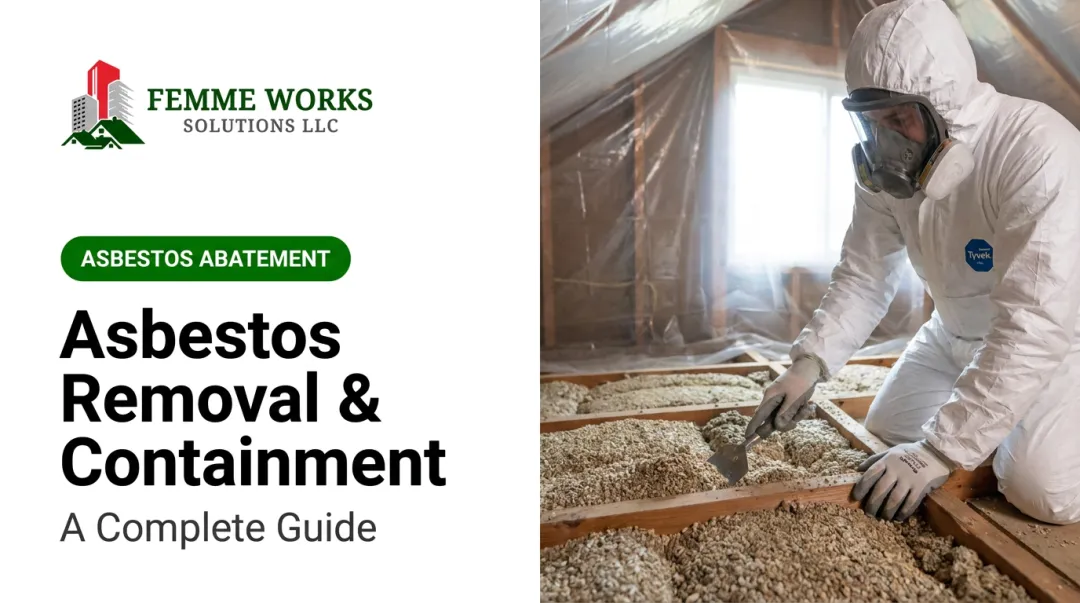
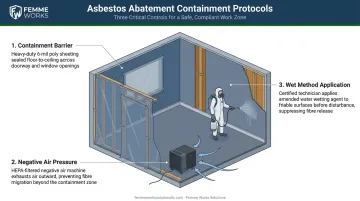
- Full Containment: The work area is sealed off from the rest of the house using heavy-duty plastic sheeting and tape.
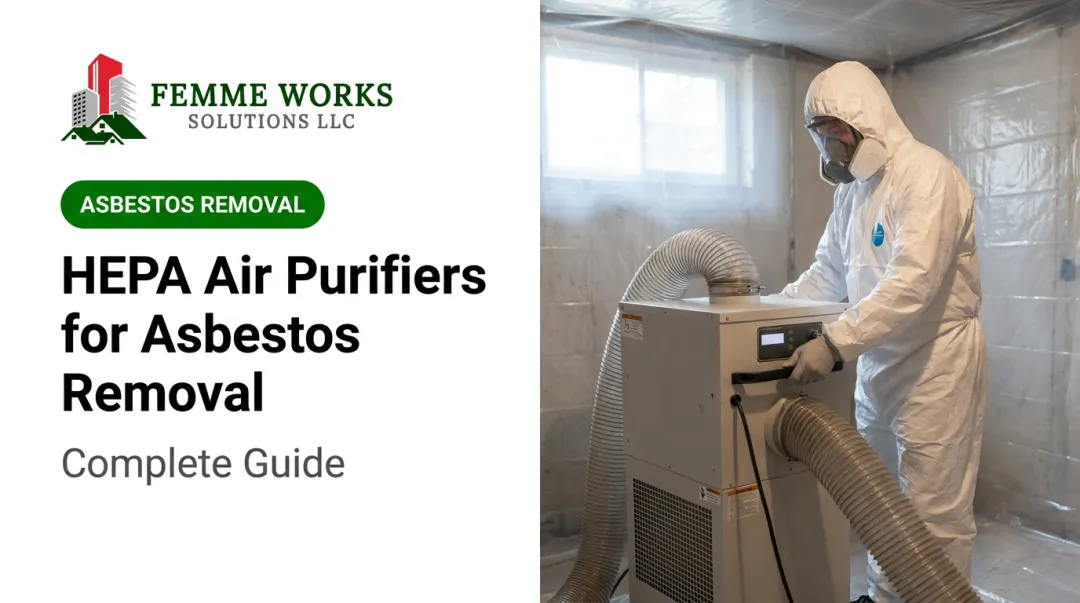
- Negative Air Pressure: High-efficiency particulate air (HEPA) filtering machines are used to create negative air pressure inside the containment zone. This ensures that air flows into the work area, not out, preventing any stray fibers from escaping into other parts of your home.
- Wet Methods: Asbestos-containing materials are wetted down with a surfactant solution before and during removal to keep fibers from becoming airborne.
Independent Third-Party Verification
This step is non-negotiable. The company performing the air quality test must be different from the one that did the removal. This separation prevents any conflict of interest and guarantees unbiased results.
A certified industrial hygienist or licensed air monitoring technician acts as your independent verifier, confirming the abatement contractor did their job correctly.
Regulatory Compliance
The entire process is governed by strict regulations designed to protect public health. In Massachusetts and New Hampshire, projects must follow rules set by the EPA and OSHA, as well as state-specific bodies like the Massachusetts Department of Environmental Protection (MassDEP).
These regulations define every part of the process, from how materials are handled to the exact air quality standards required for a home to be declared safe.
The Post-Removal Safety Verification Process: A Step-by-Step Guide
After the last bag of asbestos-containing material has been removed and the area has been thoroughly cleaned, the formal verification process begins. Here’s what happens next.
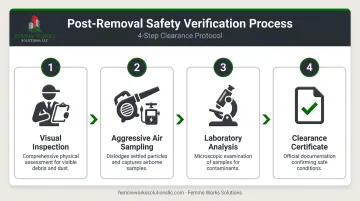
Step 1: The Waiting Period
Once the final HEPA vacuuming and wet-wiping are complete, there's a waiting period. This allows any remaining microscopic fibers still suspended in the air to settle. During this time, HEPA air scrubbers often continue to run to purify the air.
While there's no universal waiting time, the goal is to create a still environment before air sampling begins. In New Hampshire, for example, regulations specify waiting at least six hours after the final cleanup.
Step 2: The Visual Inspection
Before any air pumps are turned on, an independent inspector conducts a meticulous visual check of the contained area. This is a pass/fail test. The inspector looks for any signs of remaining debris, dust, or residue on all surfaces, including walls, ceilings, floors, and equipment.
If they find any visible dust or debris, the abatement contractor is required to re-clean the area. The project cannot move to the air sampling stage until it passes this visual inspection.
Step 3: Aggressive Air Clearance Sampling
This is the most critical step in ensuring your home is safe. It's not enough to test the air while it's still. To get an accurate picture of the air quality under normal living conditions, the inspector performs what's called "aggressive sampling."
As described in the EPA's AHERA regulations, this involves using a leaf blower to stir up any settled fibers from all surfaces while high-volume air pumps pull air through special collection cassettes.
This simulates a worst-case scenario—much like kids running through a room or a furnace kicking on—to ensure that if any fibers are left, they are captured in the samples.
Step 4: Laboratory Analysis and Final Report
The collected air cassettes are sealed and sent to an accredited laboratory. Technicians analyze the samples, typically using a method called Phase Contrast Microscopy (PCM), to count the number of fibers present.
The lab then generates a formal report that compares the fiber concentration in the samples to established safety standards. This report will definitively state whether the air inside the work area has passed or failed the clearance test.
Understanding Air Clearance Test Results
The lab report isn't just a collection of numbers; it's the scientific proof that determines whether your home is ready for re-occupancy.
Reading the Numbers: Pass vs. Fail
The results are measured in fibers per cubic centimeter of air (f/cc), and the safety standard is extremely strict.
A passing result means the air inside the containment area meets state and federal regulations. In Massachusetts, this requires an asbestos fiber concentration of less than or equal to 0.01 f/cc, according to the Mass.gov PCM Clearance FAQ. This confirms the air is as clean as the air outside.
A failing result occurs if the fiber count exceeds that 0.01 f/cc limit. The abatement contractor must then re-clean all surfaces, run air scrubbers, and repeat the entire visual and air testing process until the space passes.
The Asbestos Clearance Certificate: Your Proof of Safety
Once the area passes, you will receive a formal, written clearance certificate or report. This document is your ultimate peace of mind and an important legal record.
Be sure your clearance certificate includes:
- The date and time of the testing.
- The locations where each air sample was taken.
- The laboratory results (the f/cc value) for each individual sample.
- The name and accreditation of the laboratory that performed the analysis.
- A clear statement that the area has passed clearance and is safe for re-occupancy.
Common Pitfalls That Compromise Post-Removal Safety
To ensure the verification process is legitimate and your family is protected, avoid these critical mistakes:
- Insist on independent air testing. The removal contractor should never perform their own clearance testing. A third-party inspector is essential for unbiased, trustworthy results.
- Wait for the official clearance certificate. Do not re-enter the work area until you have official lab results confirming it is safe.
- Clean areas just outside the containment zone. A fine layer of dust can settle in adjacent rooms, so a final, precautionary cleanup is a wise safety measure.
Best Practices for Homeowners After Asbestos Abatement
You have the clearance certificate—congratulations! Your home has been declared safe. Here are a few final steps to take.
- File all documentation. Carefully review the clearance report and store it with other important household records. This certificate is crucial if you plan to sell your home in the future.
- Perform a final cleaning. While not always required, it's good practice to clean areas outside the containment zone. Wet-wipe all surfaces and use a HEPA-filter vacuum to capture any remaining dust.
- Confirm the testing process with your contractor. A reputable firm will be transparent about third-party air clearance testing. For example, at Femme Works Solutions, we coordinate with independent hygienists on every project in Massachusetts and New Hampshire to ensure unbiased, compliant results.
Conclusion: Your Home is Safe When a Certified Process Says It Is
The safety of your home after asbestos removal is not a matter of guesswork. It's a conclusion reached through a rigorous, scientific, and regulated process. From the initial containment to the final air test, every step is designed to protect your family's health. An asbestos clearance certificate provides definitive proof that the job was completed correctly and your home is verifiably safe.
At Femme Works Solutions, this commitment to safety, compliance, and transparent communication guides every project. Homeowners across Massachusetts and New Hampshire can rely on our certified and experienced professionals for a fully compliant and verifiably safe asbestos removal project.
Frequently Asked Questions
How long after asbestos is removed is it safe?
It is safe immediately after the area passes independent air clearance testing. This process, including lab analysis, is typically completed within 24 to 72 hours after the physical removal work is finished.
Can you live in a house while asbestos is being removed?
The immediate work area will be completely sealed off, so you cannot live there. While you may occupy other parts of the house depending on the project's scope, relocating temporarily is the safest option.
What is the 3-5-7 rule for asbestos sampling?
This rule is for testing building materials before a project starts, not for final air clearance. It's an EPA under AHERA regulations guideline for taking 3, 5, or 7 bulk material samples to identify asbestos.
What is an asbestos clearance certificate?
It is the official report from an independent testing agency that documents the air quality in the work area has met or exceeded safety standards (e.g., below 0.01 f/cc). This document formally declares the area safe for re-occupancy.
What should I do if the house still has an odor after asbestos removal?
Asbestos itself is odorless. Any lingering smells are likely from the wetting agents (surfactants) or encapsulants used during the removal process. These odors are not hazardous and should disappear with proper ventilation.