Ignoring it isn't an option. This guide will walk you through the common causes of crawl space mold, the risks of inaction, and the professional steps required for effective remediation. We'll also cover the essential strategies to ensure that once the mold is gone, it stays gone for good.
Key Takeaways
- Crawl space mold thrives on excess moisture from humidity, groundwater, plumbing leaks, and poor ventilation.
- Ignoring mold can lead to health issues like allergies and asthma, plus structural damage from wood rot.
- Proper remediation involves fixing the moisture source, removing contaminated materials, and treating surfaces.
- Long-term prevention is key and includes crawl space encapsulation, dehumidifiers, and proper drainage.
Common Causes of Mold in Your Crawl Space
Mold needs three things to grow: a food source (like the wood and insulation in your crawl space), a suitable temperature, and moisture. The first two are always present, making moisture the one critical factor you can control. Here in Massachusetts and New Hampshire, several common issues turn a crawl space into a perfect breeding ground for mold.
High Humidity and Condensation
During our humid Massachusetts and New Hampshire summers, warm, moist air often finds its way into the cool, dark crawl space. When this warm air hits colder surfaces like pipes, ductwork, and floor joists, it condenses—creating water droplets that feed mold growth.
This problem is amplified by the "stack effect." As warm air rises and escapes through the upper levels of your home, it creates a vacuum that pulls air up from the lowest level—the crawl space. This means mold spores, musty odors, and damp air are continuously drawn into your living areas.
Groundwater and Poor Drainage
Your home's exterior drainage system is the first line of defense. When it fails, water ends up in your crawl space.
- Improper Grading: If the soil around your foundation doesn't slope away from the house, rainwater will pool against the walls and seep inside.
- Clogged Gutters: Overflows from clogged gutters can saturate the ground right next to your foundation.
- Short Downspouts: Downspouts that dump water too close to the house create the same issue.
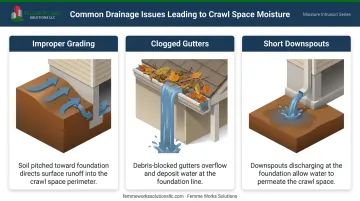
In some cases, hydrostatic pressure can force groundwater up through the dirt or thin concrete floor, creating a perpetually damp environment.
Plumbing Leaks
Even a small, slow drip from a water supply line or drainpipe can be a major source of moisture. Over time, this constant leak saturates the subfloor, insulation, and wooden joists, creating a concentrated area for aggressive mold and wood rot to take hold. This makes it critical to periodically inspect your crawl space for any signs of drips or water stains.
Open Vents and Air Leaks
For decades, building codes required crawl space vents to "air out" the space. We now know this approach often makes the problem worse, especially during humid summers.
According to the U.S. Department of Energy, these vents allow damp air to enter, increasing condensation and mold risk. Unsealed gaps around pipes and the sill plate also contribute to this moisture intrusion.
The Dangers of Ignoring Crawl Space Mold
Ignoring mold in your crawl space is a costly mistake. What starts as an unseen problem can lead to severe consequences for your home's structure and the health of everyone living in it.
Health Risks for Your Family
Mold releases microscopic spores into the air that can easily be circulated throughout your home by your HVAC system. For many people, exposure to these spores can trigger a range of health issues. The CDC and EPA both warn that indoor mold exposure can cause:
- Persistent coughing and wheezing
- Nasal congestion and sneezing
- Skin rashes and irritation
- Red, itchy eyes
- Asthma attacks in those with asthma
The problem is widespread. A 2011 peer-reviewed study estimated that 21% of current asthma cases in the U.S. may be attributable to dampness and mold in homes.
Structural Damage to Your Home
Mold doesn't just make you sick; it eats away at your house. Fungi feed on organic materials, meaning your home's wooden joists, subflooring, and sill plates are on the menu. This leads to wood rot, which weakens the structural integrity of your home.
According to the USDA Forest Products Laboratory, wood decay begins when the moisture content of wood consistently stays above 20%. Over time, this decay can cause sagging floors, sticking doors, and can even lead to the need for expensive structural repairs.
Warning Signs: How to Spot a Mold Problem Early
Catching a mold problem in its early stages can save you a significant amount of money and stress. Be on the lookout for these common indicators that you have a moisture issue in your crawl space.
- Persistent musty odors, especially when your heating or air conditioning system runs. This earthy smell is the most common indicator of a mold issue.
- Unexplained allergy or respiratory symptoms that worsen when you are at home but seem to improve when you leave.
- Visible signs of moisture, such as dark stains on insulation, peeling paint near the floor, or a white, chalky substance (efflorescence) on foundation walls.
- Soft, spongy, or uneven floors, which can mean excess moisture is causing the underlying wooden support structure to rot.
Your Guide to Professional Crawl Space Mold Remediation
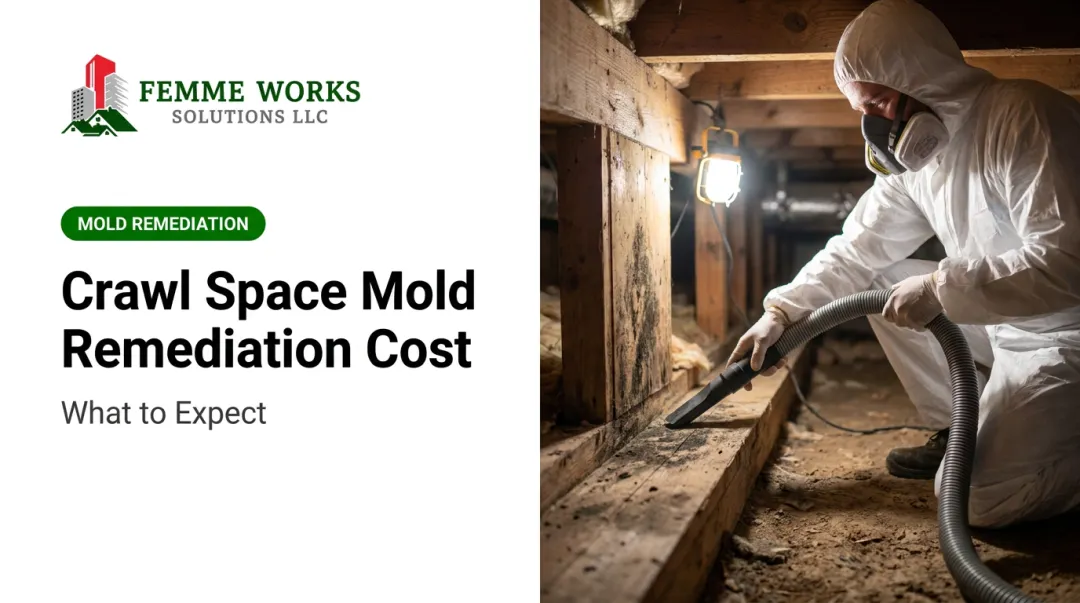
Because of the health risks and the specialized equipment needed, crawl space mold remediation is a job for certified professionals. The goal isn't just to clean visible mold but to fix the underlying conditions that caused it.
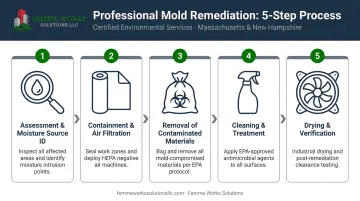
Step 1: Assessment and Moisture Source Identification
A professional's first step is a complete inspection. This involves identifying the extent of the mold growth and, most importantly, pinpointing the source of the moisture. Without fixing the water problem, the mold will just come back.
Step 2: Containment and Air Filtration
To prevent mold spores from spreading to the rest of your house, the crawl space must be sealed off. Professionals use plastic sheeting and create a negative air pressure environment with specialized equipment. At Femme Works Solutions, we use industrial-grade negative air machines and HEPA air scrubbers to ensure all airborne contaminants are captured and vented outside.
Step 3: Removal of Contaminated Materials
Any material that can't be salvaged must be removed. This often includes old, moldy fiberglass insulation, damaged vapor barriers, and any organic debris on the crawl space floor. These materials are carefully bagged and disposed of according to regulations.
Step 4: Cleaning and Treatment
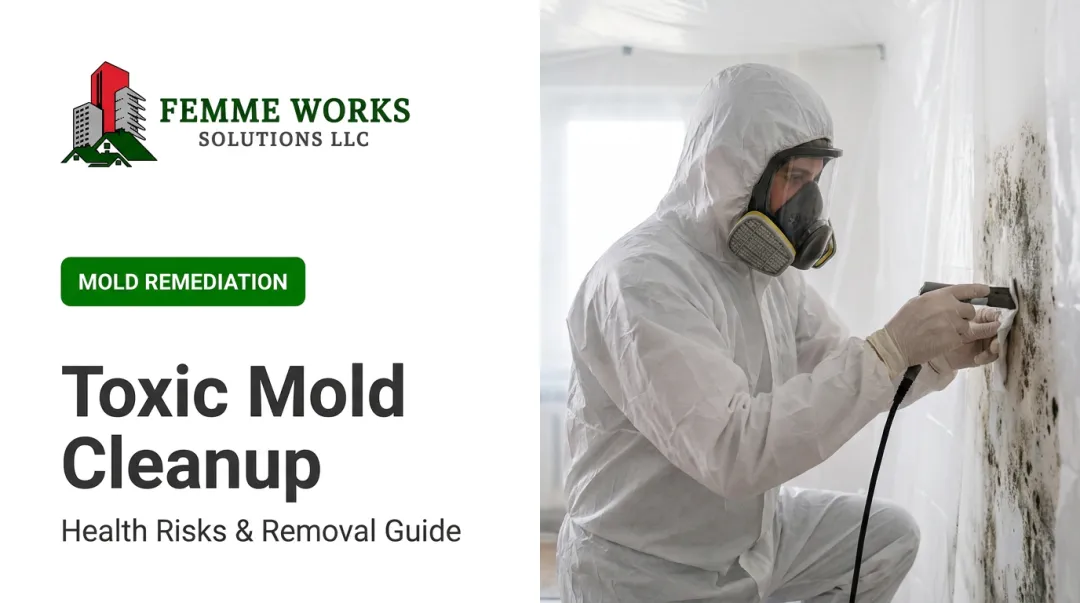
Next, all affected surfaces are thoroughly cleaned. This can involve wire brushing, HEPA vacuuming, or soda blasting to remove mold from structural wood. After cleaning, an EPA-registered antimicrobial agent is applied to kill any remaining mold spores and inhibit future growth.
Step 5: Drying and Verification
The crawl space must be completely dried out using industrial dehumidifiers and high-volume air movers. Rushing this step can undermine the entire remediation process.
A reputable company will then verify that the project was successful and that all work complies with EPA and OSHA protocols, giving you peace of mind that the job was done right.
How to Prevent Crawl Space Mold from Coming Back
Once your crawl space is clean and dry, the final step is to ensure it stays that way. This involves transforming it from a damp, vented space into a clean, controlled environment using a combination of proven methods.
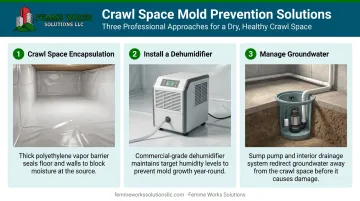
Seal the space with encapsulation. The most effective long-term solution is crawl space encapsulation. This process seals off vents and installs a heavy-duty, puncture-resistant vapor barrier across the floor and foundation walls, blocking moisture from the ground and outside air.
Control humidity levels. After encapsulation, a professional-grade crawl space dehumidifier is essential. These units automatically keep the relative humidity below 50%—the threshold for mold growth—creating a dry space that protects your home’s structure and improves air quality.
Manage groundwater with a sump pump. For homes with significant groundwater intrusion, a sump pump and interior drainage system may be necessary. This system actively collects and pumps water away from the foundation, providing a powerful defense against flooding and seepage.
A professional assessment can determine the right combination of these solutions to permanently protect your home.
Frequently Asked Questions
How serious is mold in a crawl space?
It's very serious. It can cause ongoing health problems from poor indoor air quality and lead to expensive structural damage from wood rot if left unaddressed.
How much does crawl space mold remediation cost?
The cost depends on an individual assessment of the job — including the size of the crawl space, severity of the mold, access conditions, and materials affected. A professional inspection is required for an accurate quote. Contact Femme Works Solutions for a free on-site assessment.
Can I put a dehumidifier in my crawl space without encapsulation?
While a dehumidifier will help, it will run constantly and struggle to keep up in an unsealed crawl space. It will be fighting an endless battle against moisture coming from the ground and outside vents, making it highly inefficient.
What are the first signs of mold in a crawl space?
The most common first signs are a persistent musty smell inside your house, visible discoloration on wood or insulation in the crawl space, and an increase in allergy-like symptoms among occupants.
Is it safe to live in a house with mold in the crawl space?
No, it is not considered safe, especially for children, the elderly, or anyone with respiratory conditions. Mold spores can easily travel from the crawl space into your living area through the stack effect.
Does homeowners insurance typically cover crawl space mold remediation?
It depends on your policy and the cause. Mold from a sudden, accidental event like a burst pipe may be covered. However, mold caused by long-term humidity, poor maintenance, or groundwater seepage is often excluded.