Immediate and proper mold cleanup is critical for protecting not only a building's structural integrity but, more importantly, the health of its occupants. Mold can begin to grow within just 24-48 hours of water exposure, turning a water damage problem into a serious health hazard.
This guide provides a comprehensive overview of how to assess mold damage, the step-by-step cleanup process, crucial safety precautions, and when it’s time to call in certified professionals to handle the job safely and effectively.
Key Takeaways
- Mold growth starts within 24-48 hours of water exposure, making rapid action critical after a natural disaster.
- Certified professionals follow strict EPA, OSHA, and DEP protocols and use industry-grade PPE and containment throughout the remediation process.
- Post-disaster contamination almost always requires professional remediation — certified specialists have the equipment and training to handle widespread, complex, or hazardous conditions safely.
- Proper remediation involves removing contaminated porous materials and cleaning surfaces using EPA-approved methods.
- Preventing future growth by controlling moisture is the final, most important step of the remediation process.
What is Post-Disaster Mold Remediation?
Post-disaster mold remediation is the multi-step process of identifying, containing, removing, and cleaning mold-contaminated materials from a property after a natural disaster like a hurricane or flood. Its primary goals are to return mold levels to a natural, acceptable state and to address the underlying moisture issue that allowed it to grow initially.
This process is far more complex than simple household cleaning. Unlike minor mildew issues, post-disaster remediation involves:
- Widespread contamination across large, saturated areas.
- Hazardous floodwater that may contain sewage, chemicals, and other pathogens.
- Strict safety protocols and a far more thorough and professional removal process.
Why Immediate Mold Cleanup is Critical After a Natural disaster
Why Immediate Mold Cleanup is Critical After a Natural Disaster
Acting fast isn't just a suggestion—it's a necessity. Delaying cleanup allows three major problems to escalate quickly, creating risks to both your health and your property.
Health Risks
Mold exposure can trigger a range of health issues, from a stuffy nose and coughing to skin rashes, according to the Centers for Disease Control and Prevention (CDC).
For people with asthma, allergies, or compromised immune systems, the effects are far more severe and can lead to serious respiratory infections. Children and the elderly are also particularly vulnerable.
Structural Damage
Mold isn't just an unsightly surface problem; it actively digests the organic materials it grows on. Over time, it can weaken and destroy essential building components, including:
- Drywall
- Wooden studs
- Flooring and subflooring
- Ceiling tiles
What starts as a contained issue can spread, compromising the structural integrity of your property. The longer you wait, the more extensive—and expensive—the repairs will become.
Contamination Spread
Mold reproduces by releasing microscopic spores into the air that travel effortlessly through your property. Carried by air currents or an HVAC system, these spores can turn a localized problem into a building-wide infestation, making remediation far more complex.
A Step-by-Step Guide to Safe Mold Cleanup
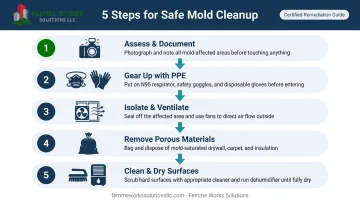
After a natural disaster, professional remediation is the recommended approach for all but the most minor surface issues. Post-disaster conditions — contaminated floodwater, saturated porous materials, and widespread spore spread — require certified expertise. Here is the professional process our technicians follow:
Assess the Damage and Document Everything Before any work begins, confirm the building is structurally safe to enter. Our team thoroughly documents all damage with photos and findings to support the remediation plan and insurance process. We identify visible mold, signs of hidden moisture, and any materials requiring removal.
Establish Professional Safety Controls Our certified technicians arrive fully equipped with professional-grade PPE — including NIOSH-approved respirators, non-vented safety goggles, long non-porous gloves, and disposable coveralls — and establish full containment before any work begins.
Isolate the Contaminated Area We seal off affected areas using heavy plastic sheeting and negative air machines with HEPA filtration to prevent cross-contamination and keep spores from spreading to unaffected parts of the building.
Remove and Discard Porous Materials Porous materials with mold growth — such as drywall, insulation, carpet, and ceiling tiles — are safely removed and sealed in heavy-duty plastic bags for compliant disposal per EPA and state regulations.
Clean Non-Porous Surfaces and Verify Dryness Non-porous surfaces are cleaned with EPA-approved antimicrobial solutions and thoroughly dried using commercial-grade air movers and dehumidifiers. Moisture meters confirm all materials are completely dry before the area is cleared for rebuilding.
When to Call a Professional
You should call a certified professional like Femme Works Solutions if:
- The mold covers more than 10 square feet.
- You suspect mold is in your HVAC system.
- The water damage was caused by contaminated water (like sewage).
- Someone in your home has a compromised immune system or respiratory issues.
Attempting a large-scale cleanup without proper containment and equipment can make the problem worse and pose serious health risks.
Key Factors Affecting Your Mold Cleanup Strategy
The right mold cleanup strategy depends on the specifics of the contamination. Your approach is guided by three key factors: the size of the problem, the source of the water, and the materials involved.
Extent of Contamination
The scale of the cleanup is the first consideration. According to guidelines from the EPA, post-disaster conditions that involve floodwater exposure, contaminated materials, or widespread growth require professional remediation. Certified contractors have the equipment and protocols to safely address contamination and restore safe conditions.
Type of Water Damage
The source of the water dictates the level of hazard. Water damage is classified into three categories:
- Category 1 (Clean Water): Originates from a sanitary source, like a broken supply line.
- Category 2 (Grey Water): Contains some contamination, such as discharge from a washing machine.
- Category 3 (Black Water): Grossly contaminated water from sources like floods or sewage backups. It can contain dangerous pathogens and chemicals.
Any damage caused by black water requires professional handling. The health risks are simply too high for anyone but a certified professional.
Materials Affected
The type of material determines whether it can be cleaned or must be discarded.
- Clean and Save: Non-porous materials like glass, metal, and hard plastics can typically be salvaged.
- Remove and Replace: Porous materials like drywall, carpet, and insulation almost always require removal and disposal.
- Salvage with Care: Semi-porous materials like wood studs and concrete can often be cleaned but may require advanced techniques like sanding or media blasting.
When to Call a Professional (And Common Mistakes to Avoid)
Knowing your limits is essential for a safe and successful remediation. Trying to handle a large or complex mold problem on your own can lead to bigger issues down the road.
Red Flags That Mandate a Professional
It's time to call in a certified remediator if you encounter any of these situations:
- The mold problem covers more than 10 square feet.
- You suspect mold is growing in your HVAC system (e.g., a musty smell when it runs).
- The water damage was caused by contaminated floodwater or sewage (black water).
- Household members have pre-existing health conditions like asthma, severe allergies, or compromised immune systems.
Common Mistakes That Make Contamination Worse
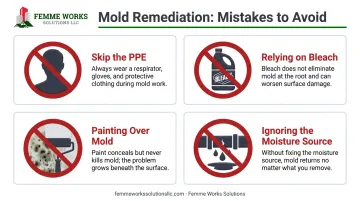
Avoid these common but dangerous errors during cleanup:
- Disturbing mold without professional containment: Removing mold without sealed barriers, HEPA filtration, and certified procedures exposes occupants to harmful mold spores and can spread contamination throughout the building. Certified professionals provide the training and equipment needed for safe remediation.
- Relying on bleach alone: Bleach is ineffective on porous materials and creates hazardous fumes. The EPA recommends using detergent and water.
- Painting over the problem: This is a cosmetic fix that allows mold to keep growing and destroying the material underneath.
- Ignoring the moisture source: If you don't fix the underlying leak or water issue, the mold will inevitably return.
The Value of a Certified Remediator
Certified professionals bring specialized equipment and expertise that ensures the job is done right. They use HEPA air scrubbers to purify the air, establish proper containment barriers to prevent cross-contamination, and use advanced moisture meters to confirm everything is completely dry.
For homeowners and businesses in Massachusetts and New Hampshire, working with a fully licensed, insured, and experienced company like Femme Works Solutions provides critical peace of mind. With over 15 years of experience, our team handles hazardous materials safely and effectively.
As a Woman/Minority-Owned business, we are committed to providing transparent service that complies with all EPA, OSHA, and DEP protocols, ensuring your property is restored safely.
Frequently Asked Questions
What happens after you clean mold?
After removing contaminated materials, thoroughly dry the area and repair the original moisture source. Continue to monitor the property for any signs of recurrence, such as musty smells or new visible growth.
How long after mold remediation will I start to feel better?
For those with mold-related symptoms, improvement can begin within days of removal. However, the timeline varies depending on individual sensitivity and the severity of the exposure. Always consult a doctor for specific health concerns.
Can I just use bleach to kill all mold?
No. Bleach only works on non-porous surfaces like tile and won't kill mold roots in wood or drywall. Instead, the EPA recommends scrubbing hard surfaces with a simple detergent and water solution.
What is the difference between mold and mildew?
Mildew is a specific type of mold that grows flat and appears powdery or downy, often in white or grey. Other molds can be fuzzy or slimy and come in various colors. Both are fungi that thrive in moist environments.
How can I prevent mold from returning after a flood?
Prevention is all about moisture control. Ensure your property is graded to drain water away from the foundation and fix all leaks promptly. In addition, use dehumidifiers in damp areas and ensure good ventilation in bathrooms and kitchens.
Is it safe to stay in a house with mold after a flood?
No, it is not safe, especially for children, the elderly, or anyone with respiratory issues. Widespread mold contamination can cause significant health problems, so you should relocate until professional remediation is complete.