Many of the school buildings our children walk into every day have a hidden history. According to 2024 data from the National Center for Education Statistics, the average US public school building is 49 years old, with nearly 60% constructed before 1999. This means a significant number were built when asbestos was a common, miracle ingredient in construction materials.
This guide is designed for two key audiences. For parents, it’s a resource to understand the risks and know your rights. For school administrators, it’s a clear roadmap for ensuring safety and maintaining legal compliance. We'll cover what the risks are, how to identify potential hazards, what the law requires, and the steps both parents and administrators can take to protect their school community.
TL;DR: Key Takeaways on Asbestos in Schools
TL;DR: Key Takeaways on Asbestos in Schools
- Many US schools contain asbestos because they were built before its dangers were known.
- Children face a higher lifetime risk from exposure due to their faster breathing rates.
- Federal law (AHERA) mandates that all schools inspect for asbestos and have a management plan.
- The focus is on managing asbestos in place; removal is only required if it's damaged.
- Parents have a legal right to request and review their school's asbestos management plan.
Why Asbestos in Schools Is a Hidden Danger
Asbestos is a group of naturally occurring mineral fibers known for their incredible resistance to heat and corrosion. These properties made it a popular choice for decades in thousands of building products, especially in schools where fire resistance, insulation, and durability were top priorities.
The danger lies in its microscopic fibers. When materials containing asbestos are disturbed or damaged, these tiny, sharp fibers can be released into the air. If inhaled, they can become lodged deep in the lungs and other tissues, leading to serious health problems decades later. The National Cancer Institute links asbestos exposure to diseases like:
- Asbestosis: A chronic lung disease caused by scarring of lung tissues, leading to shortness of breath.
- Lung Cancer: A malignant tumor in the lung's air passages.
- Mesothelioma: A rare and aggressive cancer of the thin membranes lining the chest and abdomen, almost exclusively caused by asbestos.
What makes this particularly concerning is the long latency period—symptoms of these diseases can take 10 to 40 years or more to appear after the initial exposure.
Why Children Are Uniquely at Risk
Children are not just small adults; their bodies are more susceptible to environmental hazards. The U.S. Environmental Protection Agency (EPA) notes that children are more vulnerable because they breathe in more air relative to their body weight than adults. They also have more future years of life for an asbestos-related disease to develop. Their tendency to play on floors or disturb building materials can also increase their potential for exposure.
Understanding this risk also means knowing how the state of the material affects its danger level. Asbestos-containing materials (ACMs) fall into two main categories:
Friable asbestos is the most dangerous because it can be easily crumbled or reduced to powder by hand. This includes materials like old, deteriorating pipe insulation, where fibers can become airborne with minimal contact.
Non-friable asbestos, found in materials like vinyl floor tiles, is more durable. The fibers are locked in place and pose little risk when intact. However, activities like drilling, sanding, or demolition can damage these materials, making them friable and releasing dangerous fibers.
Identifying Asbestos: Common Locations and Materials in School Buildings
Asbestos fibers are microscopic and cannot be identified by sight alone. Confirmation requires a certified professional to take samples for laboratory analysis. However, you can learn to recognize the types of materials in older school buildings that are most likely to contain it.
If your school was built before the 1980s, be aware of these common asbestos hotspots:
- Vinyl floor tiles, especially 9x9 inch squares, and the black mastic adhesive used to install them.
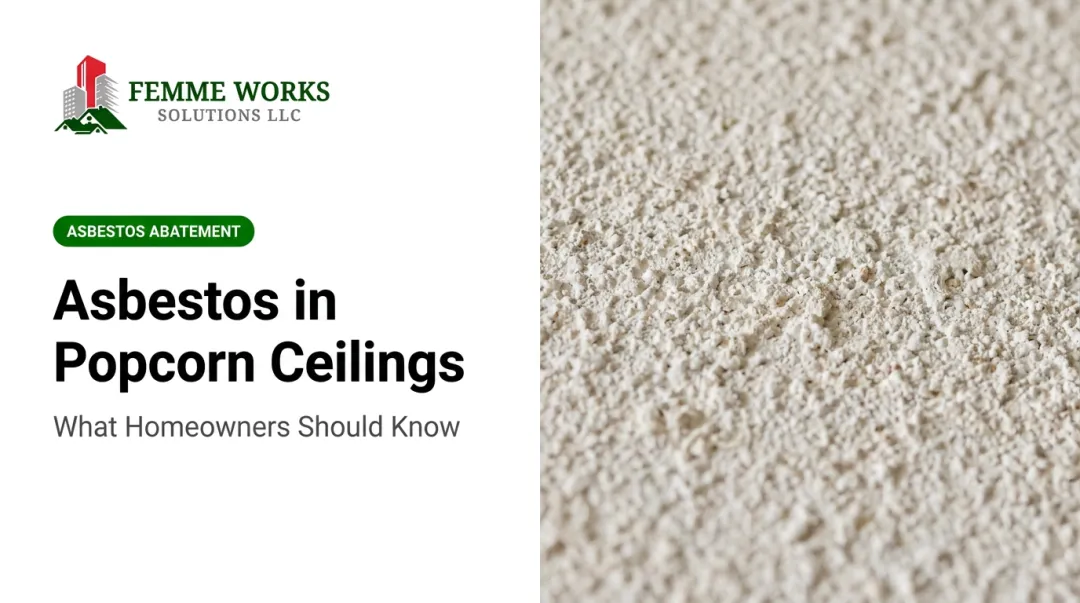
- Acoustic ceiling tiles, sprayed-on "popcorn" textures, and some plaster compounds.
- Pipe and boiler insulation, which often looks thick and chalky, as well as certain types of wall and attic insulation.
- Drywall joint compounds and cement asbestos boards (often called "transite") used for wall panels.
- Sprayed-on fireproofing materials applied to structural steel beams and columns.
- Other common materials like old lab countertops, fire blankets, and roofing or siding shingles.
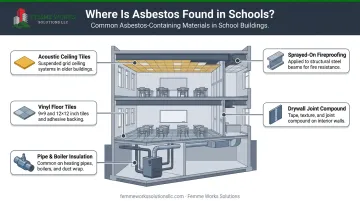
Being aware of these materials is the first step in understanding a potential risk, especially if you notice they are damaged, cracked, or crumbling.
The Law on Your Side: Understanding AHERA Regulations
The Asbestos Hazard Emergency Response Act (AHERA) of 1986 is the key piece of federal law governing how K-12 public and non-profit private schools must manage asbestos.
AHERA doesn't mandate that all asbestos be removed. Instead, it focuses on a proactive "management-in-place" strategy. The core requirements for schools are:
- Inspections: Conduct an initial inspection for asbestos-containing materials and perform a re-inspection with an accredited professional every three years.
- Management Plan: Create and maintain a detailed asbestos management plan that outlines the location, condition, and response actions for all known asbestos. This plan must be kept at the school and be available for public review.
- Designated Person (DP): Appoint a trained individual to oversee the management plan and ensure the school district complies with AHERA regulations.
- Training: Provide awareness training for any maintenance and custodial staff who might disturb asbestos-containing materials.
- Annual Notification: Inform parent, teacher, and employee organizations in writing each year that the asbestos management plan is available for their review.
This framework is designed to ensure that any asbestos in a school is monitored, maintained in good condition, and handled safely to prevent fiber release.
A Tale of Two Roles: A Guide for Parents and Administrators
Roles and Responsibilities for Parents and School Administrators
Both parents and school officials have a part to play in ensuring a safe environment. Here’s how each can approach the issue effectively.
For Concerned Parents: A Step-by-Step Guide
If you have concerns, you have the right to get answers. Follow these steps to become an informed advocate for your child's safety.
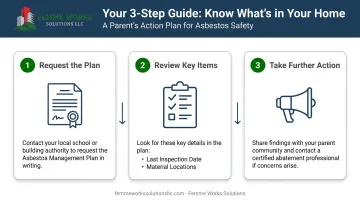
- Request the AHERA Management Plan. Submit a formal written request to the school's main office to see its asbestos management plan. By law, they must make it available for review within five working days.
- Review the Plan. When you get the plan, look for these key items:
- The date of the last three-year re-inspection. Is it current?
- A list of all confirmed or assumed asbestos-containing materials.
- The specific location, quantity, and condition of these materials.
- A record of any response actions taken (e.g., repairs, encapsulation, or removal).
- Details on periodic surveillance checks (typically every six months).
- Take Further Action if Needed. If the school cannot produce the plan, or if you find it is outdated or that damaged materials are not being addressed, you have several options.
- Contact the school district's AHERA Designated Person directly.
- Raise the issue with your school's PTA or PTO to build collective awareness.
- Attend school board meetings to voice your concerns publicly.
For School Administrators: Ensuring Compliance and Safety
For the AHERA Designated Person and other administrators, maintaining compliance is a critical responsibility. Use this checklist to stay on track.
- Schedule Re-inspections. Verify that your triennial re-inspections are scheduled and performed on time by a state-accredited inspector. Do not let this deadline lapse.
- Keep the Plan Updated. The management plan is a living document. Ensure it is updated after every inspection, surveillance check, or abatement project and is easily accessible in the administrative office.
- Send Annual Notifications. Do not forget this simple but critical step. Document when and how you sent the annual notification to parent and employee groups.
- Maintain Meticulous Records. Keep detailed logs of all activities, including inspections, air quality tests, staff training, and any work performed on asbestos-containing materials.
- Communicate Proactively. Transparency builds trust. Before any renovation or major maintenance project, communicate clearly with parents and staff about how you will safely manage any asbestos that may be disturbed.
The Action Plan: From Management-in-Place to Full Abatement
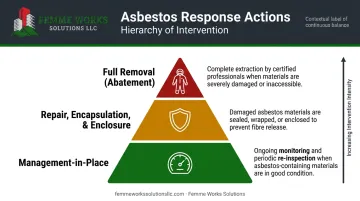
When asbestos is identified, the Asbestos Hazard Emergency Response Act (AHERA) provides a clear hierarchy of responses. The goal is to manage the material safely with the least disruption, starting with a management-in-place strategy.
Management-in-Place
This is the EPA's preferred method for asbestos that is in good condition. It doesn't involve removal but focuses on careful monitoring and prevention. Key components include:
- Regular Surveillance: Visually checking the condition of known asbestos materials at least every six months.
- Worker Training: Ensuring custodial and maintenance staff know where asbestos is and how to work around it safely.
- Immediate Repair: Promptly fixing any minor damage, like a crack in a floor tile or a tear in pipe insulation.
Repair, Encapsulation, and Enclosure
If asbestos is slightly damaged or located in a high-traffic area, more direct action may be needed.
- Repair: Patching or sealing the damaged section of an asbestos-containing material (ACM) to prevent fiber release.
- Encapsulation: Applying a specialized sealant that binds asbestos fibers together or coats the material to create a protective layer.
- Enclosure: Building an airtight, permanent barrier, such as a new wall or ceiling, over the original material.
Full Removal (Abatement)
Full abatement is the most complex and costly option, reserved for when asbestos-containing material is severely damaged or will be disturbed by major renovations. This highly regulated process must only be performed by licensed and certified asbestos abatement professionals, like the team at Femme Works Solutions, to guarantee the safety of students and staff and prevent school-wide contamination.
Choosing a Certified Asbestos Professional for Your School
When it comes to asbestos, there is no room for error. Any work, from the initial inspection to a full-scale removal, must be handled by a state-licensed and certified contractor. Cutting corners can endanger the entire school community and lead to severe legal penalties.
When vetting a professional for your school, look for these critical qualifications:
- Verify current state licensing and confirm that the company and its supervisors comply with all EPA and OSHA regulations.
- Ask for a portfolio of work in other schools, hospitals, or government buildings, which require specialized safety protocols.
- Confirm the contractor carries liability insurance that specifically covers asbestos-related work.
Working with an experienced, fully compliant contractor like Femme Works Solutions is essential for ensuring the safety of students and staff. With over 15 years of experience, they have a documented history of performing asbestos abatement in schools and municipal buildings across Massachusetts and New Hampshire.
As a woman-owned business, Femme Works Solutions is committed to strict adherence to all EPA, OSHA, and DEP protocols, providing peace of mind that the job will be done safely and correctly.
Frequently Asked Questions
Are schools required to remove asbestos?
No. AHERA does not require schools to remove asbestos-containing materials if they are in good condition. The law requires a management plan to monitor the materials and ensure they are kept in a safe state.
Is 30 minutes of asbestos exposure harmful?
According to OSHA, there is no known safe level of asbestos exposure. While the risk from a brief, low-level exposure is less than from long-term occupational exposure, any exposure can contribute to the future risk of disease.
What is the 3-5-7 rule for asbestos sampling?
This AHERA protocol for sampling friable materials requires 3 samples for areas up to 1,000 sq ft, 5 for areas between 1,000-5,000 sq ft, and 7 for areas larger than 5,000 sq ft.
What is the most common type of asbestos found in schools?
Chrysotile, or "white asbestos," is the most common type. It was widely used in commercial products and is frequently found in school building materials like vinyl floor tiles, ceiling tiles, and pipe insulation.
How can I see my school's asbestos management plan?
Contact your school's administrative office and submit a formal written request. Under AHERA, the school is legally required to make the plan available for your inspection within five business days.
What is the role of an AHERA Designated Person?
The AHERA Designated Person is a trained school district employee who oversees the asbestos management plan. They ensure the school complies with regulations and act as the main contact for asbestos-related concerns.