The cost of commercial interior demolition is anything but standard. The final quote for a project will depend on everything from the materials being removed to the complexity of the job. This guide explores the key factors that drive the scope up or down and gives you a clear framework for approaching an accurate budget.
TL;DR: Commercial Interior Demolition Key Points
- No standard rate: Every project is assessed individually based on materials, access, hazards, and scope.
- Primary Drivers: Hazardous materials (like asbestos), structural changes, and the density of materials being removed are the biggest variables.
- Budgeting Essentials: Always account for permits, inspections, and hazardous material testing in addition to the demolition work itself.
- Get a Free Quote: A professional on-site assessment is the only way to get an accurate number for your specific project.
What Determines Commercial Interior Demolition Cost?
The cost of commercial interior demolition is not a fixed number. Your final quote will always depend on a detailed, on-site assessment. The factors below explain why projects differ so significantly in scope and complexity.
Types of Demolition Work
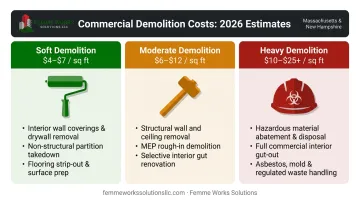
Soft Demolition / Basic Fit-Out This is the most basic level of interior demolition, involving the removal of non-structural, cosmetic finishes.
What's Included: Removal of carpets, ceiling tiles, non-load-bearing drywall partitions, and basic fixtures. Best For: Standard office spaces being cleared for a new tenant or simple retail space updates that don't involve structural changes.
Moderate Demolition / Gut-Out This involves a more extensive removal process, often clearing a space back to its core structure and including some mechanical systems.
What's Included: Everything in a soft demolition, plus the removal of interior walls (non-load-bearing), plumbing fixtures, HVAC ducting, and electrical wiring. Best For: Full-floor renovations or preparing a space for a complete redesign, such as converting a former office into a medical clinic.
Heavy Demolition / Structural & Hazardous These are the most complex projects, involving structural changes or the legally mandated removal of hazardous materials. This work requires certified professionals to handle materials like asbestos or lead paint, especially in pre-1980s buildings.
What's Included: All moderate demolition items, plus the removal of load-bearing walls, concrete slab cutting, and the abatement of materials like asbestos or lead paint. Best For: Renovations in historic buildings, industrial space conversions, or any project where hazardous materials are likely present.
Key Factors That Affect Commercial Interior Demolition Cost
The difference between a straightforward job and a complex one lies in the details. A professional quote is based on a thorough assessment of your project's unique scope, materials, and logistical challenges.
Project Scope and Complexity
- Selective demolition requires more precision than a complete gut-out. Removing specific walls or finishes without damaging what remains can increase complexity, while a full gut-out prioritizes speed.
- Structural removal of elements like load-bearing walls or concrete is far more complex than taking down non-structural drywall. This work requires engineering plans, temporary shoring, and specialized equipment.
Building Materials and Debris
The type of materials being removed directly impacts labor and disposal requirements. Demolishing a space with heavy masonry walls, thick plaster, and concrete floors is far more labor-intensive than one with standard drywall and carpet.
Heavier debris also means higher disposal costs, as landfill "tipping fees" are charged by weight. While deconstruction (carefully dismantling for salvage) can sometimes offset costs, the initial labor is more intensive.
In Massachusetts, for example, MassDEP has banned materials like clean gypsum wallboard, metal, and wood from landfills. This requires separating materials for recycling, which affects labor time and disposal logistics.
Hazardous Materials Abatement
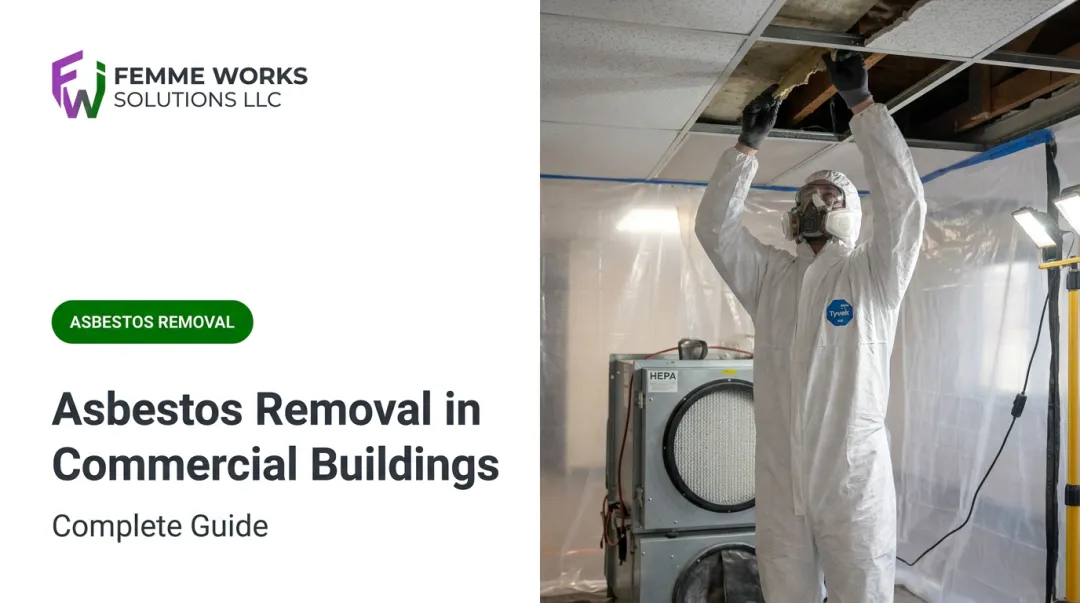
If your building was constructed before the 1980s, it's highly likely to contain hazardous materials like asbestos or lead paint. Federal and state laws require these materials to be tested for and removed by certified professionals before any renovation or demolition can begin.
Ignoring these regulations is not an option. The EPA can levy severe penalties for Clean Air Act violations related to asbestos, with fines reaching up to $124,426 per day per violation.
This is why hiring a fully licensed and certified contractor is critical. A company like Femme Works Solutions ensures every project complies with EPA, OSHA, and MassDEP regulations, protecting your workers, tenants, and business from legal liability.
Site Accessibility and Location
Logistics play a huge role in the final quote. A project on the 20th floor of a downtown Boston high-rise will require more labor and planning than one on the ground floor of a suburban office park.
Factors that increase complexity include:
- Working in a high-rise building (requiring material lifts and careful debris removal).
- Limited parking or staging areas in dense urban environments.
- Needing to work after hours or on weekends to avoid disrupting other tenants.
- The hauling distance to appropriate landfills or recycling centers.
A Detailed Breakdown of Where Your Budget Goes
A professional demolition quote should be more than a single number. It should be an itemized breakdown that shows you exactly what you're paying for.
Labor Costs
Labor is almost always the largest line item. This includes the on-site crew, supervisors, and project management.
Equipment and Tools
Costs include everything from basic hand tools like sledgehammers and saws to heavy machinery for larger jobs. Depending on the scope, your quote may factor in rental or operational costs for skid steers, mini-excavators, and material lifts.
Debris Disposal and Management
This cost has three main parts:
- Dumpster Rental Fees: The cost to have containers on-site.
- Hauling Costs: The transportation of debris to a disposal facility.
- Tipping Fees: The fees charged by landfills or recycling centers, usually by the ton.
Permits and Inspections
Nearly all commercial demolition projects require a permit from the local municipality, and fees vary widely by location and project value. Your contractor typically handles the application process, but the fee is passed on to you in the final quote.
Safety and Site Protection
A professional quote includes costs for protecting the property and ensuring a safe work environment. This can include dust barriers, floor protection, air scrubbers for hazardous jobs, and all necessary personal protective equipment (PPE) for the crew.
How to Budget for Your Demolition Project
Avoid surprises and cost overruns by following a structured approach to budgeting.
- Conduct a Professional Assessment: Your budget should start with a thorough site inspection from a qualified demolition contractor. This is the only way to identify potential structural issues, test for hazardous materials, and get an accurate scope of work.
- Define Your Scope Clearly: Clearly define what stays and what goes by providing detailed plans to your contractor. Ambiguity is the leading cause of change orders and budget creep.
- Account for Hidden Costs and Contingencies: Always build a contingency buffer into your budget. This covers unexpected issues, like discovering hidden asbestos behind a wall or needing unforeseen structural repairs.
Why a Professional Contractor is Non-Negotiable
Hiring an unqualified or underinsured contractor is a massive risk. It can lead to safety hazards, property damage, project delays, and severe legal and financial penalties. An OSHA report noted that failure to conduct a pre-demolition engineering survey is one of the most frequently cited demolition-related violations.
A professional contractor provides:
- Adherence to all OSHA, EPA, and local safety regulations.
- Full insurance coverage to protect your property and their workers.
- The right tools and experience to finish on time and on budget.
- Professional handling of all permits, inspections, and regulatory paperwork.
Always get multiple, detailed bids from experienced and certified contractors. For projects in Massachusetts and New Hampshire, choosing a local, woman-owned business with a proven track record adds another layer of accountability. This ensures you get a transparent, comprehensive quote and a clean slate for your next venture.
Frequently Asked Questions
What determines the cost of commercial interior demolition?
Every project is different. Cost depends on the scope of work, materials being removed, access conditions, hazardous materials present, debris volume, location, and permit requirements. A professional on-site assessment is the only way to get an accurate quote for your project.
What is the formula for demolition cost?
There is no single formula. A professional quote is built by estimating labor hours, equipment needs, and disposal tonnage, then adding fixed costs like permits, safety measures, and overhead. Request a free quote to get a figure based on your actual conditions.
Do I need a permit for commercial interior demolition?
Yes, almost all commercial interior demolition projects require a permit from the local building department. This ensures the work is done safely and adheres to all building codes.
What is the difference between interior demolition and deconstruction?
Demolition focuses on the fast and efficient removal of materials. Deconstruction is the slower, more methodical process of dismantling a space to salvage materials like doors, fixtures, and lumber for reuse or recycling.
How long does a typical commercial interior demolition project take?
A simple office clear-out might take a few days. A full-floor gut-out in an occupied building could take several weeks, depending on the project's size, complexity, and logistical constraints.
Does the demolition cost include removing hazardous materials like asbestos?
Standard quotes typically treat hazardous material abatement as a separate scope. Services like asbestos or lead paint removal require separate testing and quoting and must be performed by certified professionals to ensure safety and compliance.