? Complete Guide](https://file-host.link/website/femmeworkssolutionsllc-m8k6c1/assets/blog-images/4cfe896d-a08a-4266-9df9-d2db8fb4a5aa/1781043117166094_48dd6b476bc941be877ae0a0c76dd70f/360.webp)
This is a common moment of uncertainty for homeowners and contractors alike. Understanding when an interior demolition project requires an official permit is essential for staying safe and compliant.
This guide will provide clear answers for homeowners and contractors in Massachusetts and New Hampshire. We'll cover when a permit is needed, how to get one, and the serious risks of skipping the process.
TL;DR: The Short Answer
- You almost always need a permit if demolition affects a building's structure, electrical, plumbing, or HVAC systems.
- Purely cosmetic work like removing carpets or cabinets (without moving utilities) often doesn't require a permit.
- Always confirm with your local city or town building department before starting any demolition work.
- Skipping a required permit can lead to fines, stop-work orders, and future insurance or home sale problems.
When You Absolutely Need a Permit for Interior Demolition
A permit for interior demolition is a critical safety measure, not just bureaucratic red tape. It ensures all work complies with local building codes, protecting both you and your home's structural integrity.
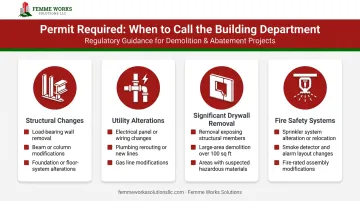
Structural Changes
This is the clearest indicator that a permit is required. Any work involving load-bearing walls, beams, columns, or the foundation is considered a major structural alteration. A load-bearing wall supports the weight of the floor or roof structure above it. Removing one without proper support can have catastrophic consequences.
According to the Massachusetts State Building Code (780 CMR), a permit is required for any project that involves cutting away a wall or partition or removing any structural beam or load-bearing support.
- Removing a wall between a kitchen and dining room to create an open floor plan.
- Widening a doorway or creating a pass-through in a structural wall.
- Removing columns or posts in a basement.
Altering Utility Systems
If your demolition plan involves altering your home’s core utility systems, you will need a permit. This includes any significant changes to electrical wiring, plumbing supply or drain lines, and HVAC ductwork. These tasks require separate, specialized permits (electrical, plumbing, mechanical) to ensure the work is done safely by licensed professionals.
- Moving a sink or toilet during a bathroom remodel.
- Adding new outlets or light fixtures that require running new circuits.
- Re-routing HVAC ducts to accommodate a new wall layout.
Significant Drywall Removal
While tearing out a small, damaged piece of drywall is usually considered a minor repair, removing large sections often signals a bigger project is underway. Many municipalities require a permit when you perform "substantial cutting away of any wall," as the Massachusetts code puts it. This is because extensive drywall removal is often a precursor to structural or utility work.
Projects Involving Fire Safety Systems
Safety is paramount, especially in multi-family homes, condos, or commercial buildings. Any demolition that impacts fire-rated walls (which are designed to slow the spread of fire) or tampers with fire suppression systems like sprinklers will always require a permit. These systems are critical for life safety, and modifications must be inspected and approved.
Common Scenarios Where You Might NOT Need a Permit
While you should always check first, many minor cosmetic updates are exempt from permit requirements. Generally, any project that doesn't alter the home's structure or major systems—like plumbing or electrical—falls into this category.
This type of work often includes:
- Tearing out old carpet, vinyl flooring, or floating floors.
- Removing kitchen cabinets or countertops, as long as you aren't moving plumbing or electrical lines.
- Taking down non-structural decorative elements like trim, molding, or wood paneling.
- Removing a small, non-load-bearing partition wall (but you must be 100% certain it’s not structural).
The most important rule is simple: always confirm with your local building department before any work begins. A quick inquiry is far easier to manage than a costly stop-work order.
The Step-by-Step Process for Securing Your Permit in MA & NH
The exact process for getting a permit is handled at the local level, so forms and procedures will vary by city and town. However, the general roadmap is consistent across Massachusetts and New Hampshire. A qualified demolition contractor can handle this entire process on your behalf.
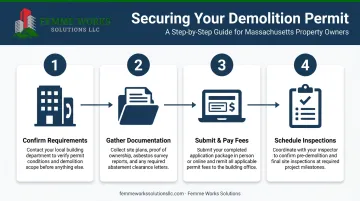
Step 1: Confirm Requirements with Your Local Building Department
Before you do anything else, contact your town or city's building department. In Boston, this is the Inspectional Services Department; in Manchester, NH, it's the Planning and Community Development Department. Ask them what triggers a permit for "interior" or "selective" demolition and what documentation you'll need.
Step 2: Gather Necessary Documentation
Once you know what's required, you'll need to prepare your application. This typically includes:
- A completed permit application form.
- A detailed scope of work describing what you plan to demolish.
- Simple floor plans or drawings showing the current layout and proposed changes.
- An engineer's report or stamped architectural drawings for any structural work.
Step 3: Submit the Application and Pay Fees
Most municipalities now have online portals for permit submission. Fees are usually based on the estimated cost of the project and are calculated according to each municipality's current fee schedule. Check directly with your local building department — in Boston through the Inspectional Services Department, and in Manchester, NH through the Planning and Community Development Department — for current rates.
Step 4: Schedule and Pass Inspections
A permit is more than just paperwork—it includes inspections to verify safety. An inspector typically visits after demolition is complete but before new walls go up (a "rough-in" inspection) and again when the project is finished to confirm all work was done to code.
Beyond the Permit: Asbestos, Lead, and Other Hidden Dangers
In New England, what you can't see behind the walls can definitely hurt you. Older homes in Massachusetts and New Hampshire often contain hazardous materials that can be released during demolition, posing a serious health risk.
The Asbestos Risk in Pre-1980s Homes
Asbestos was a common component in building materials for decades. If your home was built before the 1980s, it could be in:
- "Popcorn" ceilings and textured paint
- Vinyl floor tiles and the black mastic adhesive underneath
- Insulation around pipes and boilers
- Drywall joint compound
Disturbing these materials releases microscopic fibers into the air that can cause lung cancer and other serious diseases.
Because of this risk, the Massachusetts Department of Environmental Protection (MassDEP) requires a thorough asbestos survey before any demolition or renovation activities begin, regardless of the building's age.
Identifying and Handling Lead Paint
If your home was built before 1978, there's a good chance it contains lead-based paint. The EPA banned its use in housing that year due to its toxicity, especially to children. Demolishing walls, trim, or windows with lead paint creates hazardous dust that can be easily inhaled or ingested. For any project that will disturb painted surfaces in an older home, you should hire an EPA-certified lead-safe contractor.
Why Professional Testing is Non-Negotiable
Guessing about hazardous materials is not a risk worth taking. A certified environmental services company is essential for properly identifying and handling these dangers to ensure safety and compliance.
At Femme Works Solutions, our state-licensed team provides professional asbestos testing and abatement. We make sure all hazardous materials are safely removed before demolition begins, protecting your family’s health and keeping your project compliant.
The High Cost of Cutting Corners: Risks of Demolition Without a Permit
Skipping the permit process might seem like a way to save time and money, but it often leads to much bigger problems. The consequences can be severe and long-lasting.

- Hefty fines from your municipality that can be double or triple the original permit fee.
- Costly stop-work orders that halt your project, forcing you to tear out finished work for inspection.
- Insurance claim denials if an accident, fire, or structural failure occurs during or after the unpermitted work.
- Real estate complications, as you must disclose unpermitted work to future buyers, which can devalue your property or kill the sale.
Why Trust a Professional for Your Interior Demolition?
Getting a permit is about more than just paperwork. It’s a critical step for ensuring the safety, compliance, and long-term value of your home. The process can feel complicated, especially when navigating structural questions or the potential for hazardous materials in older New England homes.
An experienced partner can make all the difference. With over 15 years of experience in selective demolition, Femme Works Solutions has the expertise to:
- Handle projects safely and efficiently from start to finish.
- Identify and remove asbestos or other hazards before demolition begins.
- Navigate local permit requirements across Massachusetts and New Hampshire.
Ready to start your renovation the right way? Contact Femme Works Solutions at (978) 701-4140 for a consultation to ensure your project starts safely and on the right side of the law.
Frequently Asked Questions
Do you need a license for interior demolition?
Homeowners can often pull their own permit for an owner-occupied, 1-2 family home, but the work must be done by a licensed professional. In Massachusetts, this typically requires oversight from someone with a Construction Supervisor License (CSL).
What happens if I do interior demolition without a permit?
You risk significant fines from your local municipality, a stop-work order that halts your project indefinitely, and potential denial of insurance claims. It can also create legal and financial problems when you sell your home.
How much does an interior demolition permit cost?
Costs vary by location and project scope but are typically calculated as a formula based on the value of the work. Contact your local building department directly for the current fee schedule for your city or town.
How long does it take to get a demolition permit?
Timelines depend on your local department's workload. Simple permits for small projects might be issued in a few business days, while projects requiring detailed plan review can take several weeks or up to 30 days.
Do I need a permit to remove a non-load-bearing wall?
Usually no, but you must be 100% certain the wall isn't structural. If there's any doubt, consult a licensed contractor or structural engineer and confirm with your local building department before proceeding with any work.