For homeowners in Massachusetts and New Hampshire, especially those in older properties, this is a common and stressful discovery. Black mold and asbestos are two of the most feared household contaminants, but they are fundamentally different hazards. Mistaking one for the other can have serious consequences for your family’s health and your home's value.
This guide will walk you through how to tell them apart, understand their unique risks, and take the right steps for safe, effective removal.
Key Takeaways
- Black Mold: A living fungus caused by moisture. It's often visible and can cause allergic reactions and respiratory issues. Remediation focuses on removal and fixing the water source.
- Asbestos: A mineral fiber used in older building materials. The fibers are microscopic and invisible, and exposure can cause long-term diseases like cancer. Removal is a highly regulated process.
- Misidentification is dangerous. Disturbing asbestos that you think is mold can release toxic fibers into the air, contaminating your entire home.
- Professional testing is the only way to be sure. Never guess, and never attempt to remove suspected asbestos yourself.
Black Mold vs. Asbestos: A Side-by-Side Comparison
While both are common hazards in older homes, black mold and asbestos have fundamental differences. Knowing what sets them apart is the key to handling each problem safely and effectively.
Origin & Composition
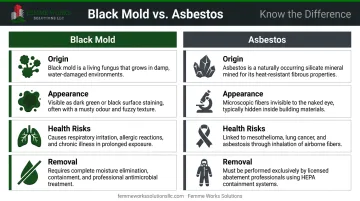
- Black Mold: This is a living organism. Specifically, it's a fungus (Stachybotrys chartarum) that grows and feeds on organic, cellulose-rich materials like drywall, wood, and paper when moisture is present. It spreads as long as it has water and a food source.
- Asbestos: This is a naturally occurring mineral made of silicate fibers. It was mined and manufactured into thousands of building products for its durability and fire resistance. It does not grow, spread, or multiply.
Appearance & Detection
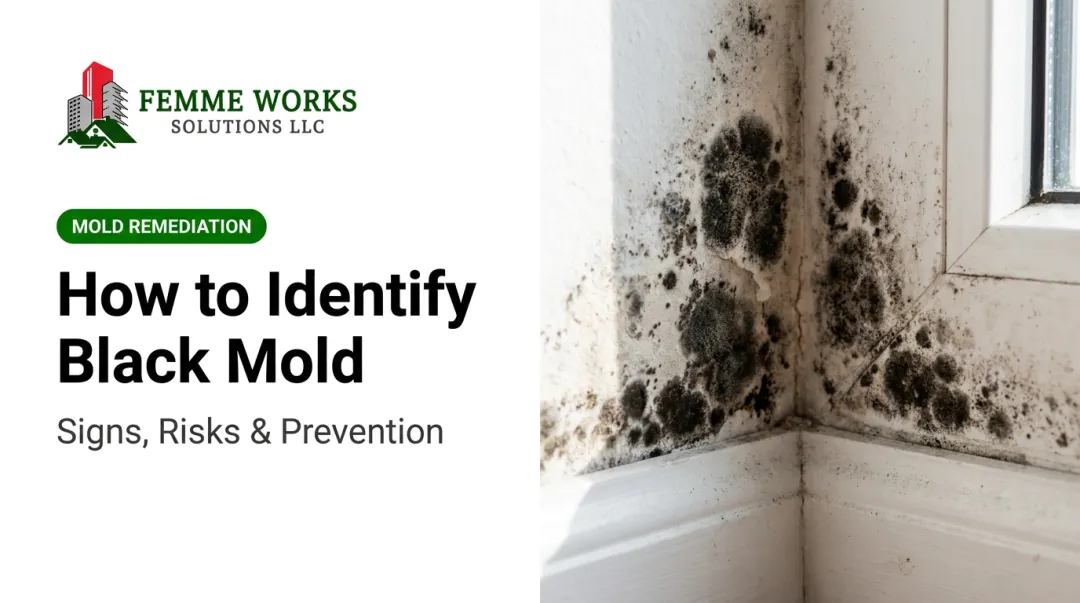
- Black Mold: Usually visible as slimy or fuzzy patches that are black, dark green, or grey. One of its most telling signs is a distinct musty, earthy odor. While you can see it, only lab testing can confirm the specific type of mold.
- Asbestos: The individual fibers are microscopic and impossible to see, smell, or taste. The danger is hidden within common building materials that often look completely harmless, like floor tiles or insulation. The only way to detect asbestos is through professional lab analysis of a material sample.
Common Locations
| Black Mold | Asbestos (in homes built before the 1980s) |
|---|---|
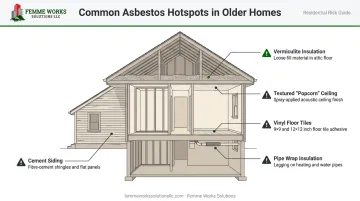
| Basements and crawl spaces | "Popcorn" ceilings and textured paints |
| Bathrooms (showers, under sinks) | Pipe, furnace, and boiler insulation |
| Attics with roof leaks | Vinyl floor tiles and their adhesive (mastic) |
| Behind wallpaper or drywall | Cement siding and roofing shingles |
| Anywhere with water damage | Vermiculite attic insulation |
Health Risks
- Black Mold: The health effects are primarily allergenic and respiratory. Exposure can trigger immediate symptoms like coughing, sneezing, skin irritation, headaches, and worsening asthma. Symptoms typically improve after leaving the contaminated area.
- Asbestos: The health risks are severe, long-term, and often fatal. Inhaling the microscopic fibers can lead to asbestosis (lung scarring), lung cancer, and mesothelioma. Symptoms may take decades to appear after the initial exposure.
Removal Approach
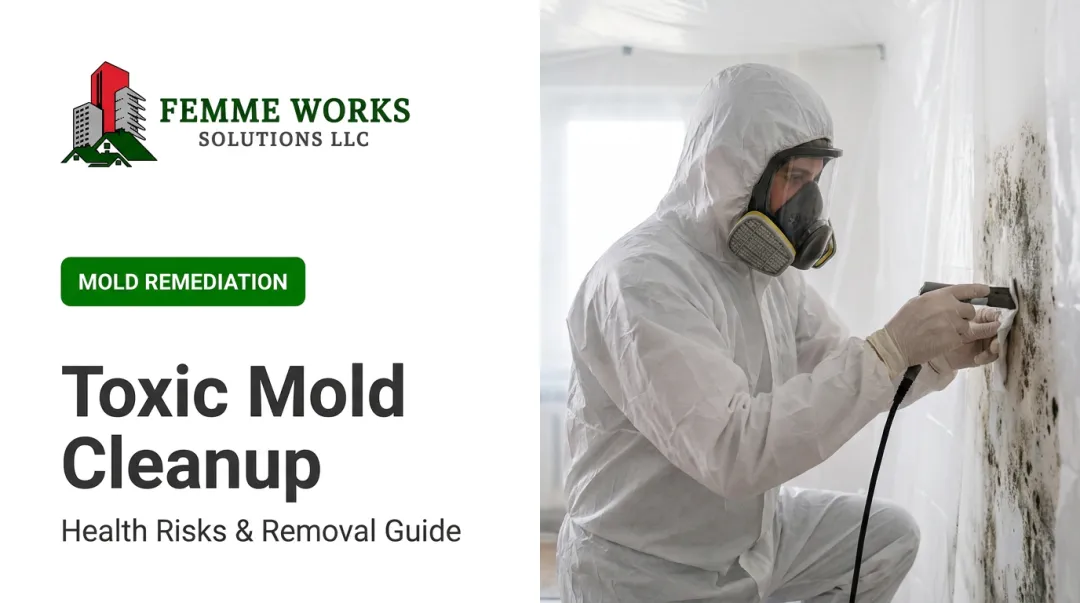
- Black Mold: Remediation involves isolating the contaminated area, removing the moldy materials, cleaning the surrounding surfaces, and—most importantly—fixing the moisture problem that caused the growth.
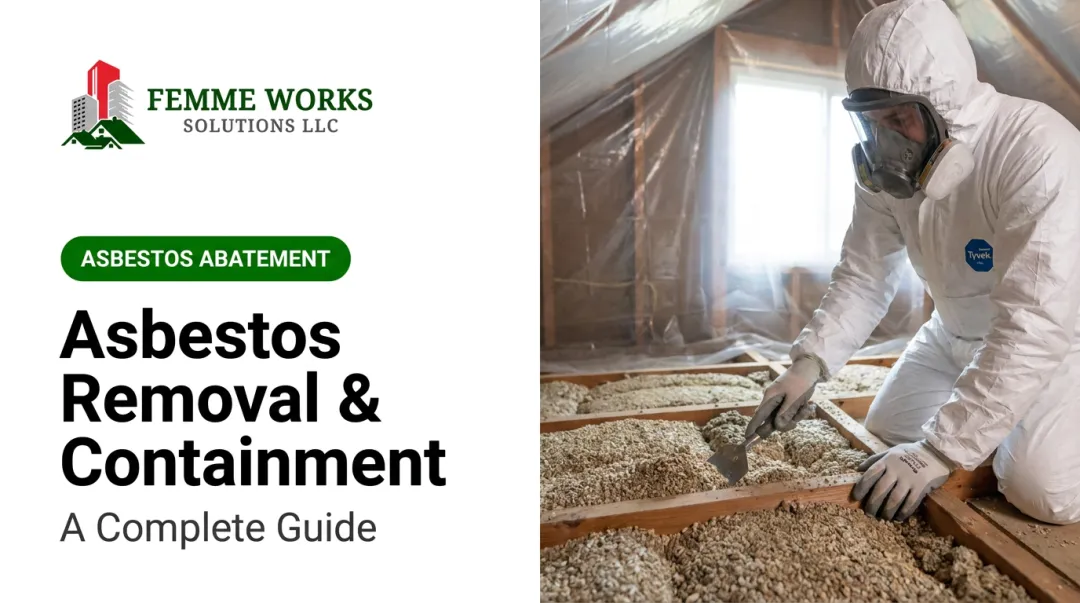
- Asbestos: Removal, known as abatement, is a highly regulated process that requiring certified professionals. It requires strict containment with negative air pressure, specialized protective gear, and legal disposal methods to prevent fiber release.
Understanding Asbestos: The Invisible Threat in Your Home
Asbestos was once called a "miracle mineral" for its heat resistance and insulating properties, which led to its use in over 3,000 building products. That miracle, however, came with a hidden danger.
Asbestos-containing materials (ACMs) are generally categorized into two types:
- Friable Asbestos: Can be easily crumbled into powder by hand. This makes materials like old pipe insulation or "popcorn" ceilings highly dangerous, as fibers become airborne with minimal disturbance.
- Non-Friable Asbestos: Fibers are tightly bound within a durable material, like vinyl floor tiles or cement siding. It is much safer when intact but releases fibers if cut, sanded, or drilled.
The Long-Term Health Risks
Asbestos is only dangerous when its fibers are disturbed and inhaled. Once in the lungs, these sharp, microscopic fibers can become lodged in the tissue, causing inflammation and scarring over time. This can lead to severe diseases, including:
- Mesothelioma: A rare and aggressive cancer of the lining of the lungs or abdomen that is almost exclusively caused by asbestos exposure.
- Asbestosis: A chronic, progressive lung disease caused by the scarring of lung tissue, which makes breathing difficult.
- Lung Cancer: Asbestos exposure significantly increases the risk of developing lung cancer, especially for those who also smoke.
A frightening aspect of these diseases is their long latency period. According to the CDC, symptoms can take 20 to 40 years to develop after the initial exposure. This is why the danger is so often underestimated—the consequences aren't felt for decades.
Understanding Black Mold: The Consequence of Moisture
What people call "black mold" is usually a specific species named Stachybotrys chartarum. While often called "toxic," the mold itself isn't poisonous. The real health risk comes from mycotoxins—chemical compounds on its spores that can cause irritation and allergic reactions in sensitive people.
For mold to grow, it needs three things:
- Moisture: A leak, flood, condensation, or even just persistently high humidity.
- A Food Source: Organic materials like drywall paper, wood, or carpet.
- The Right Temperature: Standard indoor temperatures are perfect for mold growth.
Beyond visible growth, other signs can point to a hidden problem. Be on the lookout for:
- Water stains on ceilings or walls
- Peeling or bubbling paint
- Warped drywall
- A musty smell you can’t seem to place
While its health risks differ from those of asbestos, chronic mold exposure can cause significant problems, especially for people with asthma, allergies, or compromised immune systems.
The Critical Dangers of Misidentification and Untrained Removal
Here's the worst-case scenario: a homeowner finds what looks like moldy, crumbling insulation around a pipe. Assuming it's just a mold problem, they try to scrub or rip it off. In doing so, they unknowingly release a cloud of invisible asbestos fibers, contaminating the entire house.
Attempting untrained removal of either hazard is a bad idea, but mistaking asbestos for mold is a catastrophic error.
Key Risks of Untrained Attempts
- Spreading contamination throughout your home. Without proper containment, mold spores or asbestos fibers can be pushed through your HVAC system, turning a localized issue into a whole-house problem that is far more expensive to fix.
- Exposing your family to severe health risks. Only certified professionals with specialized training, containment systems, and compliant equipment can safely manage these materials. Any untrained disturbance creates serious direct exposure risk.
- Violating state and federal disposal laws. Throwing asbestos-containing materials in your regular trash is illegal. In Massachusetts, disposal requires licensed contractors to notify MassDEP 10 working days in advance and use an approved facility.
Why Professional Remediation is Non-Negotiable
When you suspect mold or asbestos, guessing is not a strategy. The only safe path forward is to bring in certified professionals who follow a systematic process to ensure your home is safe and the job is done right.
The Professional Process
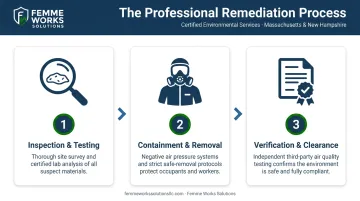
- Inspection and Certified Testing: A trained professional will assess the situation and take samples of the material for analysis at an accredited lab. This definitively confirms whether you are dealing with asbestos, mold, or another substance.
- Containment and Abatement/Remediation: The work area is sealed off using plastic sheeting and negative air pressure machines to create a containment zone. This prevents fibers or spores from escaping while certified technicians use specialized equipment to safely remove the hazardous material per EPA and OSHA protocols.
- Verification and Clearance: After the removal is complete, an independent third party often performs air testing to verify that the asbestos fiber or mold spore count is at a safe level. This clearance testing provides total peace of mind that the job was done correctly.
If you suspect you have mold or asbestos in your home, don't take any chances. The team at Femme Works Solutions has over 15 years of experience serving homeowners across Massachusetts and New Hampshire.
As a woman-owned business, we are fully licensed, insured, and certified to handle both mold remediation and asbestos abatement in full compliance with all state and federal regulations.
Our certified professionals use state-of-the-art equipment, including HEPA vacuums and negative air machines, to ensure your property is left safe and clean. If you've found something suspicious, contact Femme Works Solutions today for a professional inspection.
Frequently Asked Questions
What is worse, asbestos or black mold?
While both are serious, asbestos is considered worse due to its direct link to fatal diseases like mesothelioma and lung cancer. Mold typically causes immediate respiratory and allergic issues but is rarely fatal.
What is commonly mistaken for black mold?
Besides other types of mold, black mold can be mistaken for simple dirt, soot from a fireplace, or mildew. Because they can look similar, professional testing is the only way to be sure.
Can I remove black mold myself if I suspect asbestos is nearby?
No, this is extremely risky. The process of removing mold (scrubbing, cutting drywall) could easily disturb adjacent asbestos materials, creating a severe inhalation hazard. Always test for asbestos first in older homes.
How do professionals test for asbestos and mold?
For asbestos, a certified inspector takes a small, solid sample of the suspected material for lab analysis. For mold, testing may involve taking surface samples or air samples to identify the type and concentration of spores.
Does homeowners insurance cover mold or asbestos removal?
Homeowners insurance coverage varies. Mold may be covered if caused by a sudden event, like a burst pipe, but asbestos removal is rarely included in standard policies. Always review your specific policy for details.
What is the difference between mold remediation and mold remediation?
Removal is simply cleaning the visible mold. Remediation is a complete process that includes containment, removal, cleaning, and addressing the root moisture source to ensure the mold does not return.