This guide will walk you through everything you need to know. We'll cover the common causes of attic mold, how to spot the signs, and what a professional removal project involves. Most importantly, we'll explain why certified remediation is the safest, most effective choice for your home.
TL;DR: Key Takeaways on Attic Mold
- Primary Causes: Moisture from roof leaks, poor ventilation, or improper exhaust fans is the root of the problem.
- Best Solution: Professional certified remediation is the recommended approach. For any mold growth, contacting a certified professional ensures safe containment, compliant removal, and proper prevention guidance.
- Prevention is Key: Control moisture with proper ventilation, quick leak repairs, and correct insulation.
- Get a Free Quote: Every attic is different — request a free assessment so the scope and quote reflect your specific conditions.
What Causes Mold in Your Attic?
Mold spores are a natural part of our environment, both indoors and out. They're harmless until they find the right conditions to grow: a food source (like the wood and drywall in your attic), warmth, and — most critically — moisture. Your attic often provides the perfect trifecta for a mold problem to take hold.
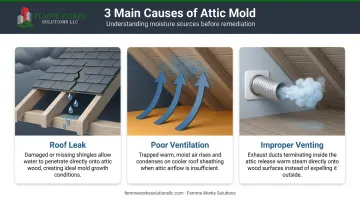
So, where does the moisture come from? It almost always traces back to one of these sources.
Roof Leaks
This is the most obvious culprit. Damaged shingles, failing flashing around chimneys or vents, or old, cracked seals can allow water to seep in. This water drips onto your roof sheathing and insulation, creating the damp environment mold needs to thrive.
Poor Ventilation
Many attics, especially in older New England homes, lack proper ventilation. A healthy attic needs a balanced system of intake vents (soffits) and exhaust vents (ridge or gable) to allow air to circulate.
Without proper airflow, warm, moist air rising from your living space gets trapped. This is especially problematic in the winter, when the humid air condenses on the cold underside of your roof deck, creating the perfect conditions for mold.
Improper Venting
A common construction shortcut is to vent bathroom fans, kitchen hoods, or clothes dryers directly into the attic instead of all the way outside. This pumps gallons of warm, humid air directly into the space, creating a perfect breeding ground for mold. The U.S. Department of Energy identifies this as a primary cause of attic moisture and mold growth.
Common Signs You Have an Attic Mold Problem
Since attics are rarely visited, a mold problem can grow for months or years without being noticed. Watch for these common warning signs:
- Visible Mold Growth: The most obvious indicator is seeing mold, which often appears as black, white, or green patches. You'll typically find it on the plywood roof sheathing, rafters, or trusses.
- Musty Odors: A distinct damp, earthy smell is a classic sign of mold. This odor is often noticeable near the attic hatch or in rooms directly below it, signaling active growth.
- Water Damage or Dampness: Any evidence of a long-term moisture problem is a major red flag. Look for rusted nails in the roof sheathing, damp insulation, or dark water stains on wood. These signs mean the conditions are right for mold, even if it's not visible yet.
What Attic Mold Remediation Involves
The scope of professional attic mold remediation varies significantly based on the size of the contaminated area, the severity of the mold, attic accessibility, and whether underlying repairs are needed. The only way to get an accurate picture is a professional on-site assessment. Request a free quote from Femme Works Solutions so the scope and approach reflect your specific attic.
Key Factors That Influence the Scope
- Size of Contaminated Area: The more square footage affected by mold, the more labor, time, and materials are required for the job.
- Severity and Type of Mold: Light, surface-level mildew is easier to address than extensive, deeply penetrated mold that has started to rot the wood.
- Attic Accessibility: A cramped attic with low clearances, limited access, or lots of obstacles will increase labor requirements. Technicians need space to work and bring in equipment safely.
- Necessary Repairs: Remediation doesn't just mean cleaning the mold. Fixing the underlying moisture source, such as repairing a roof leak or upgrading attic ventilation, is a separate but essential part of the process.
What's Included in a Professional Remediation Quote?
Understanding a professional quote helps you see the value and thoroughness of the service. A typical quote from a certified company like Femme Works Solutions will include:
- Inspection and Assessment: An initial evaluation to determine the scope of the mold growth and identify the moisture source.
- Containment and Air Filtration: Setting up plastic barriers and negative air machines to seal off the attic and prevent mold spores from spreading to the rest of your home.
- Removal and Cleaning: The physical labor of removing the mold. This can involve scraping, media blasting (with soda or dry ice), HEPA vacuuming, and applying antimicrobial treatments.
- Material Disposal: The cost of safely bagging and disposing of contaminated materials, like old insulation, according to local and federal regulations.
While a thorough quote covers all direct remediation work, some related costs might fall outside the initial scope.
Potential Additional Expenses
Some expenses may arise during the project that aren't part of the initial remediation quote. Be prepared for the possibility of:
- Structural Repairs: If mold has caused wood rot, you may need to replace roof sheathing, rafters, or trusses.
- Insulation Replacement: Moldy insulation cannot be salvaged. The cost to remove the old material and install new insulation is a separate expense.
- Duct Cleaning: If your HVAC system runs through the attic, the ducts may need to be professionally cleaned to remove any trapped spores.
Attic Mold Remediation: Why Certified Professionals Are the Right Choice
When you discover mold, the right course of action is to contact a certified remediation professional. The U.S. Environmental Protection Agency (EPA) recommends professional remediation whenever mold covers more than 10 square feet, or when it affects porous materials like wood or insulation — conditions common in attics. Certified contractors use industry-grade containment, HEPA filtration, and safe removal methods that protect occupants and prevent cross-contamination. For any attic mold concern, working with a certified professional is the safest and most effective path forward.
The Professional Solution: A Step-by-Step Process
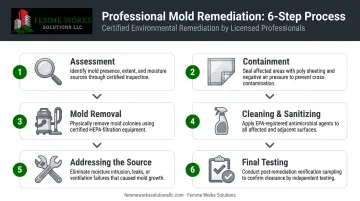
Certified remediation companies follow a strict, multi-step process to ensure mold is removed safely and completely.
- Assessment: A trained technician performs a thorough inspection to identify the full extent of the mold and pinpoint the exact cause of the moisture problem.
- Containment: The attic is sealed off from the rest of the home using plastic sheeting. Negative air pressure machines with HEPA filters are often used to ensure no spores can escape the work area.
- Mold Remediation: Professionals use industry-grade equipment like HEPA vacuums, air scrubbers, and specialized techniques like media blasting to physically remove all mold growth from surfaces.
- Cleaning & Sanitizing: After removal, all affected areas are treated with EPA-approved antimicrobial agents to kill any remaining spores and prevent future growth.
- Addressing the Source: The team ensures the original moisture problem is resolved, whether by recommending a roofer or a ventilation specialist.
- Final Testing (Clearance): Reputable companies may recommend optional third-party air testing after the job is done to verify that the attic has returned to a normal, healthy fungal ecology.
Why Hiring a Certified Professional Matters
Choosing the right company is crucial. When vetting contractors, a qualified professional should be fully licensed, insured, and certified, adhering to strict protocols from agencies like the EPA, OSHA, and DEP.
At Femme Works Solutions, we believe every homeowner in Massachusetts and New Hampshire deserves this level of protection. Here's what to look for in any reputable remediation specialist:
- Proper Credentials: Ensure they are licensed, insured, and follow all state and federal guidelines.
- Proven Experience: Look for a long track record — for example, our team has over 15 years of experience and more than 80 five-star reviews.
- Advanced Equipment: They should use state-of-the-art tools like HEPA filtration and negative air machines to protect your home.
- Clear Communication: A trustworthy company keeps you informed throughout the process with no hidden fees.
How to Prevent Attic Mold from Returning
Removing the mold is only half the job. If you don't address the underlying moisture issue, it will inevitably come back. Prevention is the key to a long-term solution.
- Control moisture and humidity by keeping indoor levels between 30% and 50%, as recommended by the EPA. Use dehumidifiers in naturally damp areas to maintain this balance.
- Ensure proper attic ventilation by checking that soffit vents are clear of insulation or debris. A balanced intake and exhaust system keeps air circulating and prevents moisture buildup.
- Inspect your roof and attic regularly, ideally twice a year in the spring and fall. Look for new water stains, damp spots, or musty smells to catch small leaks before they cause major mold growth.
Frequently Asked Questions
Will homeowners insurance cover mold in the attic?
It depends on the cause. Insurance often covers mold from a "sudden and accidental" event, like a storm-damaged roof. However, coverage is typically denied if the cause is long-term neglect, like a slow leak or poor maintenance.
What does attic mold look like?
Attic mold can appear in various colors, including black, white, green, or gray. It can look like fuzzy patches, slimy spots, or powdery stains on the wood sheathing, rafters, and trusses.
Is attic mold dangerous to my family's health?
Yes, it can be. Mold spores can travel from the attic into your living spaces through gaps and ductwork. For sensitive individuals, this can trigger allergic reactions, asthma attacks, and other respiratory issues.
Can I just paint over mold in the attic?
No. Painting only hides the problem without killing the mold. It will continue to grow under the paint, damage the wood, and release spores into your home's air.
How long does professional attic mold remediation take?
Most standard attic remediation projects take between 1 to 3 days to complete. The exact timeline can vary depending on the size of the attic, the severity of the mold, and the accessibility of the space.