In places like Massachusetts and New Hampshire, with our humid summers and cold winters, attics can become prime real estate for mold growth. Ignoring it isn't an option. Mold can compromise your home's air quality, damage its structure, and hurt its resale value.
So, what does it take to fix it? This guide breaks down what attic mold remediation involves, explaining every factor that influences the scope and what you can expect from a professional remediation process. Every project is different — request a free assessment from attic mold remediation contractors to get an accurate quote based on your specific attic, mold extent, and conditions.
TL;DR: Attic Mold Remediation Summary
- No standard price: The scope and cost depend on the size of the area, attic accessibility, mold type, and any underlying damage.
- Small vs. Large Jobs: A small, contained patch requires far less work than extensive growth requiring structural repairs.
- Key Takeaway: Professional remediation is an investment in your home's health and safety. The only way to know the true scope is to get a detailed quote from a certified expert.
What Goes Into Attic Mold Remediation?
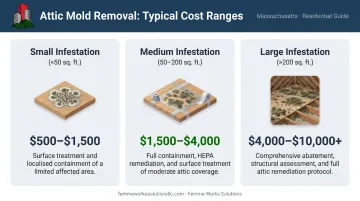
Attic mold remediation doesn't have a flat-rate price because every infestation is different. Working with certified mold remediation companies ensures the right scope is defined before any work begins. Scope and cost are calculated based on the job's specific requirements, which vary widely depending on how far the mold has spread, the condition of the attic, access constraints, and what materials have been affected.
Factors That Shape the Scope
- Size and Severity: A light surface treatment on a small, accessible area is far less involved than widespread mold that has deeply embedded into wood sheathing and requires aggressive methods like media blasting.
- Accessibility: Low-pitched roofs, cramped access hatches, dense insulation, and stored items that must be cleared all increase the labor required.
- Materials Affected: Porous materials like insulation, drywall, and ceiling tiles that are contaminated cannot be salvaged and must be removed and disposed of legally.
- Moisture Source: Effective remediation is a two-part process — removing the existing mold and fixing the moisture problem that caused it. The cost of fixing the source (roof repairs, ventilation improvements) is a separate but essential expense.
What a Professional Remediation Quote Covers
A professional mold remediation quote should be itemized, showing you exactly what you're paying for. Here are the key components.
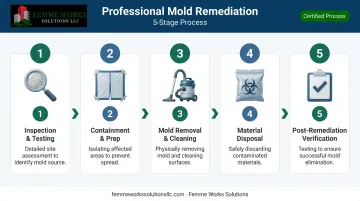
Initial Inspection and Testing
Before work begins, a thorough inspection is needed to define the scope of the problem. This may include air or surface sampling to identify the mold type and concentration, which helps in planning the right remediation strategy. Contact Femme Works Solutions for a free on-site assessment.
Containment and Site Preparation
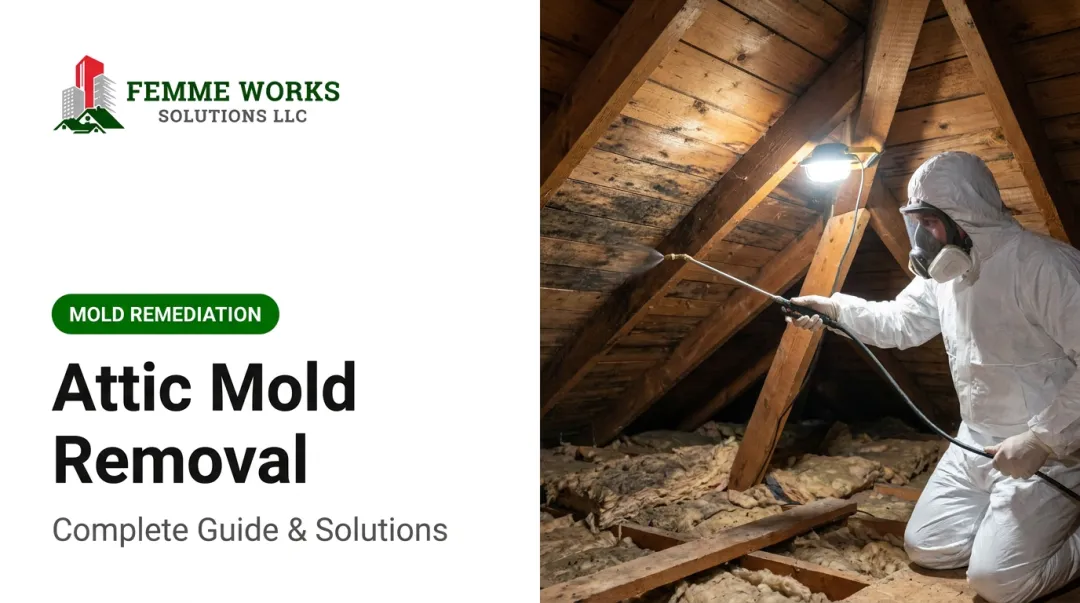
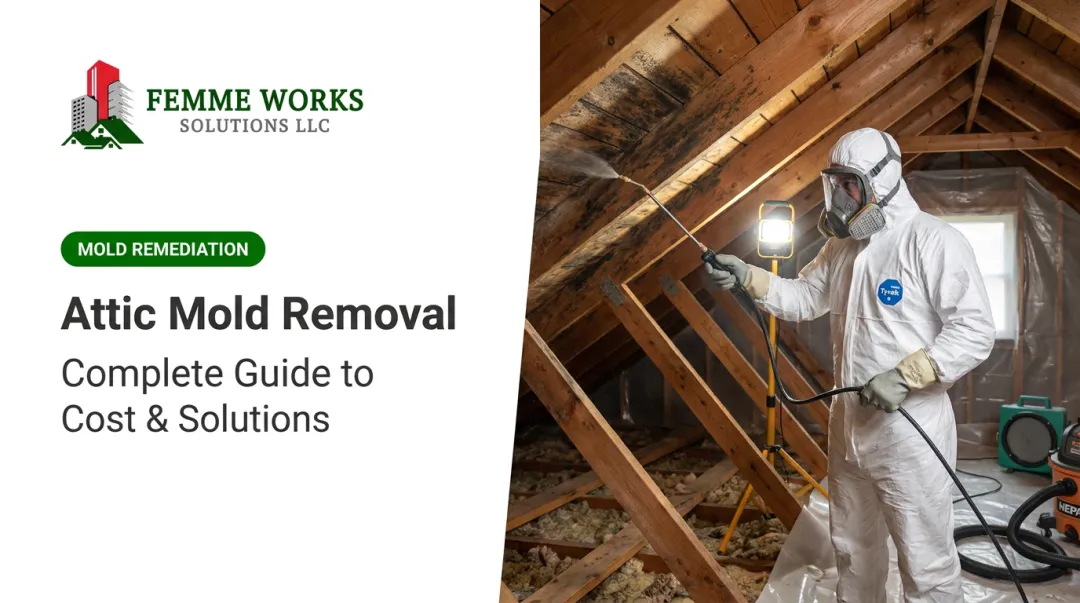
This is a critical, non-negotiable step. To prevent mold spores from spreading to the rest of your house, the remediation team will set up containment barriers using plastic sheeting and zipper doors. They will also use equipment like negative air machines and HEPA air scrubbers to create negative pressure, ensuring that airborne spores stay within the work area.
Mold Remediation and Cleaning
This is the core of the job. Depending on the surface and severity, methods can include:
- HEPA Vacuuming: Using specialized vacuums to capture microscopic spores.
- Manual Cleaning: Scrubbing and sanding affected wood surfaces.
- Media Blasting: Using dry ice or soda blasting for severe contamination on wood, which is often faster and more effective than manual methods.
Material Removal and Disposal
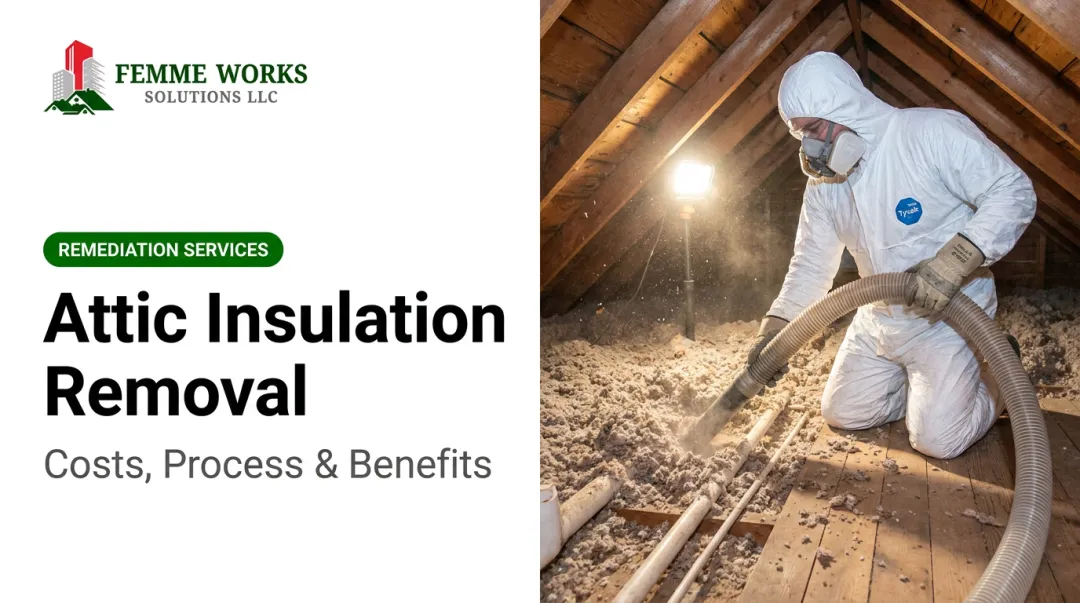
Porous materials like insulation, drywall, and ceiling tiles that are contaminated with mold cannot be salvaged. The cost to carefully bag, remove, and legally dispose of these materials is included in the quote.
Post-Remediation Verification (Clearance Testing)
To verify the job was successful, a final air quality test can be performed after remediation is complete. This optional step is conducted by an independent industrial hygienist to confirm that mold spore counts have returned to safe levels.
This "clearance testing" provides official documentation of a successful project. At Femme Works Solutions, we facilitate this third-party testing to ensure the results are completely unbiased.
Why Mold Remediation Requires Certified Professionals
The Risks of Remediation Without Certified Professionals
The Environmental Protection Agency (EPA) recommends professional remediation for any significant mold problem. Without proper containment and certified equipment, disturbing mold can cross-contaminate an entire property, sending millions of spores airborne and turning a small attic problem into a whole-house issue.
This mistake makes remediation far more expensive. Additionally, work performed without professional certification lacks the documentation often required for real estate transactions or insurance claims.
The Long-Term Value of a Professional
Hiring a certified and insured company like Femme Works Solutions ensures the job is done right the first time. Our teams are fully licensed and follow strict protocols from the EPA, OSHA, and DEP.
We use state-of-the-art containment and filtration equipment to protect your family and your property, providing the documentation and peace of mind that only certified professionals can offer.
Additional Costs to Plan For
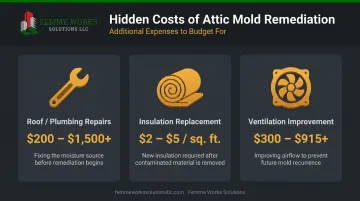
The initial quote covers mold remediation, but it often excludes the cost of crucial repairs needed to prevent its return. Be prepared for these potential additional expenses.
Roof or Plumbing Repairs
The moisture source must be stopped, which often means hiring a roofer or plumber. The scope of these repairs varies significantly depending on what is found during the assessment.
Insulation Replacement
Mold-damaged insulation is a total loss and must be removed and replaced. Your contractor can advise on the scope required once the attic is assessed.
Improving Attic Ventilation
Poor ventilation traps moisture — a leading cause of attic mold. A remediation expert may recommend improvements to improve airflow, such as installing ridge vents, soffit vents, or a powered attic fan.
Fixing these underlying issues is the only way to ensure your attic remains mold-free for good.
Frequently Asked Questions
Is black mold in the attic dangerous?
Yes, certain types of mold can produce mycotoxins that may pose health risks, particularly for individuals with asthma, allergies, or compromised immune systems. A professional assessment is critical to ensure safety.
Can attic mold be removed?
Absolutely. Certified remediation professionals can safely and effectively remove attic mold by following industry-standard protocols for containment, cleaning, and addressing the moisture source.
Will homeowners insurance cover attic mold?
Coverage depends on the cause. It is often approved for "sudden and accidental" events like a burst pipe, but not for problems caused by long-term neglect, such as a slow roof leak.
How long does attic mold remediation take?
A typical attic remediation project takes between 1 and 5 days. The exact timeline depends on the size of the attic, the severity of the mold, and the scope of any related repairs.
Can I stay in my home during attic mold remediation?
For safety, it's best for your family and pets to stay elsewhere during the remediation process. The professionals will provide specific guidance based on the project's scope and containment needs.
What's the difference between mold remediation and mold remediation?
Mold "removal" simply cleans the visible growth. Professional "remediation" is a complete process that also includes containment, air filtration, fixing the moisture source, and verifying the area is safe.