Mold remediation is only half the battle. The critical final step—the one that provides true peace of mind and protects both your health and property value—is verification. Without objective proof, you're just hoping the problem was solved.
This guide will walk you through everything you need to know about mold clearance testing. We'll cover what it is, why it's essential, how the process works, and what to do if your property doesn't pass the first time.
TL;DR: Key Takeaways on Mold Clearance Testing
- Mold clearance testing, or Post-Remediation Verification (PRV), scientifically confirms a mold remediation project was successful.
- It's critical for verifying safe air quality, preventing regrowth, and providing legal documentation for property sales or insurance claims.
- The process involves a visual inspection, moisture readings, and air and surface samples analyzed by an accredited lab.
- A clearance test must be performed by an independent, third-party inspector to avoid a conflict of interest with the remediation company.
What is Mold Clearance Testing (Post-Remediation Verification)?
What Is Mold Clearance Testing?
Mold clearance testing is an inspection and sampling process performed after mold cleanup to verify that the remediation was effective and the property has been returned to a normal, safe condition.
This process, known in the environmental industry as Post-Remediation Verification (PRV), provides objective, data-driven proof that a property is safe for re-occupancy. It goes beyond a simple visual check to give you scientific certainty that the job was done right.
Why Mold Clearance Testing is a Non-Negotiable Final Step
Think of clearance testing as a quality control check for your home's health. It’s an investment that protects your family, your finances, and your peace of mind.
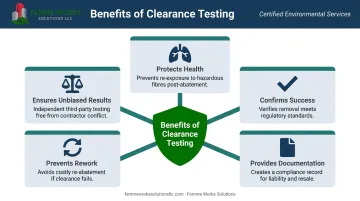
Protects Your Family's Health
Even after all visible mold is removed, microscopic spores can linger in the air. According to the Centers for Disease Control and Prevention (CDC), exposure can cause symptoms like a stuffy nose, wheezing, and skin or eye irritation, especially in individuals with allergies or asthma.
Clearance testing verifies that the indoor air quality has returned to a normal fungal ecology, minimizing these health risks.
Confirms the Remediation Was Successful
A clearance test is the only way to know for sure that the remediation worked. It confirms that three key criteria have been met:
- The original moisture source has been repaired.
- All contaminated materials have been properly removed.
- The area has been thoroughly cleaned according to professional standards, such as the ANSI/IICRC S520 Standard for Professional Mold Remediation.
Provides Essential Legal and Financial Documentation
A passing clearance report is a valuable legal document. It serves as official proof that you, as the property owner, acted responsibly to resolve a mold issue. This documentation is often crucial for:
- Real estate transactions: Providing a passing report to potential buyers offers transparency and can prevent future liability.
- Insurance claims: Insurers may require a clearance report before closing a claim related to water damage and mold.
- Landlord-tenant disputes: The report demonstrates that a rental property is safe and habitable.
Prevents Costly Rework and Future Growth
Catching a failed remediation early saves you money and stress. If a clearance test fails, the remediation company must come back to finish the job correctly—usually at their own expense.
Without the test, you might not discover the failure until the mold grows back, forcing you to pay for a second, often more expensive, remediation project.
Avoids Conflicts of Interest
This is critical: the company that did the remediation should never be the one to perform the clearance test. This creates a clear conflict of interest.
An independent, third-party inspector provides unbiased, credible results that you can trust. Their only goal is to give you an accurate assessment of your home's condition.
The Mold Clearance Testing Process: A Step-by-Step Guide
A professional mold clearance test is a systematic process designed for thorough, objective verification. Here’s what you can expect.
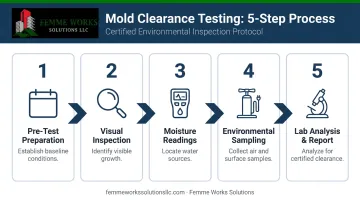
Step 1: Pre-Test Preparation
Before the inspector arrives, all remediation work must be complete, and the containment area should be clean and dry. Most importantly, any air scrubbers or HEPA filtration devices used during remediation must be turned off for at least 12-24 hours before sampling. This allows the air to return to a normal, settled state, ensuring the samples collected are accurate and representative of the home's true condition.
Step 2: The Visual Inspection
The inspector starts with a detailed visual check of the work area. They are looking for any signs of remaining visible mold, water damage, or dust and debris left behind from the remediation process. A professionally remediated area should be visibly clean.
Step 3: Moisture and Humidity Readings
Mold needs moisture to grow. The inspector will use professional-grade moisture meters and sometimes thermal imaging cameras to test building materials like drywall, wood studs, and subflooring. These tools confirm that all materials within the work area are thoroughly dry and that the underlying moisture problem has been solved.
Step 4: Environmental Sampling
This is the core of the test, where an inspector collects scientific samples for lab analysis. There are two main types:
Air Samples
A calibrated air pump pulls a specific volume of air through a collection cassette. The inspector takes at least one sample from inside the remediated area and a crucial "control" sample outdoors. The goal isn't to find zero mold spores—as OSHA notes, mold is a natural part of the environment—but to ensure indoor spore counts are similar to or lower than outdoor levels.
Surface Samples
If needed, an inspector may use sterile swabs or tape lifts to collect samples from surfaces within the work area. This checks for any remaining mold residue that is not visible to the naked eye.
Step 5: Lab Analysis and the Final Report
The collected samples are sent to an accredited, independent laboratory. There, microbiologists identify the types of mold present and count the number of spores in each sample.
The inspector then combines the lab results with their visual findings and moisture readings into a final clearance report. This report will provide a detailed analysis and, most importantly, a clear "pass" or "fail" determination. A "pass" means the remediation was successful, and the area is safe to re-occupy.
What Happens if Your Property Fails the Clearance Test?
A "fail" isn't the end of the world—it's the system working as it should. It means the remediation did not meet established standards, usually because of elevated spore counts, lingering moisture, or incomplete cleaning.
If this happens, your remediation contractor is responsible for returning to correct the issues identified in the report. This follow-up should be done at no additional cost to you.
Once the additional work is complete, a second clearance test is performed to verify that the remediation is successful.
Partnering with Femme Works Solutions for a Verifiably Clean Property
At Femme Works Solutions, our mission is to do the job right the first time. As a remediation expert serving Massachusetts and New Hampshire, we prioritize quality and transparency on every project. We don't just remove the mold; we create a safe environment built to pass independent verification.
While we focus on expert mold remediation, we fully support and recommend independent, third-party clearance testing for every client. This commitment to unbiased verification aligns with our core values of "Safety, Quality, & Compliance."
Our process is designed to meet and exceed IICRC industry standards, ensuring our work stands up to scrutiny. Key steps include:
- Establishing proper containment to prevent cross-contamination.
- Using HEPA air scrubbers to capture airborne mold spores.
- Removing all affected materials safely and thoroughly.
- Leaving the area clean and dry to prevent future growth.
This meticulous approach gives our clients complete peace of mind that the job was done right.
Frequently Asked Questions
What is mold clearance testing?
It's a post-remediation verification process that uses visual checks and scientific sampling (air and surface) to confirm a mold cleanup was successful and the property's air quality is safe for occupants.
How long should you stay out of a house after mold remediation?
You should wait until you receive a "pass" on a professional, third-party clearance test. This report is your official confirmation that the air quality has returned to a safe and normal state.
How much does mold testing cost?
Costs vary based on the size of the property and the number of samples required. It's important to distinguish between an initial assessment to find mold and a post-remediation clearance test to verify its removal.
What happens if my property fails a mold clearance test?
The remediation company must return to correct the specific issues identified in the inspector's report. After they have re-cleaned the area, another clearance test is performed to confirm the job is complete.
Why can't my remediation company perform the clearance test?
This is a major conflict of interest. An unbiased, third-party inspector is essential to ensure the results are credible and objective, protecting you from a company that might approve its own incomplete work.
Is mold clearance testing legally required?
While not always legally required for private homes in Massachusetts or New Hampshire, it is a vital industry best practice. The test is often necessary for real estate transactions, insurance claims, and landlord-tenant legal compliance.