If you live in an older home in Massachusetts or New Hampshire, discovering you might have an asbestos popcorn ceiling can be alarming. The good news is that with the right information, you can manage the situation safely and effectively. This guide will walk you through the risks, how to identify a potential problem, and what steps to take to protect your family.
TL;DR: Asbestos in Popcorn Ceilings
- You cannot tell if a popcorn ceiling contains asbestos just by looking at it; professional lab testing is the only way to know for sure.
- Asbestos is only dangerous when its microscopic fibers are disturbed and become airborne. Intact, undamaged ceilings are generally not an immediate risk.
- In Massachusetts, an asbestos survey is legally required before any renovation or demolition that could disturb suspect materials.
- If your ceiling tests positive, your main options are professional removal (abatement), encapsulation (sealing), or encasement (covering).
What Are Popcorn Ceilings and Why Did They Contain Asbestos?
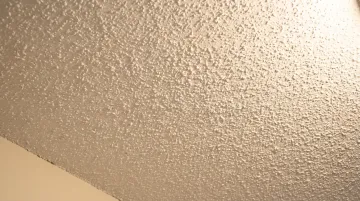
Popcorn ceilings, also known as acoustic or stucco ceilings, are spray-on or paint-on treatments that create a bumpy, textured surface. From the 1950s through the late 1970s, asbestos was a common ingredient in these textured finishing products for several reasons:
- Fire Resistance: Asbestos fibers are naturally resistant to heat and fire, adding a layer of safety.
- Sound Dampening: The texture and composition helped to reduce echo and noise between floors, which is why they were often called "acoustic ceilings."
- Durability: Asbestos added strength and longevity to the ceiling finish.
- Aesthetics: The texture was excellent at hiding imperfections in the underlying ceiling work, like cracks and uneven drywall seams.
The use of asbestos in these products was largely halted in 1978, when the U.S. Environmental Protection Agency (EPA) banned spray-applied surfacing materials containing asbestos.
However, the ban didn't stop the sale of existing stockpiles. This means homes built as late as the early 1980s could still have asbestos-containing popcorn ceilings.
The Health Risks: Why "Undisturbed" is the Key Word
The primary concern with asbestos is its "friable" nature. OSHA defines friable asbestos-containing material (ACM) as material that can be crumbled or reduced to powder by hand pressure. Popcorn ceilings are highly friable, meaning even minor disturbances can release microscopic asbestos fibers into the air.
When inhaled, these fibers can become lodged in the lungs and other tissues, leading to serious health conditions decades later. The American Cancer Society links this exposure to:
- Asbestosis: A chronic lung disease caused by the scarring of lung tissues.
- Lung Cancer: A significant increase in risk, especially for those who also smoke.
- Mesothelioma: A rare and aggressive cancer of the lining of the lungs, abdomen, or heart that is almost exclusively caused by asbestos exposure.
This brings us back to the key word: "undisturbed." If your popcorn ceiling is in good condition—free of cracks, water damage, and flaking—it is not likely releasing fibers and poses minimal risk. The danger arises when the ceiling is scraped, drilled into, sanded, or begins to deteriorate.
How to Know if Your Popcorn Ceiling Contains Asbestos
You cannot determine if a material contains asbestos simply by looking at it. The fibers are microscopic and are mixed into the ceiling texture itself. However, there are clear indicators that should prompt you to investigate further.
The Primary Indicator: Age of Your Home
The single most important factor is the age of your house. If your home was built or had ceilings textured before the mid-1980s, there is a high probability that the popcorn ceiling contains asbestos. Given the age of the housing stock in Massachusetts and New Hampshire, this applies to a large number of properties across the region.
The Only Way to Be Sure: Professional Testing
Do-it-yourself sampling is strongly discouraged. Scraping a piece of the ceiling yourself can easily release dangerous fibers into your home if not done with proper precautions.
The only safe and definitive way to know is to hire a professional. A state-licensed asbestos inspector will follow strict safety protocols to collect a few small samples from your ceiling.
These samples are then sent to an NVLAP-accredited laboratory for analysis. This process ensures accuracy while keeping your home's air safe.
A Homeowner's 5-Step Guide to Handling Suspected Asbestos
If you suspect your popcorn ceiling contains asbestos, don't panic. Follow these simple steps to manage the situation safely.
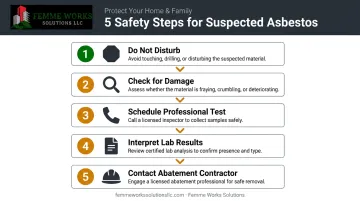
Do Not Disturb the Ceiling This is the most important rule. Avoid any activity that could damage the surface. This means no scraping, sanding, drilling, or nailing into the ceiling. Don't hang plants from it or let children throw toys at it. Leave it completely alone.
Check for Damage From a safe distance, visually inspect the ceiling. Look for any areas that are peeling, crumbling, cracking, or showing signs of water damage. Damaged areas are more likely to release fibers and should be addressed promptly by a professional.
Schedule a Professional Asbestos Test Contact a certified and licensed asbestos inspection company in your area. They have the training and equipment to collect samples safely, providing you with definitive proof of whether asbestos is present.
Interpret the Lab Results The lab report will tell you two things: whether asbestos is present and, if so, what percentage of the material it makes up. Any percentage of asbestos is cause for caution, but this information will be vital for the next step.
Contact a Licensed Asbestos Abatement Contractor If the test comes back positive, your next call should be to a specialist in asbestos remediation. A licensed abatement contractor will assess the condition of your ceiling and provide you with safe, legal options.
For homeowners in Massachusetts and New Hampshire, finding a qualified contractor is the final, most critical step. Femme Works Solutions is a trusted local expert in asbestos abatement, with over 80 five-star Google reviews.
As a fully licensed, insured, and certified woman/minority-owned business, we bring over 15 years of experience to every project. Our team strictly follows all EPA, OSHA, and MassDEP regulations to ensure your home and family are protected.
Your Options for Asbestos Ceilings: Removal vs. Containment
Once you've confirmed the presence of asbestos, you have three industry-standard options. A professional can help you decide which is best for your situation and budget.
Option 1: Abatement (Full Removal)
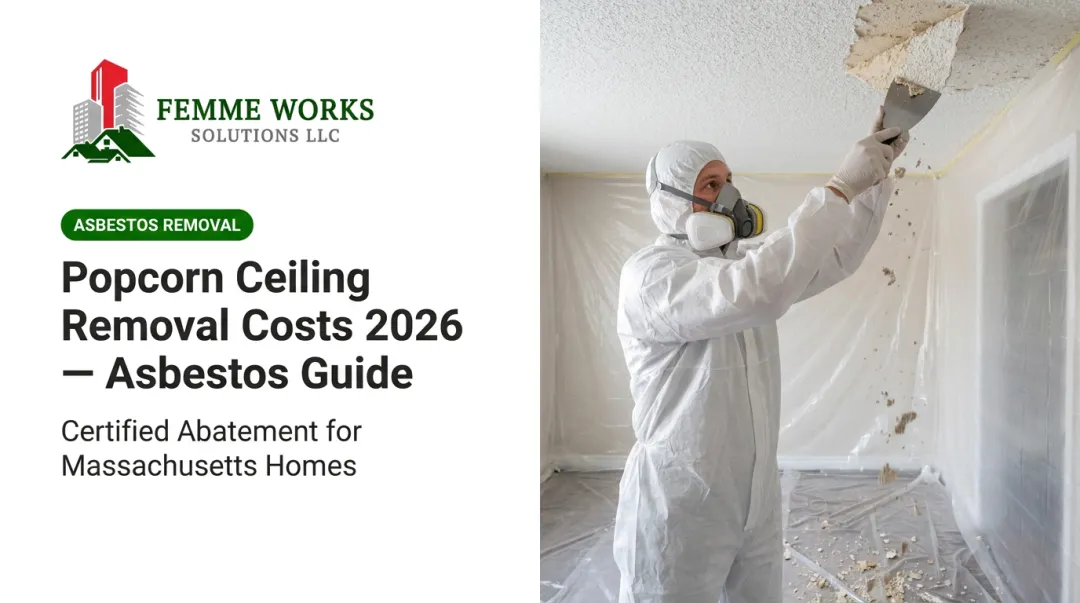
This is the most complete and permanent solution. Professional abatement involves carefully removing the entire popcorn ceiling under highly controlled conditions. The process includes:
- Establishing a containment zone by sealing the work area off from the rest of the house with heavy plastic sheeting.
- Creating negative air pressure with HEPA-filtered machines to ensure no asbestos fibers escape the contained area.
- Wetting the ceiling material to minimize dust and prevent fibers from becoming airborne during removal.
- Disposing of all materials properly by securely bagging asbestos-containing waste and transporting it to a licensed facility.
This is the method Femme Works Solutions specializes in, using state-of-the-art equipment like HEPA filtration systems and negative air machines to ensure every project meets the highest safety standards.
- Pros: This is a permanent solution that eliminates the asbestos hazard, provides total peace of mind, and allows for complete ceiling renovation.
- Cons: Abatement is the most expensive option and can be disruptive to your household.
Option 2: Encapsulation
This method involves sealing the asbestos material instead of removing it. A special, penetrating sealant is sprayed onto the ceiling, which binds the asbestos fibers together and coats the surface, preventing their release.
- Pros: This method is less expensive and less disruptive than full removal.
- Cons: The asbestos remains in your home, which may need to be disclosed during resale. This method is also unsuitable for ceilings that are badly damaged or deteriorating.
Option 3: Encasement
Encasement means covering the existing popcorn ceiling with a new, solid barrier. This is most commonly done by installing a new layer of drywall directly over the old ceiling.
- Pros: Encasement is highly effective at preventing fiber release and gives you a brand-new, modern ceiling surface.
- Cons: This method slightly lowers your ceiling height, and the asbestos is still present behind the new layer, which can complicate future renovations.
Frequently Asked Questions
How can I tell if my popcorn ceiling contains asbestos?
You cannot tell if a popcorn ceiling contains asbestos simply by looking at it. The only way to know for sure is to have a small sample collected by a licensed professional and analyzed by an accredited laboratory.
Is asbestos testing required before removing a popcorn ceiling?
Yes, Massachusetts law requires it. The MassDEP mandates a professional asbestos survey before any renovation or demolition that could disturb materials potentially containing asbestos.
How much does it cost to test a popcorn ceiling for asbestos?
The price depends on the number of samples your property requires, access conditions, and the rates of local inspectors. Contact Femme Works Solutions for a free consultation and accurate quote based on your specific property.
What is the 3-5-7 rule for asbestos sampling?
This guideline ensures professionals collect enough samples from a uniform surface like a ceiling. It specifies taking 3 samples for areas up to 1,000 sq. ft., 5 for 1,000-5,000 sq. ft., and 7 for areas over 5,000 sq. ft.