Can a General Contractor legally and safely perform demolition, or do you need a specialist? The answer is nuanced. While a GC can often handle simple teardowns, the decision depends on state licensing, the project's scope, and whether hazardous materials are involved. This guide will walk you through the key factors to ensure your project starts safely and on the right side of the law.
TL;DR: Can a GC Handle Your Demolition?
- Yes, many GCs can perform simple, non-structural demolition if their license and insurance cover it.
- Specialized contractors are needed for structural work, full teardowns, or hazardous material (e.g., asbestos) removal.
- Verify a contractor’s license, insurance, and specific demolition experience before hiring them.
- Hiring an unqualified contractor can lead to safety risks, legal penalties, and costly project delays.
Understanding a General Contractor’s Primary Role
Think of a General Contractor as the project manager for your renovation. Their main job is to oversee the entire project from start to finish. According to the U.S. Bureau of Labor Statistics, their responsibilities include managing budgets, creating timelines, coordinating subcontractors, and ensuring the final build meets all legal and safety codes.
While GCs have a broad knowledge of construction, they are masters of coordination, not necessarily every specific trade. They hire licensed specialists for critical tasks that require specific certification or equipment, such as:
- Plumbing and electrical work
- HVAC installation
- Complex demolition, especially projects involving structural risks or hazardous materials
When Can a General Contractor Handle Demolition? The Deciding Factors
A general contractor's ability to handle demolition isn't a simple yes or no. The answer depends on three critical factors: licensing, insurance, and the specific scope of work.
State and Local Licensing: The First Hurdle
Contractor licensing laws vary dramatically across the country, and what's permitted in one state could be illegal in another.
In Massachusetts, most construction work is overseen by individuals holding a Construction Supervisor License (CSL). While an unrestricted CSL covers demolition supervision, the state also issues a Specialty CSL for Demolition for certain projects.
For any job involving structural demolition, a permit is mandatory, and the work must be performed by a supervisor with the proper state license.
New Hampshire does not have a statewide general contractor or demolition license; instead, regulations are handled at the municipal level. Cities like Manchester, Nashua, and Concord have their own strict permitting and contractor registration rules.
Before starting any demolition, a contractor must secure the right local permits. This process often involves getting sign-offs from multiple utility and city departments.
Insurance Coverage: Beyond General Liability
Demolition is a high-risk activity, and a standard General Liability (GL) insurance policy may not be enough. Many GL policies contain exclusions for demolition work or, more commonly, for pollution-related incidents.
If demolition disturbs hazardous materials like asbestos or lead paint—a common occurrence in older buildings—a standard GL policy will likely deny the claim. This is why specialized demolition contractors carry Pollution Liability Insurance. This policy covers claims for bodily injury, property damage, and cleanup costs from hazardous material exposure, making it a non-negotiable safeguard.
Scope of Work: Simple vs. Complex Demolition
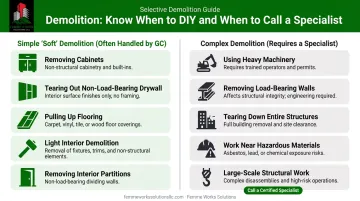
The type of demolition is the final piece of the puzzle. A qualified GC can often manage simple "soft" demolition, which includes:
- Removing kitchen cabinets or bathroom fixtures
- Tearing out drywall on non-load-bearing walls
- Pulling up old flooring like carpet or vinyl tile
However, complex demolition requires a specialist. This category includes any work that is structural or requires heavy machinery, such as:
- Removing load-bearing walls or support columns
- Tearing down an entire building or garage
- Using excavators, cranes, or other heavy equipment
This type of work affects the building's structural integrity and requires engineering oversight and a team with specialized training and equipment.
When to Call a Specialist: Red Flags for Your Demolition Project
If any of the following scenarios apply to your project, it’s time to pause and insist on hiring a specialized demolition contractor.
The Structure is Old (Pre-1980s)
This is a major red flag. According to OSHA regulations, many materials in buildings constructed before 1981 are presumed to contain asbestos. This includes common items like:
- Insulation (especially around pipes and in attics)
- Vinyl floor tiles and the mastic used to glue them down
- Ceiling tiles
- Roofing and siding shingles
- Textured paints and patching compounds
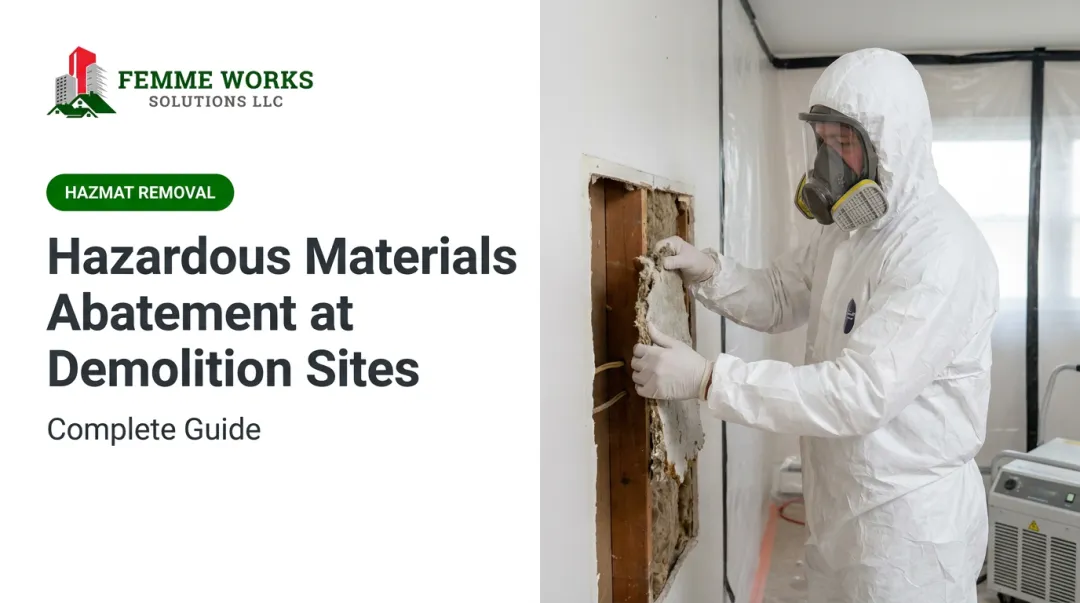
Disturbing asbestos without proper containment is illegal and poses a serious health risk. If your property was built before the 1980s, a certified asbestos abatement contractor is required by law to test for and safely remove these materials before any demolition begins.
The Project Involves "Selective Demolition"
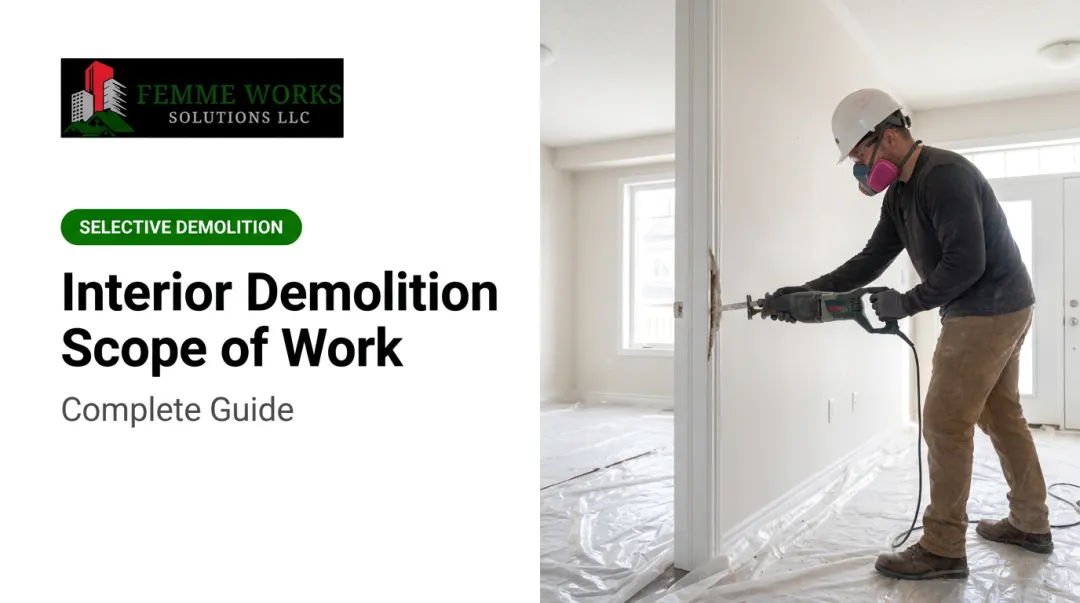
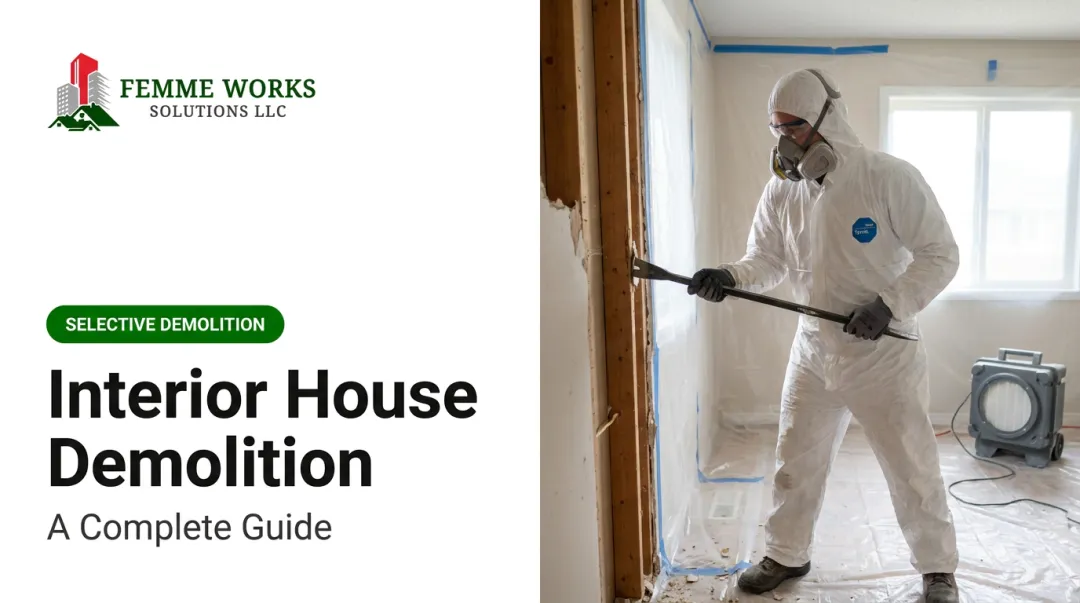
Selective demolition requires surgical precision to dismantle specific parts of a building carefully while protecting the surrounding structure. It’s not about brute force. Examples include gutting a single floor for a commercial tenant fit-out or removing a section of a wall for an addition.
This work requires specialized tools, dust control systems, and containment strategies to prevent damage to the rest of the property.
Femme Works Solutions specializes in this type of precise, controlled demolition, ensuring the project is clean, safe, and doesn't create bigger problems.
The Work Involves Structural Components or Heavy Machinery
Any demolition that touches the building's core support system is out of bounds for a typical GC. This includes removing load-bearing walls, foundations, columns, or roof trusses. This work requires an engineer's assessment and a licensed demolition expert to execute safely.
Furthermore, operating heavy machinery like excavators or wrecking balls is a highly specialized skill. A demolition contractor has the trained operators and safety protocols necessary to use this equipment without endangering your property or neighboring structures.
Your Vetting Checklist: How to Hire the Right Contractor for Demolition
Before you let anyone start demolition, run them through this checklist. The Federal Trade Commission advises consumers to always verify a contractor's credentials before hiring.
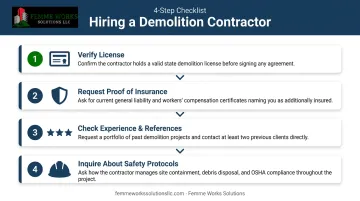
Ask for License Verification: Don't just take their word for it. Ask for their specific license number(s). For Massachusetts, you can verify a Construction Supervisor License through the state's Office of Public Safety and Inspections (OPSI) portal. For New Hampshire, contact the local building department in your town or city to confirm they are registered to pull demolition permits.
Request Proof of Insurance: Ask for a Certificate of Insurance (COI) sent directly from their insurance agent. Look for three key coverages: General Liability, Worker's Compensation, and—most importantly for demolition—Pollution Liability.
Check for Experience and References: Ask to see a portfolio of similar demolition projects they have completed. Call at least two references and ask about their experience, focusing on safety, communication, and how the contractor handled unexpected issues.
Inquire About Hazardous Material Protocols: Demolition can uncover hazardous materials like asbestos or lead paint. Ask what their process is for identifying and handling these substances. A qualified contractor will have a clear, compliant plan, while others might ignore the risk.
Why a Certified Demolition Specialist is Your Safest Choice
Hiring a certified demolition specialist ensures your project is safe, compliant, and efficient from day one, going far beyond basic rule-following.
Unmatched Expertise in Safety and Containment
Specialists are trained in OSHA, EPA, and DEP protocols for dust control, debris management, and protecting adjacent properties. They use equipment like HEPA air scrubbers and negative air machines to contain dust and hazardous particles, keeping your family or tenants safe.
Navigating Complex Permitting
Demolition specialists are experts in the specific, multi-layered permitting process. In Massachusetts, Femme Works Solutions handles all the necessary paperwork, from DEP notifications to local building department approvals, ensuring the project is fully compliant and protecting you from potential fines.
The Right Tools for the Job
A specialist's toolkit goes far beyond a GC's standard equipment, including:
- Precision cutting tools for selective demolition
- Heavy equipment for structural work
- Proper personal protective equipment (PPE) for handling hazardous materials safely
Integrated Hazardous Material Handling
The most significant advantage of a specialist is integrated hazardous material handling. If a GC starts demolition and finds asbestos, the project grinds to a halt. They must stop work, call a certified abatement company, and wait—costing you time and money.
A firm like Femme Works Solutions provides a seamless, integrated process. As a fully licensed asbestos abatement and selective demolition contractor, our team is already certified to handle hazardous materials if they are discovered.
This means we don't have to stop work. We can safely test, abate, and dispose of the materials according to all state and federal regulations, keeping your project on schedule and on budget. With over 15 years of experience, we ensure your demolition is a clean slate, not a compliance crisis.
Frequently Asked Questions
Do you need a license to demolish a building?
Yes, demolition almost always requires a permit and must be done by a licensed contractor. This is particularly important in regulated states like Massachusetts.
What's the difference between a general contractor and a dedicated demolition contractor?
A general contractor (GC) manages the entire project. In contrast, a demolition contractor is a specialist with the specific equipment, skills, and licenses needed for safe deconstruction.
What is selective demolition?
It’s the precise removal of certain building components, such as interior walls or floors, while keeping the main structure intact. This is common in renovations and commercial remodels.
Can a general contractor handle asbestos removal during demolition?
No, unless they also hold a separate asbestos abatement license. Asbestos removal is a highly regulated specialty that requires certified professionals due to severe health risks.
How do I verify a contractor's license in Massachusetts?
Use the state's official online lookup tool provided by the Office of Public Safety and Inspections (OPSI). Check for a valid Construction Supervisor License (CSL) and any other specialty licenses required for your project.