This guide provides a clear, step-by-step plan for homeowners. We'll cover why mold thrives after a flood, the dangers it presents, and exactly what you need to do to prevent it. We’ll also explain when to call in certified professionals for safe, thorough remediation.
Key Takeaways
- Mold can start growing within 24-48 hours of water damage, so speed is essential.
- Your immediate priorities: stop the water source, remove all standing water, and start drying everything.
- Discard all porous materials that can't be completely cleaned and dried, like drywall, carpet padding, and mattresses.
- If the mold covers more than 10 square feet or the floodwater was contaminated, professional remediation is not just a good idea—it's necessary.
Why Mold Grows So Quickly After a Flood
Mold is a type of fungus that exists everywhere in our environment. It only becomes a problem when it finds the right conditions to multiply, and a flood creates the perfect storm for a massive outbreak. For mold to thrive, it needs three key ingredients.
The Three Ingredients for a Mold Outbreak
A flood provides the ideal "mold triangle" in abundance, turning your home into an incubator.
- Moisture is the most critical ingredient. Floodwaters saturate porous materials like wood, drywall, and furniture, providing a constant water source for mold spores to germinate and grow.
- A reliable food source is easy to find, as mold feeds on almost any organic material in a home. This includes the paper in drywall, wood studs, fabrics, and even dust.
- Ideal temperatures and oxygen levels are already present. Most indoor temperatures (60-80°F) are perfect for mold, and ample oxygen makes the environment hospitable for a widespread infestation.
The Dangers of Ignoring Post-Flood Mold
It's tempting to think of mold as just an ugly blemish on a wall, but it's far more than a cosmetic issue. Ignoring it can lead to severe consequences for your health and your home's structural integrity.
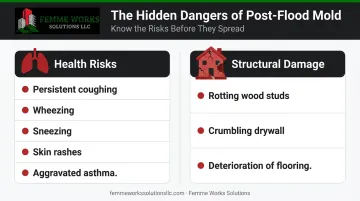
Health Risks from Mold Exposure
Mold releases microscopic spores into the air that you and your family can easily inhale. According to the Centers for Disease Control and Prevention (CDC), this exposure can trigger a range of health problems, especially for those with existing respiratory conditions.
Common symptoms include:
- Persistent coughing and wheezing
- Sneezing and stuffy nose
- Itchy, watery eyes
- Skin rashes or irritation
- Aggravated asthma attacks
For vulnerable individuals—such as children, the elderly, and people with compromised immune systems—the risks are even greater. Certain molds produce mycotoxins, toxic compounds that can lead to more serious health complications. The CDC advises that all types of mold should be removed promptly and safely.
Structural Damage to Your Property
Mold doesn't just sit on a surface; it actively consumes the material it's growing on. As it feeds on organic materials, it causes them to decay and weaken. Over time, this can lead to:
- Rotting wood studs and floor joists
- Crumbling drywall
- Deterioration of flooring and subflooring
This damage isn't just expensive to fix; it can compromise the structural integrity of your home. Left unchecked, this damage will significantly decrease your property's value and complicate future sales.
A Step-by-Step Guide to Preventing Mold After a Flood
As soon as it's safe to re-enter your property, you need to begin the cleanup process immediately. This action plan will guide you through the critical first steps.
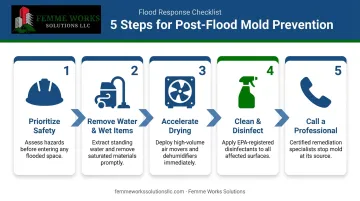
Step 1: Prioritize Safety
Before you begin any cleanup, ensure the area is safe.
- Turn off utilities: If you suspect any damage to electrical wiring or gas lines, shut off the main power and gas supplies to your home. Don't turn them back on until a qualified professional has inspected them.
- Keep occupants away from the affected area: Floodwater is often contaminated with sewage, chemicals, and bacteria. Limit access to the affected zone and contact a certified remediation professional who will arrive equipped with the appropriate protective equipment and containment measures.
Step 2: Remove Water and Wet Items Immediately
The goal is to get your home as dry as possible, as quickly as possible.
- Pump out standing water: Use sump pumps, wet-dry vacuums, or even buckets to remove all standing water from the affected areas.
- Remove all waterlogged items: Take everything that is soaked out of the house. This includes carpets, rugs, furniture, mattresses, and books. Porous materials like carpet padding and insulation are nearly impossible to salvage and should be discarded. According to the EPA, you may have to throw away absorbent materials that have become moldy.
Step 3: Accelerate the Drying Process
Once the standing water is gone, focus on removing moisture from the structure itself.
- Create airflow: Open all windows and doors to get air circulating, as long as the weather outside is dry.
- Use fans and dehumidifiers: Position industrial-grade fans and dehumidifiers throughout the flooded areas. Fans help evaporate moisture from surfaces, while dehumidifiers pull that moisture out of the air. Run them 24/7 until all materials are completely dry.
Step 4: Clean and Disinfect Non-Porous Surfaces
Hard, non-porous surfaces like tile, metal, concrete, and some plastics can often be saved.
- Clean first: Scrub all hard surfaces thoroughly with a non-ammonia detergent and clean water. This removes the dirt and grime that mold can feed on.
- Disinfect after cleaning: After surfaces are clean and dry, you can use a disinfectant to kill any remaining mold spores. A solution of 1 cup of household bleach to 1 gallon of water can be effective, but never mix bleach with ammonia or other cleaning products, as this creates toxic gas.
Step 5: Know When to Call a Professional
Professional remediation is needed for any significant mold after a flood. The EPA recommends professional help when mold covers more than 10 square feet, and post-flood conditions — saturated materials, possible sewage contamination, and rapid mold spread — typically exceed that threshold. Certified specialists bring the containment, HEPA filtration, and safe removal methods that protect your home and family.
Other situations that require a certified remediation company include:
- The floodwater was contaminated with sewage.
- Your home's HVAC system was submerged or affected.
- A household member has a compromised immune system or severe asthma.
- A musty smell persists after you've cleaned.
For homeowners in Massachusetts and New Hampshire, a certified and insured specialist like Femme Works Solutions is essential. With over 15 years of experience in environmental remediation, their team follows strict EPA and OSHA protocols to ensure mold is removed safely and completely.
They use specialized equipment, including HEPA air scrubbers and negative air machines, to contain and eliminate spores without cross-contaminating your home.
Long-Term Strategies to Keep Your Home Mold-Free
After you've managed the immediate crisis, shift your focus to preventing future mold issues. A few key habits can make a huge difference in keeping your home dry and healthy.
- Keep indoor humidity below 50% by using dehumidifiers in damp areas like basements and crawl spaces. A whole-home dehumidifier is a great option for humid climates.
- Ensure proper ventilation in high-moisture areas like bathrooms, kitchens, and laundry rooms. Always run exhaust fans when showering or cooking to push damp air outside.
- Routinely inspect for leaks under sinks, around windows, and in the attic. Check that your roof and gutters divert water away from the foundation to prevent moisture intrusion.
These long-term habits are your best defense against future mold growth. By staying vigilant about humidity, ventilation, and potential leaks, you can maintain a safe, healthy home. If you spot signs of a recurring issue, a professional inspection can provide peace of mind and prevent a small problem from becoming a major one.
Frequently Asked Questions
How long does it take mold to settle in after water damage?
Mold spores can begin to grow within 24 to 48 hours of water exposure, provided they have moisture and an organic food source. This narrow window is why immediate action is so critical.
Does FEMA pay for mold remediation?
FEMA may cover mold remediation after a presidentially declared disaster, but coverage varies. Always check your specific eligibility and review your insurance policies to confirm what is covered.
Can I just use bleach to kill all the mold?
While bleach can kill surface mold on non-porous materials, the EPA does not recommend it as a routine practice. It is not effective on porous surfaces like drywall or wood, as the mold's roots remain intact.
What are the first signs of mold after a water leak?
Common signs include a persistent musty smell, visible dark spots (black, green, or white), and worsening allergy-like symptoms when you are in the affected area.
Is it safe to stay in my house after a flood if I suspect mold?
Staying in a house with suspected mold is not recommended, especially for those with respiratory issues or weak immune systems. Relocate until a professional has assessed the area and confirmed the air is safe to breathe.
When should I call a professional for mold remediation?
Call a professional if mold covers more than 10 square feet, sewage was involved, or your HVAC system was affected. You should also call if a musty smell persists after your own cleanup attempts.