For homeowners in Massachusetts and New Hampshire, removing outdated attic insulation isn't just about maintenance — it's a critical step toward a healthier, safer, and more energy-efficient home. This guide breaks down the signs you need removal, the benefits of starting fresh, what the professional process looks like, and what factors shape the project scope and cost.
TL;DR: The Essentials of Attic Insulation Removal
- Remove insulation if it's damaged by water, mold, pests, or contains asbestos.
- Key benefits include better energy efficiency, improved air quality, and pest elimination.
- The process uses professional-grade HEPA vacuums and containment for safe disposal.
- Price depends on an individual assessment — request a free quote for an accurate figure.
Top 5 Signs You Need to Remove Your Attic Insulation
Knowing when to replace your insulation is key. Simply adding new material over old, compromised insulation can trap problems and waste money. Here are five clear signs that it's time for a complete removal.
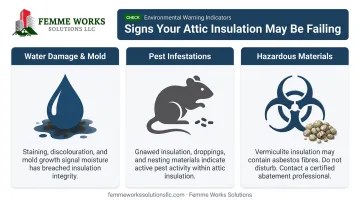
1. Water Damage and Mold Growth
Roof leaks, ice dams, and poor ventilation can introduce moisture into your attic, turning your insulation into a damp, compressed mat. Wet insulation loses its thermal resistance (R-value) and becomes a perfect breeding ground for mold and mildew.
Look for visual cues like water stains on your ceilings, a persistent musty smell, or visible black, green, or white spots on the insulation itself. According to the U.S. Environmental Protection Agency (EPA), mold exposure can trigger allergic reactions and asthma attacks, making its removal essential for your family's health.
2. Pest Infestations (Rodents, Birds, Insects)
Your attic can be an inviting home for pests. Rodents, birds, and insects love to nest in soft insulation, shredding it and contaminating it with droppings, urine, and nesting debris. This not only destroys the insulation's effectiveness but also introduces serious health risks.
Rodent droppings can carry dangerous pathogens. The Massachusetts Department of Public Health warns, for example, that inhaling dust from infected rodent droppings in our region can transmit Hantavirus, a rare but serious respiratory disease. Complete removal and decontamination is the only way to eliminate these biohazards.
3. The Presence of Hazardous Materials
Many older homes in New England contain outdated insulation that is now known to be hazardous. The most common concern is vermiculite insulation, which may contain asbestos. Often sold under the brand name Zonolite, this pour-in insulation looks like small, grayish-brown, or silvery-gold pebbles.
The EPA advises homeowners to assume all vermiculite insulation is contaminated with asbestos and to never disturb it themselves. If you suspect you have vermiculite, only a certified and licensed abatement contractor should test and remove it. A specialist like Femme Works Solutions follows strict safety protocols to handle these hazardous materials safely.
4. Significant Age and Ineffectiveness
Over decades, loose-fill insulation like cellulose and fiberglass naturally settles and compresses. This compression reduces its thickness and R-value, leading to drafty rooms, uneven temperatures, and higher energy bills. If your insulation is visibly thin, flat, or dusty, it's likely no longer doing its job.
5. Preparing for Major Upgrades or Renovations
If you're planning to finish your attic, perform electrical work, or undertake other major renovations, removing the old insulation is a necessary first step. It provides a clean slate and, most importantly, exposes the attic floor.
This allows for proper air sealing — a critical step for maximizing energy efficiency. Programs like Mass Save often require air sealing gaps and cracks around pipes, vents, and fixtures before new insulation can be installed. This can only be done effectively once the old material is completely gone.
The Key Benefits of Professional Insulation Removal
Investing in professional insulation removal pays dividends in home comfort, health, and energy savings. It's about more than just a clean attic; it's about upgrading your home's performance from the top down.
- Boost energy efficiency and save an average of 15% on heating and cooling costs, according to ENERGY STAR. Proper removal and air sealing, often eligible for Mass Save rebates, is the critical first step.
- Improve indoor air quality by eliminating hazardous materials. Old insulation can hide mold, pest droppings, and even asbestos or vermiculite, which pose serious risks to those with allergies or asthma.
- Achieve a permanent pest solution by removing nests and scent trails that attract new infestations. Professionals can then thoroughly clean, disinfect, and seal entry points to prevent pests from returning.
The Professional Attic Insulation Removal Process: A Step-by-Step Guide
A professional removal job is a systematic process focused on safety and thoroughness. Here's what you can expect when a team like Femme Works Solutions arrives at your home.
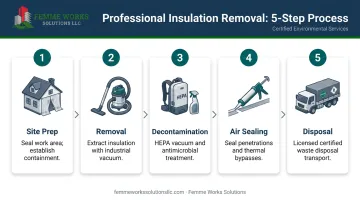
Step 1: Site Preparation and Containment
The first priority is protecting your home. Crews lay down heavy-duty plastic sheeting to create a protected pathway from the entrance to the attic hatch. The work area is then sealed off using a containment system, often with negative air pressure machines, to ensure no dust, debris, or hazardous fibers escape into your living space.
Step 2: Safe and Efficient Removal
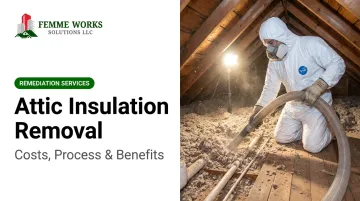
Professionals use high-powered, commercial-grade vacuums connected to long hoses that run outside to a specialized truck or large disposal bags. This method safely extracts loose-fill insulation like cellulose or vermiculite without bringing it through your home.
Batt insulation is typically rolled, bagged, and removed manually. For hazardous materials like asbestos, technicians follow strict EPA and OSHA protocols, wearing full personal protective equipment (PPE).
Step 3: Detailed Attic Cleaning and Decontamination
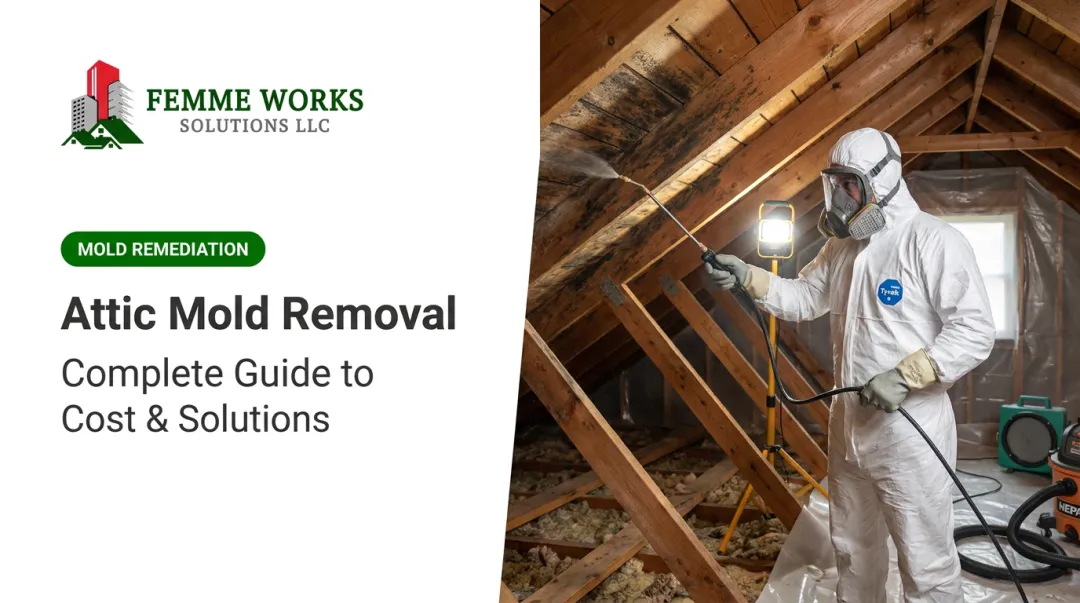
Once the bulk insulation is gone, the job isn't finished. The crew meticulously HEPA-vacuums the entire attic — including joists, beams, and flooring — to capture any remaining fine dust and debris. If mold or pests were present, they will apply an antimicrobial spray or enzyme cleaner to sanitize all surfaces.
Step 4: Preparing for New Insulation
With the attic floor completely clear, it's the perfect time for air sealing. The team can now easily access and seal all the small cracks and gaps around light fixtures, plumbing stacks, and wiring that cause energy loss.
Step 5: Proper Disposal
A professional service handles the lawful disposal of all removed materials. This is especially important for hazardous waste like asbestos, which must be transported to a licensed facility according to state and federal regulations. This saves you from a major logistical and legal headache.
Understanding Attic Insulation Removal: What Shapes the Cost
The cost of attic insulation removal depends on several factors. Understanding these variables helps set realistic expectations, but the only accurate number comes from a professional assessment of your specific project.
Key Factors That Influence the Final Price
Several variables affect your final quote:
- Type of Insulation: Dense materials like packed cellulose or Rockwool are more labor-intensive to remove than light fiberglass.
- Attic Size and Accessibility: A large, open attic with high ceilings costs less to clear than a small, cramped crawlspace.
- Debris and Obstacles: Insulation mixed with roofing debris, old wood, or stored items requires extra labor.
The most significant factor, however, is contamination. Insulation containing asbestos, extensive mold, or heavy pest infestations requires specialized handling by certified professionals using advanced PPE, containment systems, and specific disposal protocols. These situations add substantially to the project's complexity.
Contact Femme Works Solutions for a free on-site quote based on your attic's specific conditions, size, and material type.
Why Trust Femme Works Solutions for Your Attic Insulation Removal
When dealing with something as important as your home's air quality and safety, you need a trusted expert. Femme Works Solutions is a local, certified contractor dedicated to protecting homeowners across Massachusetts and New Hampshire.
- Specialize in hazardous material remediation, including asbestos, vermiculite, and mold. Our licensed team follows strict EPA, OSHA, and MA DEP protocols for your peace of mind.
- Are a trusted, local Woman/Minority-Owned business with over 15 years of community experience, backed by 97+ five-star Google reviews.
- Provide comprehensive service with clear, upfront communication. Our bilingual (English and Spanish) team manages everything from inspection to decontamination and disposal.
- Partner with the Mass Save program to help eligible homeowners get rebates for hazardous material removal during energy-efficiency upgrades.
Frequently Asked Questions
How much does attic insulation removal cost?
The price depends on an individual assessment of your project — including attic size, insulation type, accessibility, and whether hazardous materials like asbestos are present. Contact Femme Works Solutions for a free quote based on your specific conditions.
Is attic insulation removal worth it?
Yes. It is a worthwhile investment for improving your home's energy efficiency, eliminating health hazards from mold and pests, and increasing overall comfort and property value, especially when preparing for upgrades.
Do mice like blown-in attic insulation?
Yes, mice and other rodents find soft, blown-in materials like cellulose and fiberglass to be ideal for nesting. An infestation is one of the most common reasons for needing professional removal and decontamination services.
How long does the removal process take?
For an average-sized attic, a professional removal job typically takes between 4 to 8 hours. Projects involving hazardous materials or difficult access may take a full day or longer.
Do I have to remove insulation that might contain asbestos?
Undisturbed, intact asbestos material may not require removal. If it's damaged or you plan to renovate, it becomes a serious health risk and must be handled by a licensed abatement contractor.