According to the EPA, a single mine in Libby, Montana, was the source of over 70% of all vermiculite sold in the U.S. from 1919 to 1990. This vermiculite was naturally contaminated with asbestos, and the same material used for insulation often found its way into spray-on ceiling textures. When disturbed, it can release microscopic fibers that cause devastating long-term health issues.
This guide will walk you through the risks, explain how to identify a potential problem, and detail the strict safety protocols required for managing or removing a vermiculite ceiling.
TL;DR: Safely Handling Vermiculite Ceilings
- Assume any textured ceiling in a pre-1990 home contains asbestos until a lab test proves otherwise.
- Never scrape, sand, or drill a suspected vermiculite ceiling. The danger lies in airborne fibers.
- The only way to confirm asbestos is through professional testing by a certified inspector.
- Removal is a job for licensed asbestos abatement contractors who follow strict containment and disposal laws.
- Encapsulation (covering the ceiling) is an alternative, but it also requires professionals to avoid disturbing the asbestos.
Understanding the Vermiculite-Asbestos Connection
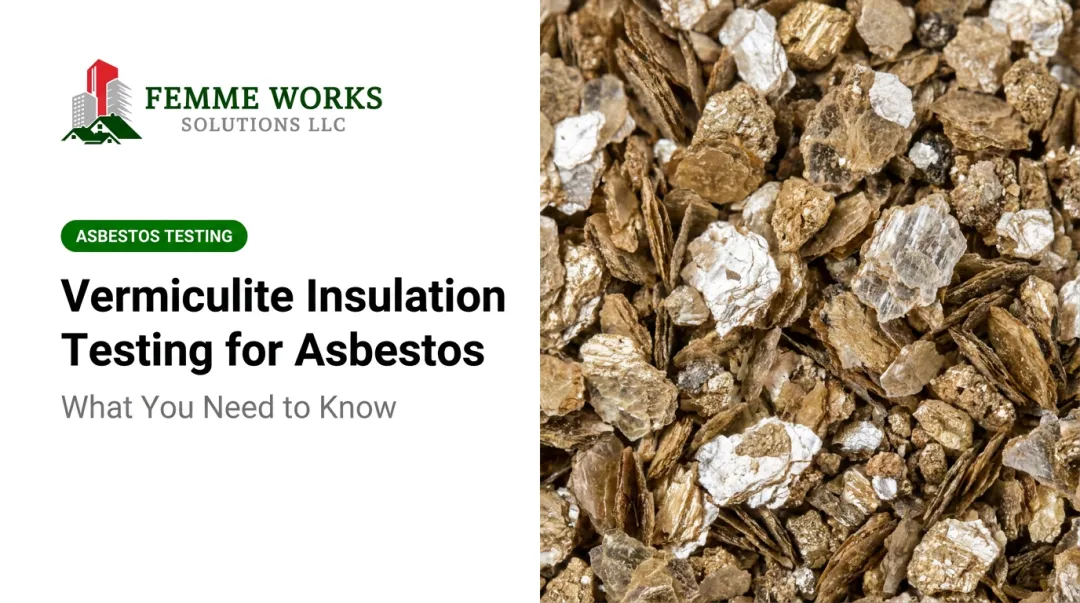
Understanding what vermiculite is and why it's often linked with asbestos is the first step to assessing the risk. Vermiculite is a naturally occurring mineral that expands when heated, creating a lightweight, fire-resistant material. These properties made it a popular ingredient in building materials, including attic insulation and spray-on textured ceilings.
The problem is where most of it came from. The mine in Libby, Montana, that dominated the global supply for 70 years had a massive, naturally occurring deposit of tremolite asbestos running through it. As a result, the vermiculite extracted was contaminated with these toxic fibers.
The Health Risks of Asbestos Exposure
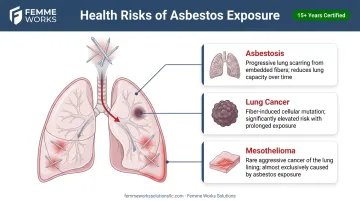
Asbestos is classified as a known human carcinogen. When materials containing it are disturbed, they release microscopic, needle-like fibers into the air. If inhaled, these fibers can become permanently lodged in the lungs and surrounding tissues, leading to severe diseases decades later, including:
- Asbestosis: A chronic lung disease that causes scarring of lung tissue and severe shortness of breath.
- Lung Cancer: A well-established risk for those exposed to asbestos.
- Mesothelioma: A rare and aggressive cancer of the lining of the lungs, abdomen, or heart that is almost exclusively caused by asbestos exposure.
"Popcorn" vs. Vermiculite Ceilings
People often use the terms interchangeably, but there's a key difference. "Popcorn ceiling" refers to the bumpy, cottage-cheese-like style of the texture. Vermiculite is one of the specific materials that may have been used to create that texture. While other materials like styrofoam were also used, vermiculite is the primary source of asbestos risk in these applications.
The texture of vermiculite ceilings is also highly friable—a critical safety term. A friable material is one that, when dry, can be crumbled, pulverized, or reduced to powder by hand pressure.
This friability makes the material especially hazardous. Even a minor disturbance—like scraping it with furniture or a water leak—can release dangerous fibers.
First Step for Safety: How to Identify and Test for Asbestos
While you can look for clues, you can never confirm the presence of asbestos just by looking. If your home was built or renovated between the 1950s and early 1980s and has a bumpy ceiling, you should treat it as a potential hazard.
Visually, ceilings containing vermiculite sometimes have a faint sparkle from the mica flakes within the mineral. However, this is not a reliable indicator.
The only way to be certain is through professional testing.
Do not attempt to take a sample yourself. Scraping the ceiling to collect a sample is one of the easiest ways to release fibers and create the very hazard you’re trying to avoid. Instead, hire a licensed asbestos inspector. The process involves three key steps:
- An inspector performs a safe sample collection, wearing protective gear and wetting the area to prevent fibers from becoming airborne.
- The sample undergoes professional lab analysis using Polarized Light Microscopy (PLM), the standard method for identifying asbestos.
- You receive a formal report detailing whether asbestos is present, its type, and its concentration.
Safety Guidelines for Managing and Removing Vermiculite Ceilings
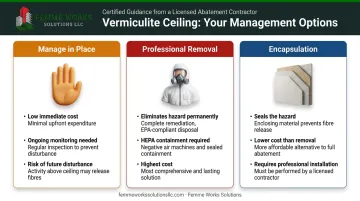
Once you have a positive test result, you have three primary options for managing the ceiling. Each approach is safe when done correctly and is suited to different situations.
Option 1: Managing an Existing Ceiling Safely (The "Do Not Disturb" Rule)
If the ceiling is in excellent condition—no cracks, peeling, or water damage—and is in a low-traffic area, it may be safe to leave it in place. Asbestos is only a danger when its fibers are airborne. If the material is intact and undisturbed, the risk is minimal.
To manage it safely:
- Do not drill, sand, or scrape the ceiling.
- Be careful not to abrade it when moving tall furniture or ladders.
- Prevent water damage from roof or plumbing leaks, as moisture can degrade the material.
- Inform any contractors working in your home about the presence of asbestos.
Option 2: Professional Asbestos Abatement (Complete Removal)
For homeowners planning a renovation or who want to eliminate the hazard for good, complete removal by a licensed asbestos abatement contractor is the best solution. This is a highly regulated process that cannot be done by a general contractor or handyman.
A professional team follows strict OSHA and EPA protocols:
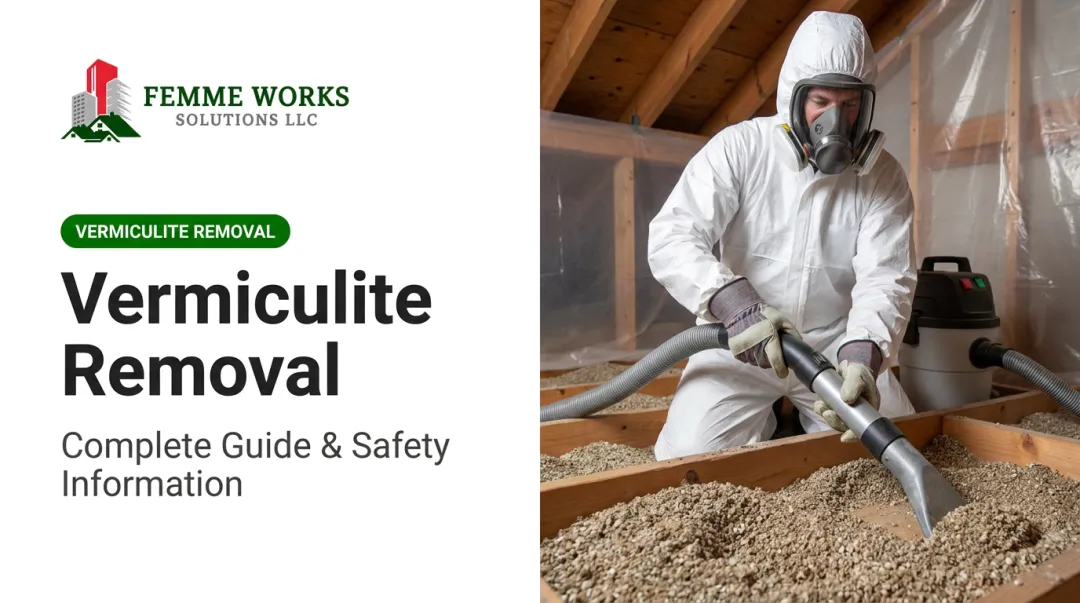
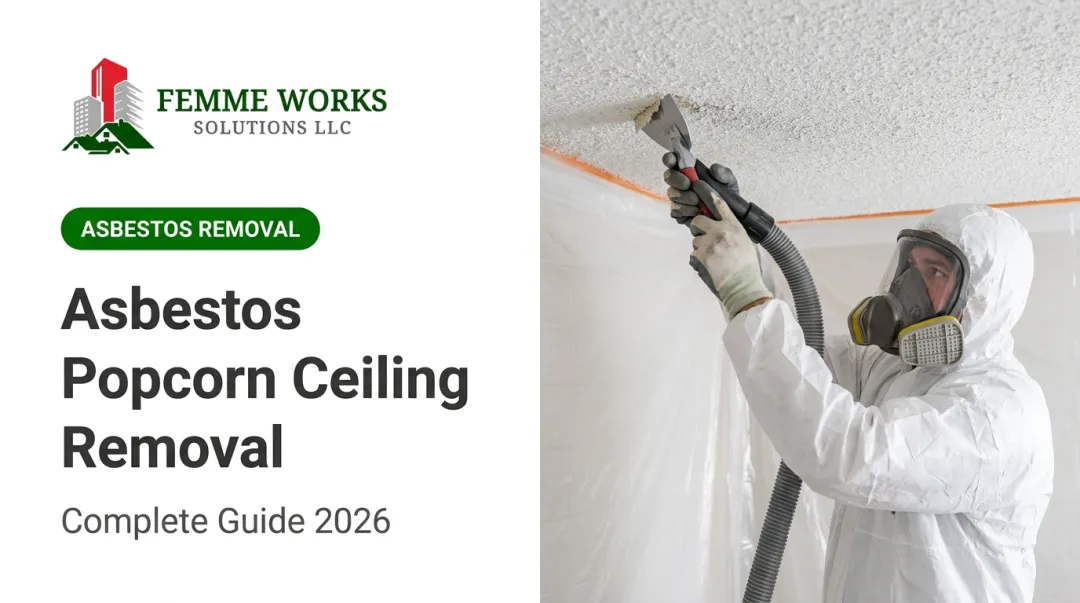
- Establish a containment zone. The team seals the work area from the rest of the house using heavy plastic sheeting and runs a negative air pressure system to prevent cross-contamination.
- Wet the material before removal. Technicians spray the ceiling with a water-based solution to suppress dust and stop asbestos fibers from becoming airborne.
- Scrape and dispose of all material. Certified technicians in full protective gear remove the wetted material, which is then sealed in specially labeled, leak-proof bags for transport to a hazardous waste facility.
For residents in Massachusetts and New Hampshire, hiring a company with proven experience is essential. Femme Works Solutions brings over 15 years of expertise to every project, strictly adhering to all EPA, OSHA, and MassDEP protocols.
As a fully licensed and insured woman-owned business, we ensure the job is done safely, legally, and with complete transparency, giving you peace of mind.
Option 3: Encapsulation (Covering the Ceiling)
Encapsulation involves covering the asbestos ceiling with a new, permanent barrier. This is most commonly done by installing a new layer of drywall directly over the existing texture.
Key considerations for encapsulation include:
- It offers a less disruptive option that is often more cost-effective than full removal because it seals the hazard in place.
- The asbestos remains in your home, which slightly lowers ceiling height and requires you to disclose its presence to future buyers.
Crucially, encapsulation must also be performed by professionals. Attaching new drywall requires screwing into the ceiling joists, which can easily disturb the friable asbestos material if not done with proper precautions.
Critical Safety Mistakes to Avoid with Vermiculite Ceilings
Handling a vermiculite ceiling incorrectly can have serious, long-lasting consequences for your family's health and your property's value.
Mistake 1: DIY Removal
This is the single most dangerous mistake a homeowner can make. Without proper containment, negative air pressure, and protective equipment, you will inevitably contaminate your entire home with asbestos fibers. These microscopic fibers can settle into carpets, ductwork, and furniture, becoming a persistent hazard that is nearly impossible to fully clean up.
Mistake 2: Improper Disposal
You cannot legally or safely throw asbestos-containing material in your regular trash. It is considered hazardous waste and is subject to strict federal and state disposal regulations. Improper disposal can result in significant fines and poses a health risk to sanitation workers and the community.
Mistake 3: Believing Painting Makes it Safe
While a layer of paint might seem to seal the ceiling, it's a flawed solution. The process of rolling or spraying can disturb the friable texture, releasing fibers. Worse, paint does not eliminate the hazard—it just covers it up.
This temporary fix can also make future professional removal more difficult and expensive, as the added paint makes the material heavier and harder to scrape.
Frequently Asked Questions
Are all vermiculite ceilings asbestos?
Not all vermiculite contains asbestos, but the vast majority used in homes before 1990 came from the contaminated Libby mine. For safety, you should always assume it contains asbestos until proven otherwise by a professional lab test.
Are popcorn ceilings worth removing?
Removing an asbestos-containing popcorn ceiling eliminates a major health hazard, modernizes your home's appearance, and can increase its property value. It's a worthwhile investment, especially if you plan on any renovations.
How can I tell if my ceiling has asbestos-contaminated vermiculite?
You can't tell for sure just by looking. While the age of the home (pre-1990) and a bumpy, sometimes sparkly texture are clues, the only definitive way to know is to hire a certified professional to take a sample for lab analysis.
What is the average cost of professional vermiculite ceiling removal?
Costs vary based on room size, location, and disposal fees, typically ranging from $5 to $20 per square foot. Always get a detailed, written quote from a licensed abatement contractor for an accurate price.
Is it safe to live in a house with a vermiculite ceiling if I don't remove it?
An undisturbed, undamaged ceiling poses a low immediate risk. However, it remains a potential hazard that must be handled with caution and addressed professionally before any renovations or repairs.
Can I just paint over or seal a vermiculite ceiling myself?
This is strongly discouraged, as painting can disturb the material and release asbestos fibers without removing the danger. Proper sealing (encapsulation) involves adding a physical barrier like drywall and should only be done by professionals.